

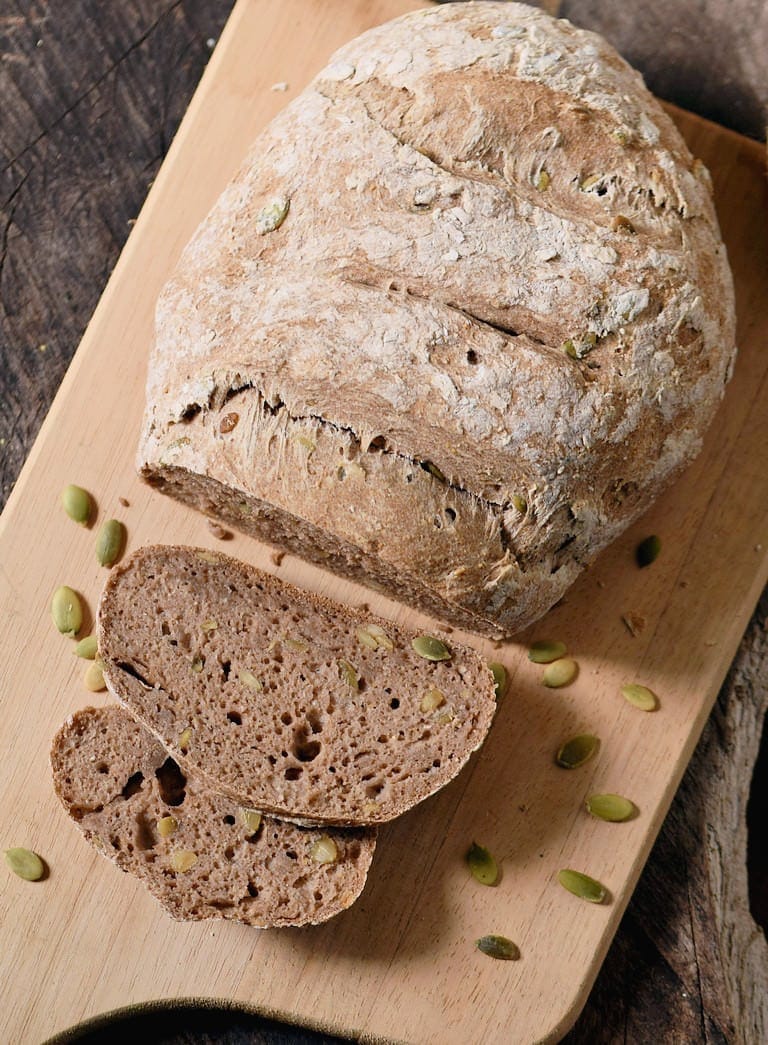
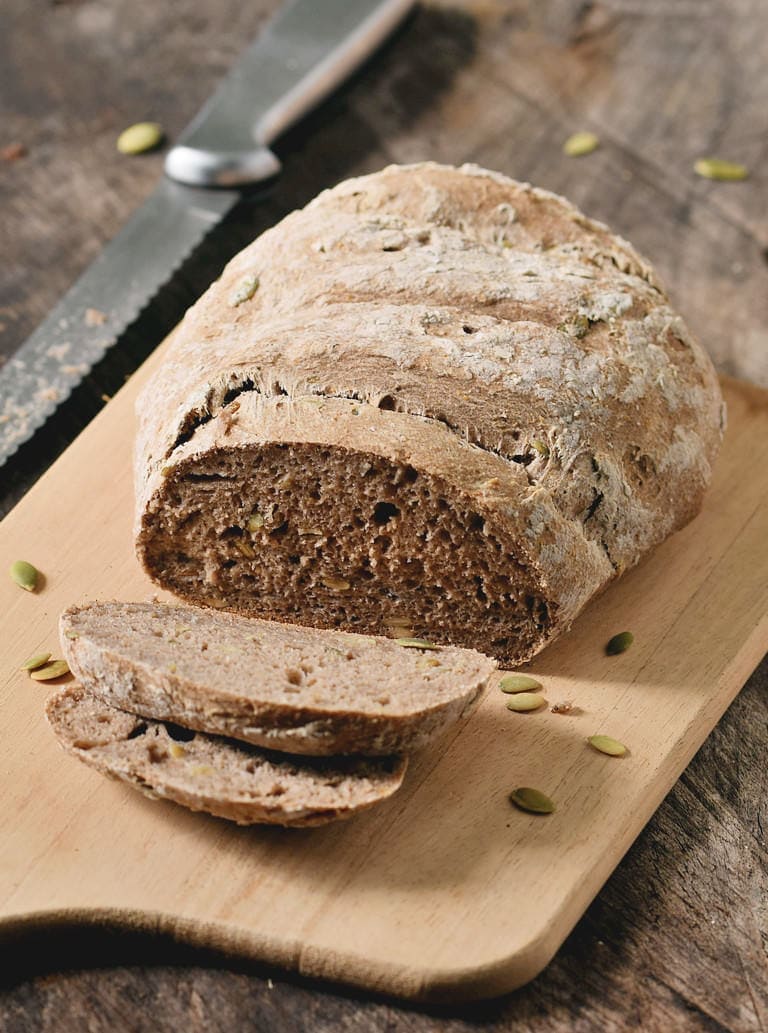
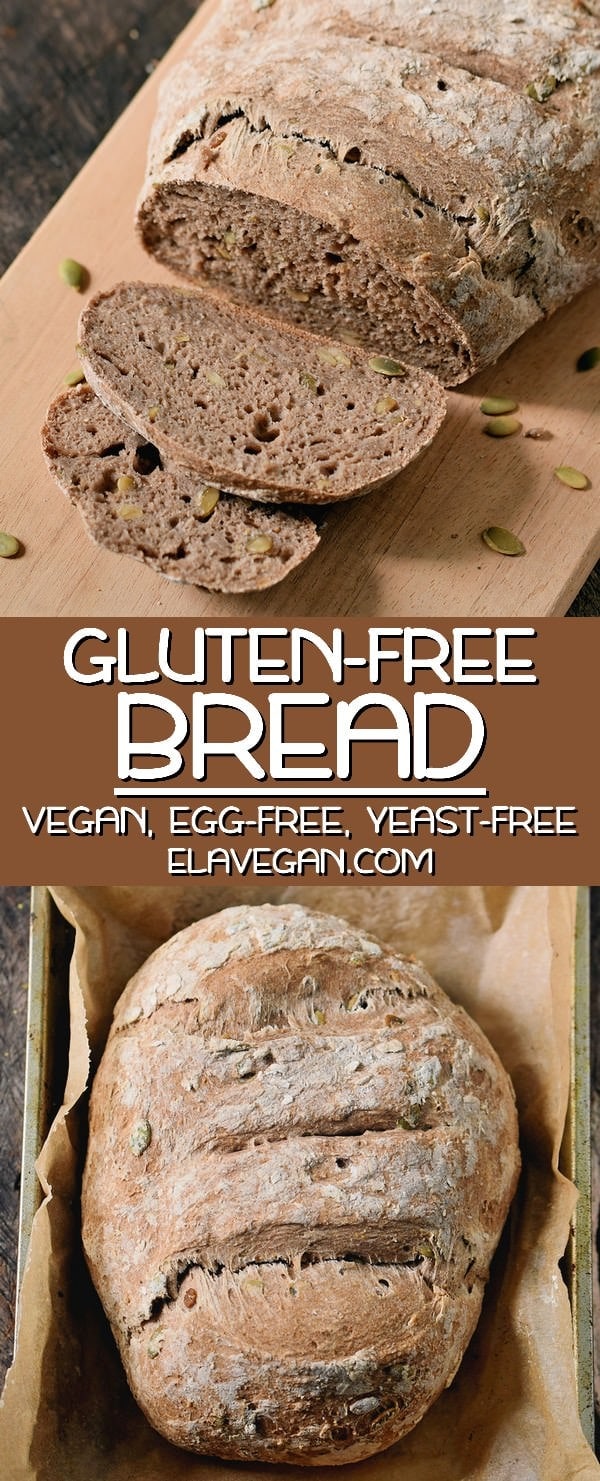
This is the best homemade gluten-free vegan bread recipe which is egg-free, dairy-free, yeast-free, and nutritious! This German bread is actually healthy since it contains psyllium husk powder. It’s crispy on the outside and soft on the inside!
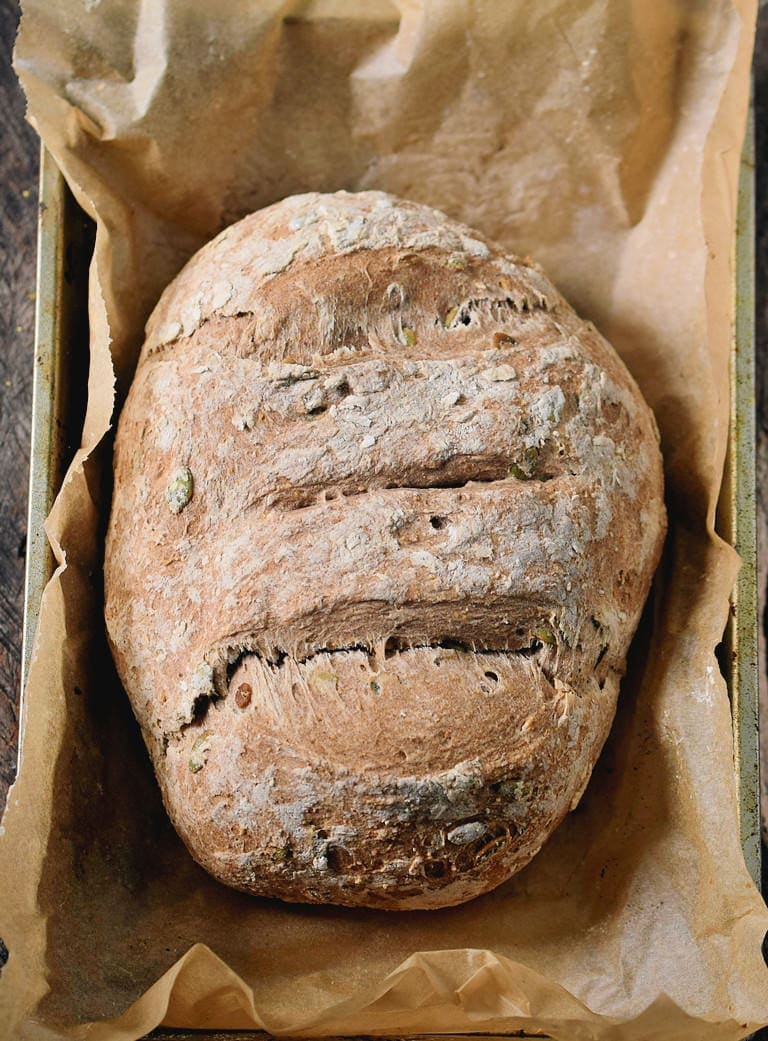
Homemade Gluten-Free Vegan Bread
I cannot tell you how many times I tried making the perfect gluten-free vegan bread… Actually, I lost count how many times I ended up throwing the towel because it’s damn hard to create good gluten-free bread without eggs.
But since I can be quite stubborn (haha) I actually never gave up and continued with the recipe testing…
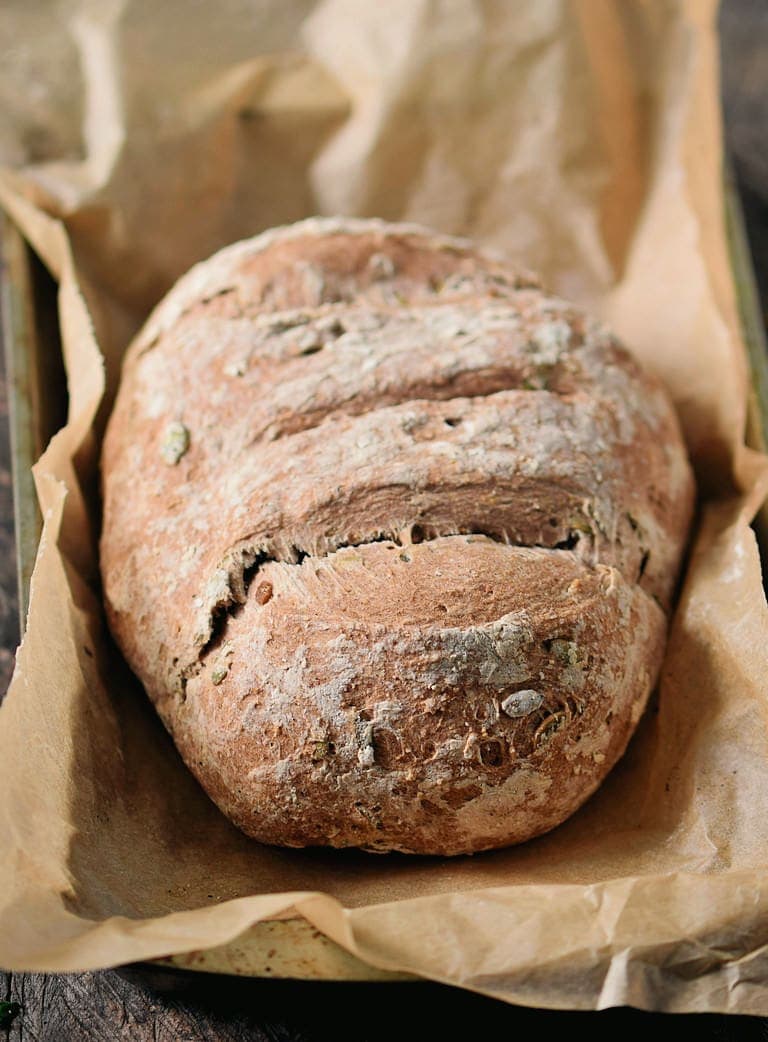
Psyllium Husk Powder
One day, I started experimenting with gluten-free pizza crust that contains psyllium husk powder. The recipe turned out so good, that I got intrigued.
To make a long story short, I made an online search about homemade gluten-free vegan bread + psyllium husk and found a couple of different recipes that were using huge amounts of psyllium husk powder in their bread recipes.
One recipe was from a German blogger, and she inspired me to give psyllium husk a try. I tweaked her recipe and used a different flour blend and the bread turned out amazing!
I was shocked by how great it turned out, especially since the bread is wheat-free (and therefore gluten-free), and egg-free (vegan)! It did rise, even though it doesn’t contain yeast and it actually looked like German bread from a bakery.
Conclusion: Psyllium husk powder is a godsend for gluten-free vegan baked goods. It’s also very healthy, especially for our gut! So please do yourself and favor and buy it or order it online. It’s cheap and absolutely amazing!
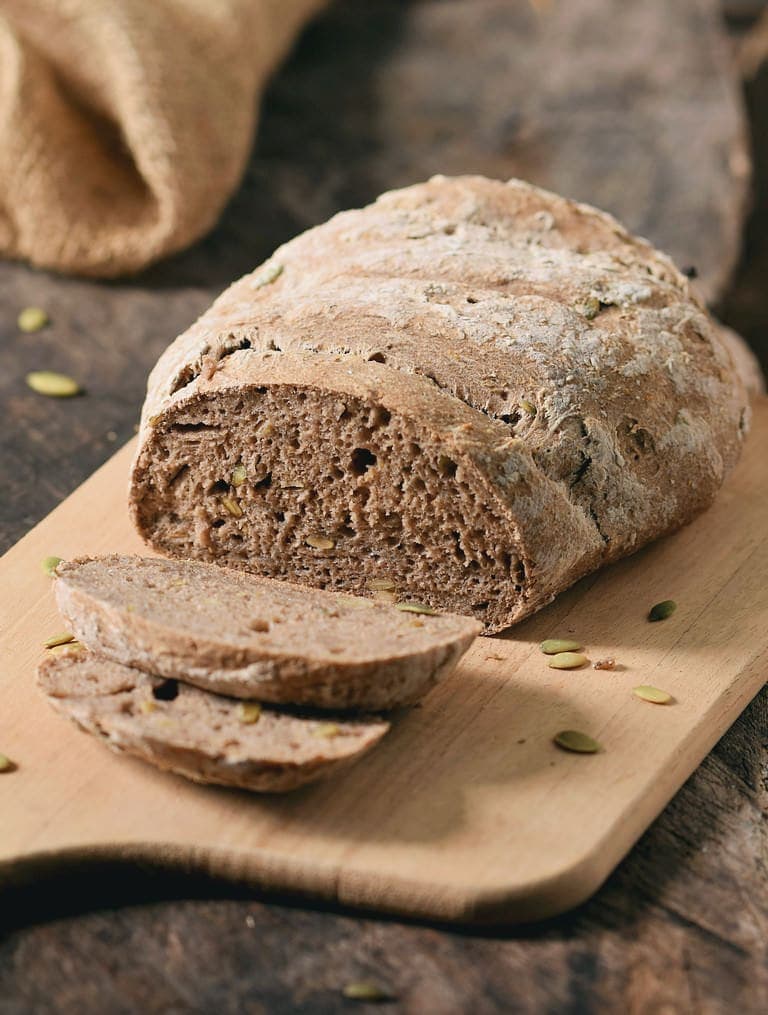
How To Make Gluten-Free Bread?
Check the video in the post to see how I made this amazing bread.
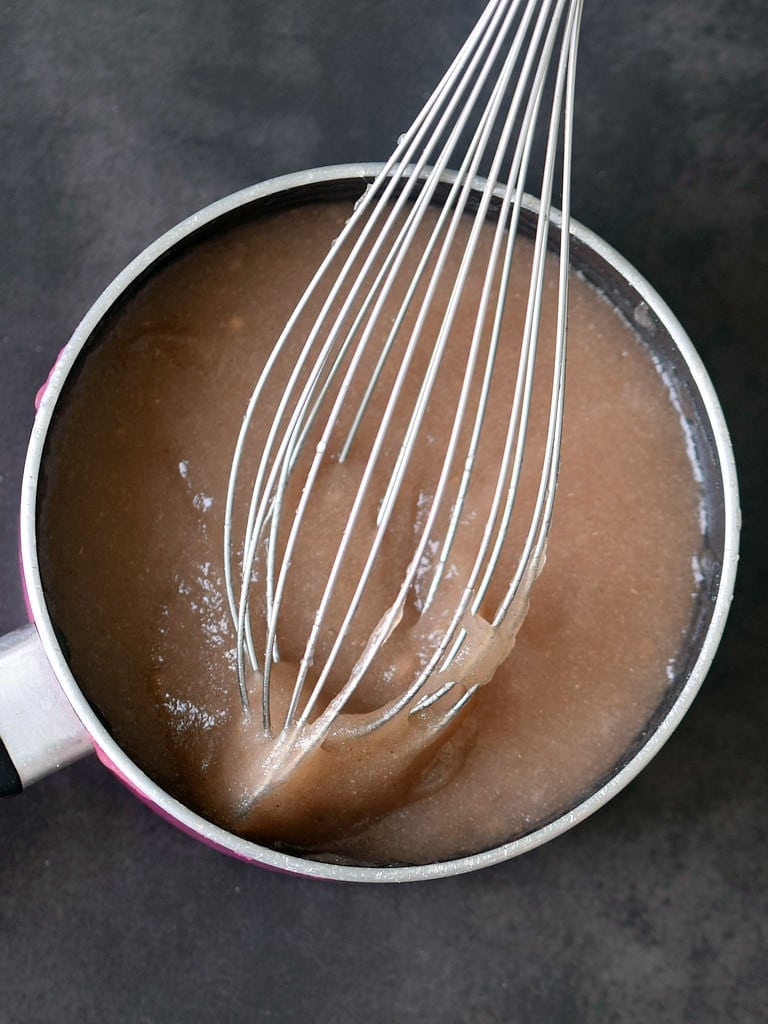
Step 1: Make the psyllium husk gel first. Mix the psyllium husk powder and water in a bowl. Try to be quick, because it gels instantly, within SECONDS. I always use a whisk, it works the best. Set aside and measure the dry bread ingredients in the meantime!
Step 2: It’s time to measure/weigh all dry ingredients and add them to a big bowl. You can also preheat your oven to 390 °F (ca. 200 °C) now.
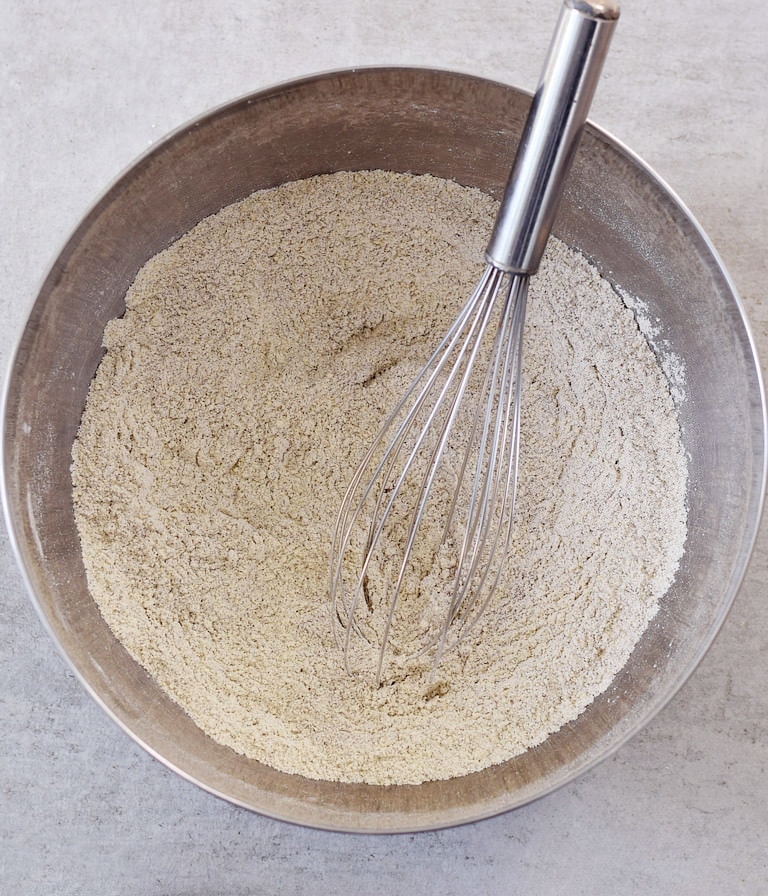
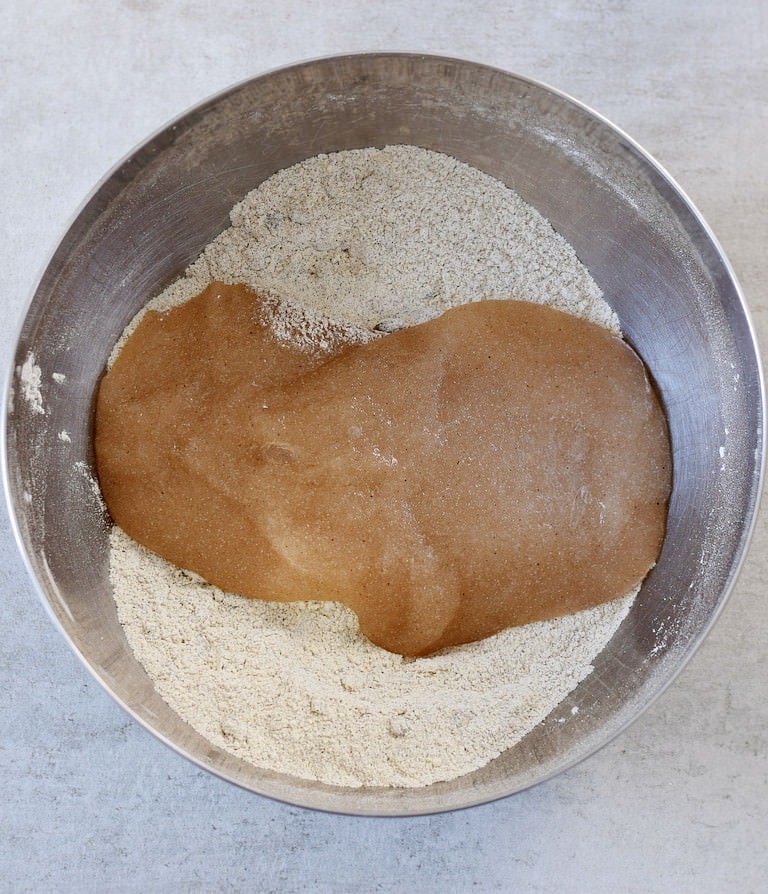
Step 3: Mix it all together: Add the psyllium gel to the big bowl and mix all ingredients with a hand mixer (use the dough hooks). You can also knead the dough with your hands or use a Kitchen Aid. It will take about 5-10 minutes until the dough comes together.
Step 4: Shape the dough and bake the bread in the oven for about 55-60 minutes. That’s it!
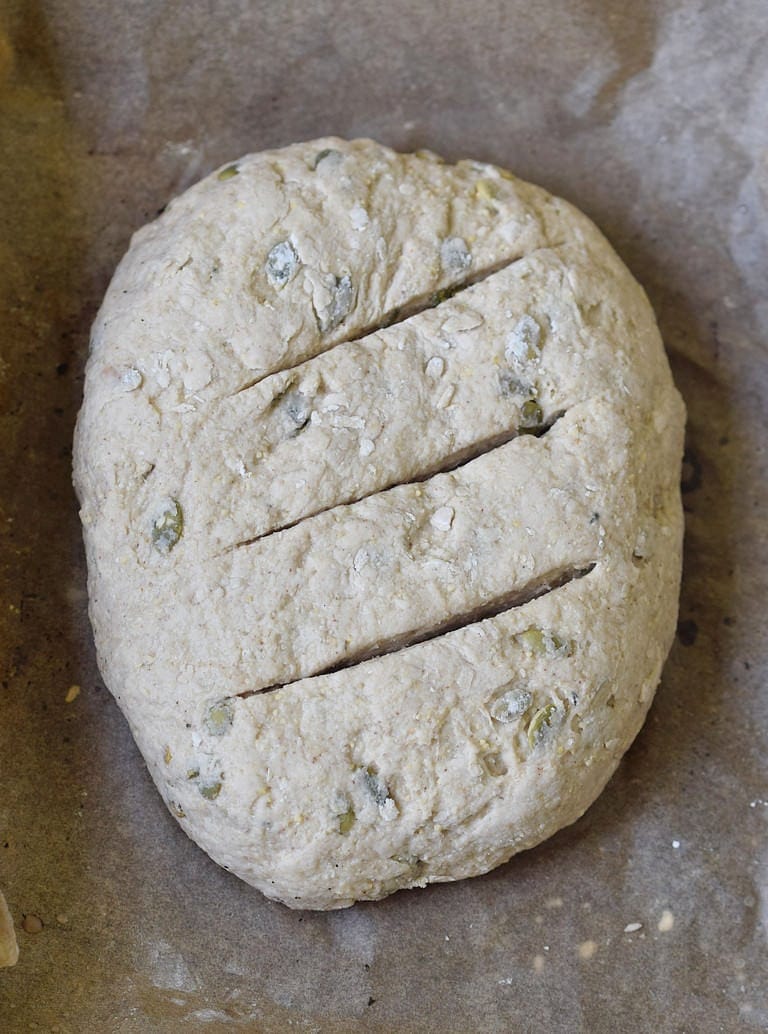
Add Seeds Of Choice
I love adding pumpkin seeds but you can also use sunflower seeds, sesame seeds or nuts of choice (e.g. hazelnuts, walnuts, cashews, almonds, etc).
The Ingredients
You can find all the ingredients with measurements below in the recipe card! Please also check the recipe notes below where I list different substitutes.
My favorite flour combo is this:
- Buckwheat flour
- Rice Flour
- Chickpea Flour
- Tapioca Flour
Recipe Notes & Substitutes
- Some readers replaced the buckwheat flour with oat flour or sorghum flour (or a combo) and the bread still turned out amazing.
- Rice flour works great in this bread recipe, but feel free to experiment with lentil flour, teff flour, sorghum flour, or quinoa flour.
- You can use arrowroot flour instead of tapioca flour/starch. Cornstarch or potato starch will most likely work as well.
- Chickpea flour is the same as garbanzo bean flour. It adds plant-based protein and I love adding it to bread. Some readers had success using oat flour instead.
- Psyllium husk powder is the most important ingredient in this recipe and cannot be subbed by any other ingredient. Make sure to use psyllium husk POWDER. If you have psyllium husk (not the powder), you can blend it in a blender or electric spice/coffee grinder until it’s a fine powder.
Can I Freeze Gluten-Free Bread?
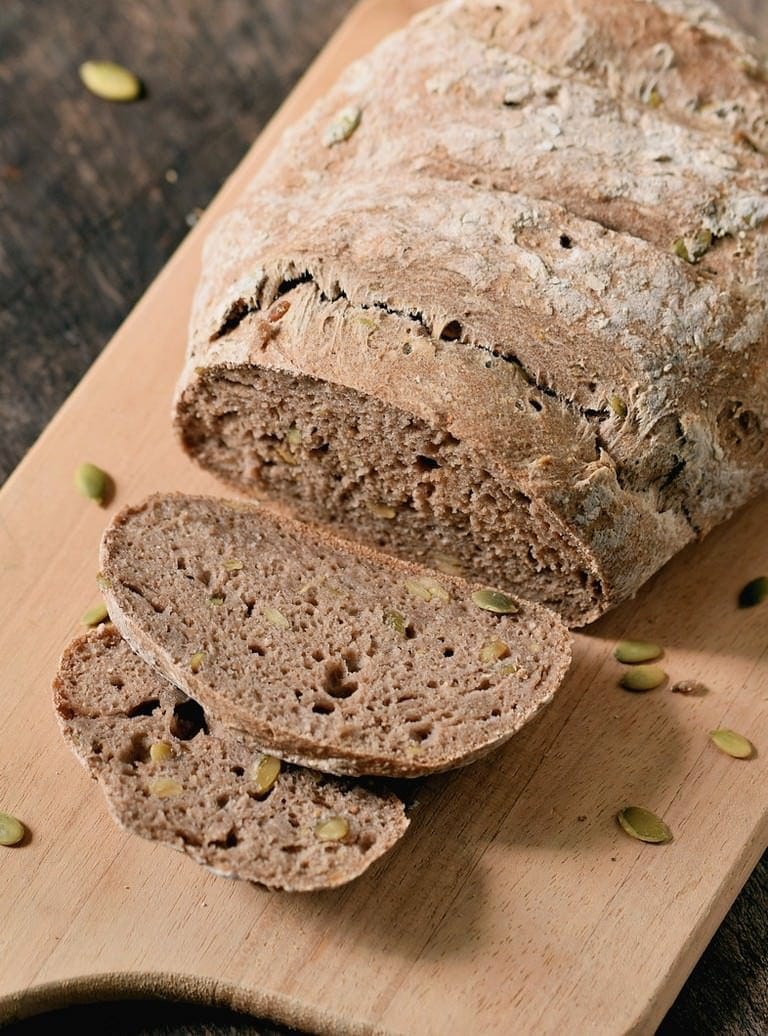
You can definitely freeze this gluten-free bread! Slice it and wrap all individual slices in wax paper or parchment paper. Put in zip lock bags and freeze for up to 3 months. Let thaw at room temperature and then toast the bread once you want to serve it.
Other Gluten-Free Bread Recipes
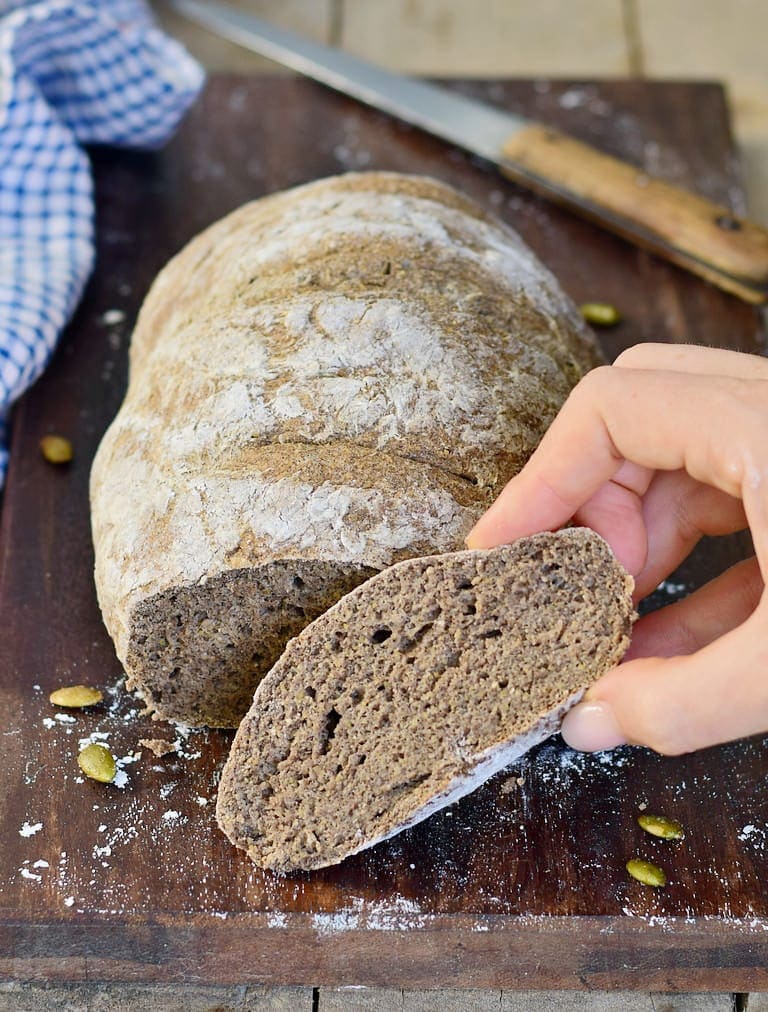
You can serve the bread with stews, soups and all kinds of comfort meals. Make sure to also check out my other vegan and gluten-free bread recipes:
- Gluten-Free Baguette
- Gluten-Free Pita
- Gluten Free Naan
- Gluten Free Buns
- Chocolate Chip Banana Bread
- Pumpkin Bread
- Moist Vegan Cornbread
- Marbled Banana Bread
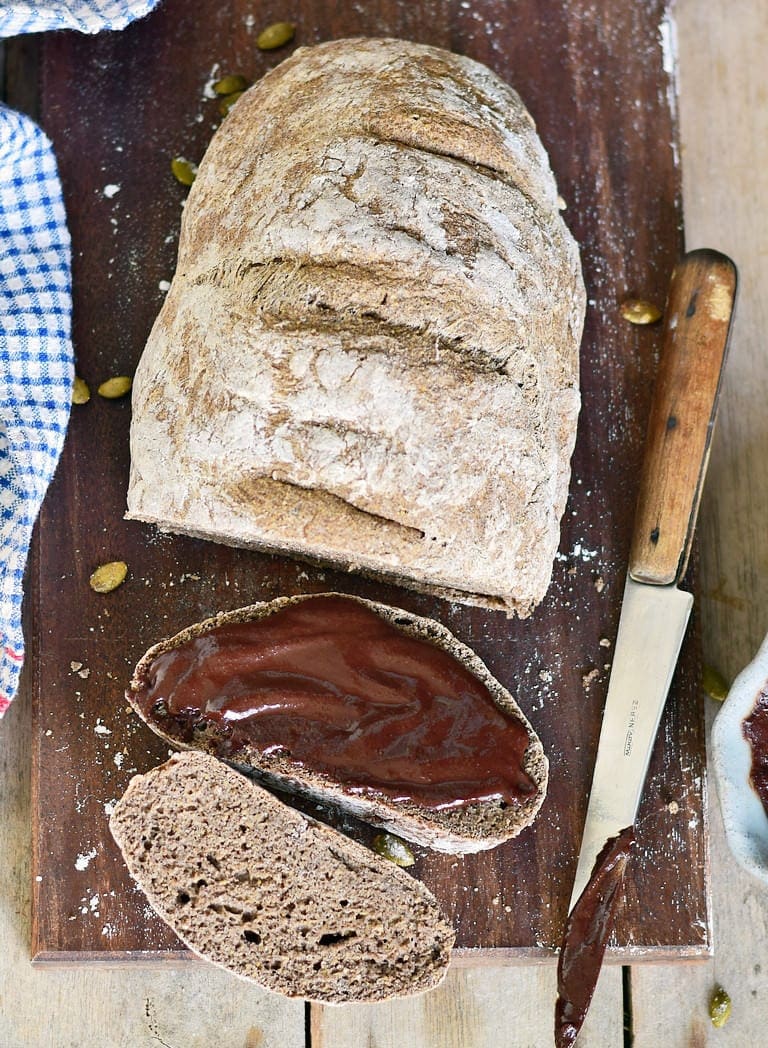
Should you give this gluten-free German bread recipe a try, please leave a comment and rating below and don’t forget to tag me in your Instagram or Facebook post with @elavegan and #elavegan because I love to see your remakes! 🙂

Gluten-Free Bread Recipe
Video
Ingredients
Dry ingredients:
- 100 g (¾ heaped cup) buckwheat flour (see notes)
- 100 g (⅔ cup) white rice flour
- 100 g (1 cup) chickpea flour
- 40 g (5 Tbsp) tapioca flour/starch (see notes)
- 1 tsp baking powder
- ½ tsp baking soda
- ¾-1 tsp sea salt
- 50 g (⅜ cup) pumpkin seeds (optional - see notes)
Psyllium mixture:
- 450 ml (1.8 cups) water
- 30 g (3 Tbsp) psyllium husk powder (see notes)
Instructions
- I recommend using the metric measurements for this recipe (grams/ml). In a bowl, combine the water with the psyllium husk powder and whisk well. It will gel instantly and become thick. Set aside for 20-30 minutes.
- Meanwhile, measure/weigh all the dry ingredients and add them to a large bowl. Preheat the oven to 390 °F (200 °C).
- Add the psyllium gel to the bowl and knead the ingredients with a hand/ stand mixer (use a dough hook). You can also knead the dough with your hands. It will take about 5-10 minutes for the dough to come together.
- If the dough appears too wet, sprinkle it with 1-2 Tbsp tapioca flour. If it feels too dry, add a little water.
- Shape the dough into a round or rectangular loaf and place it on a baking sheet lined with parchment paper (I sprinkled the paper with a bit of tapioca flour).
- Bake for 50-60 minutes. Let the bread cool completely, then slice and enjoy. The bread freezes well, for up to 3 months!
Notes
Video Of The Recipe
- Psyllium husk powder is the most important ingredient in this recipe and cannot be substituted by any other ingredient. Make sure to use psyllium husk POWDER. If you have whole psyllium husk (not the powder), you can blend it in a blender or electric spice/coffee grinder until it's a fine powder.
- A few people mentioned a weird smell in the bread (I didn't, and most other people didn't either), however, I received a few helpful comments.
- You can use whole-grain buckwheat flour or regular, both are fine. Some people replaced the buckwheat flour with oat flour or sorghum flour (or a combo) and the bread still turned out amazing.
- Rice flour works great in this bread recipe, but feel free to experiment with lentil flour, teff flour, sorghum flour, or quinoa flour.
- You can use arrowroot flour instead of tapioca flour/starch. Cornstarch or potato starch will most likely work as well.
- Chickpea flour is the same as garbanzo bean flour. It adds plant-based protein and I love adding it to bread. Some readers had success using oat flour instead.
- Please don't compare this bread with wheat bread which contains gluten and yeast or a gluten-free bread which was made with eggs and yeast. It's hard to make a gluten-free, yeast-free, vegan bread, but this is the best recipe I have tried so far, and it turns out amazing every time! Depending on the flour mixture, the bread might end up more fluffy or dense.
- Pumpkin seeds: You can use sunflower seeds instead, however, they will turn green due to a chemical reaction with the baking soda/powder. This is perfectly fine and shouldn't concern you.
Nutrition information is an estimate and has been calculated automatically
Equipment
 „Simple and Delicious Vegan“ Cookbook by ElaVeganCLICK HERE to order!
If you are using Pinterest, feel free to pin the following photo:
Hello from Australia!
I’m not a baker. This recipe is so easy. It turned out amazingly. I added olives, dried garlic and herbs to it (delicious with cashew cream cheese!). Thank you
Hello to Australia, so nice to hear from you!
I’m really happy it worked so well for you, especially if you’re not a baker. Love the additions too, olives, dried garlic and herbs sound perfect, especially with cashew cream cheese. Thanks so much for taking the time to share this!
This is the best GF bread recipe I have tried and I have been baking GF for years. The only substitution I made was for the rice flour = I used a 1:1 AP flour. The texture is excellent, with a lovely chewy crust. I can’t wait to try the baguette and other recipes.
Hi Andrea! So happy to hear that you loved it and that it worked so well with your substitution! A chewy crust is exactly what we want in a good GF loaf. Hope you enjoy the baguette and the other versions just as much. Thanks for the wonderful feedback! 😊💛
I just have to tell you that the bread toasted is incredible too. It has a crispy crust!
Your cookbook recipes look amazing too- I can’t wait to try them.
I’m wondering if anyone has baked this in a loaf tin and had it turn out ok? Baking for my 6 year old with coeliac disease who likes things to look ‘normal’ ie. like the shop bought loaf we used to buy before his diagnosis.
You can absolutely bake it in a loaf tin. Just make sure to line the tin with parchment paper so you can lift it out easily.
Once the baking time is over, remove the bread from the tin and place it directly on the oven rack or a baking sheet. Bake it for another 5–10 minutes, so the sides can firm up and the crust isn’t too soft. This makes a big difference for texture, especially with gluten-free bread.
Hope your little one loves it! 🥰
I will try the recipe again since the loaf I made was hard as a brick. To mix the dough I had to add I C of water. I measured using a scale and made no substitutions. I may have waited too long as the psyllium husk powder was congealed.
You likely waited too long before mixing everything together. Once psyllium fully congeals, it becomes very dense and won’t incorporate well, which makes the dough stiff and the loaf heavy. Next time, try adding the psyllium gel to the dry ingredients a bit earlier, while it’s still soft and easier to knead.
Also double-check that you used psyllium powder, not whole husks, and that your scale measurements were correct. If the dough ever feels too dry, add just a splash of water until it comes together smoothly.
I hope your next loaf turns out much lighter and softer! 😊
My quest for the perfect gluten free vegan bread is complete!! I used oat flour in place of buckwheat, and Bobs 1-1 GF blend in place of rice flour. I weighed everything and it turned out perfectly!!
That’s amazing to hear! I love that your flour swaps still gave you a perfect loaf. Oat flour and the Bob’s 1:1 blend can work beautifully when everything is weighed accurately, so great job. So happy your gluten-free vegan bread journey has its happy ending! 🥰
Hi Ela I love this bread recipe and have made it for quite a while but find that consistently the bread rises in the oven but then once it cools down on the counter rack it sinks quite a bit. How can I avoid this? I googled and it said to decrease the temperature a bit (how much?) and lengthen the time by half an hour-but I think that is for yeasted bread though.. Another tip was to let the bread cool in the oven and therefore have a slow temperature drop. Hoping you have the answer 🙂 thanks
Hi Trish 🙂 If your loaf rises nicely in the oven but sinks while cooling, it usually means too much moisture in the dough or a fast temperature change.
Here are a few things that can help:
• Reduce the water slightly
Try using about 30–50 ml less water in the psyllium mixture.
Too much moisture can make the loaf collapse as it cools.
• Bake a little longer
If the inside is still a bit moist, the loaf will sink.
Bake for 5–10 minutes more, or until the crust feels firm.
• Cool it slowly
You can turn off the oven, leave the door slightly open, and let the bread sit inside for 10–15 minutes before transferring it to a rack. That gentle temperature drop helps a lot.
• Let it cool completely
This loaf continues to firm up while cooling, so cutting too early can also make it collapse.
I hope one of these tips helps — let me know how your next loaf turns out! 😊
Ela,
If I could give you a big hug I would. Thank you for sharing this recipe! It’s literally the only bread I can eat. I have autoimmune diseases and react to so many foods. To eat avocado toast again is such a joy! Because of my climate I had to lesson the water content and I did add a couple tablespoons apple cider vinegar. It comes out perfect every time now.. Thank you!
Aww, that makes me so happy to read, Molly! 🥰 Thank you for sharing your tweaks too, they sound perfect! 💛
Hello Michaela,
I tried this for the first time with oat flour to replace the buckwheat but otherwise stuck to the recipe. The bread is okay but the texture is slightly odd but I’m 100% certain it’ll just take me a bit of practise! I had to make the psyllium gel three times as it gelled far too quickly even though I whisked it well (I used a handheld mixer the second time). Third time it still went lumpy and the bread feels a bit sticky so I wondered if if is that? Does it matter if the gel clumps? I would love to know so I can try again!
Thanks so much for giving the recipe a try! Yes, if the psyllium gel clumps, that can definitely affect the texture — it can make the bread a bit sticky or uneven inside. The trick is to whisk the psyllium into the water very quickly (within a few seconds) before it starts gelling. Some brands gel much faster than others, so next time you could either:
– mix the psyllium directly with the dry ingredients first (as some readers do), and then add the water,
– or use slightly warmer water (about 60°C / 140°F), which sometimes helps it blend more smoothly.
Oat flour can also make the texture a bit softer or stickier than buckwheat, so if you try again, maybe start with half oat and half buckwheat to see which you prefer.
Thanks so much Ela! I’ll try all of those. After writing this message, I’ve realised that I don’t think it cooked properly and the bottom was a bit raw inside which probably hasn’t helped either. I maybe should have cooked a bit longer but not sure how to tell when it is ready as it looked cooked on the bottom. Not to worry, I’m determined to get it right! o)
This recipe is incredible! My husband and I are currently doing a parasite cleanse and we don’t usually have bread while on it and now we can 🙂 I used oat and quinoa flour instead of the buckwheat and rice. I might want this over regular bread now!! Thank you so much for sharing your recipe! Oh and btw I rarely ever take the time to comment, it was just that good!
I came across your recipe and the comments were amazing. I am about to try to make it, but I was wondering if anybody has ever made them into little buns instead of one big loaf? Would love some feedback.
Yes, definitely! I’ve seen quite a few little bun versions shared on social media.
I was so grateful to find this gluten free, yeast free, egg free, dairy free bread recipe. It is not easy to find a good one. The texture and flavour are great, and it is high in protein (if you use some chick pea flour). I use it to stuff our turkey so my daughter can have stuffing. She loves it. The psyllium husk powder is definitely important. One time I got that wrong – it didn’t turn all the water into a gel – and that’s the only time this hasn’t worked perfectly.
Hello, I just want to thank you for this recipe. I’ve been searching for a good gluten-free vegan bread for ages, and most of them were really disappointing — but this one went far beyond my expectations. I absolutely loved your flour mix! Even though I usually don’t like using chickpea flour, it turned out wonderful. I also really appreciate that you use so little starch and avoid potato starch — it makes this bread amazingly healthy. Honestly, it has become my favorite meal right now. Every time it runs out, I can’t wait to bake it again!
I do have one question, though. If I replace all the flours with brown rice flour, do you think it would still work? I’ve been searching for a good brown rice bread recipe, but none of them have turned out well so far.
Thank you so much for your kind feedback, I’m really happy you enjoyed the bread and my flour mix!
Regarding your question: I wouldn’t recommend replacing all the flours with brown rice flour, because the texture would likely turn out too dense and gummy. The mix of different flours (buckwheat, chickpea, rice, tapioca) is what gives the bread the right balance of structure, binding, and softness.
If you’d like to emphasize brown rice flour, you could try replacing only one of the flours (for example the white rice or part of the buckwheat) with brown rice flour. That way, you still get the nutty flavor of brown rice but without compromising the overall texture.
Phenomenal. Used chickpea flour, oat flour and lupin flour.
That sounds amazing, Julie! 😍 Chickpea, oat, and lupin flour must give it such a nice flavor and texture. Thanks for sharing your variation!
I have done this bread 4 times and we love it so much that we don’t want to go back to buy bread anymore. thank you
So happy to hear that, thanks a lot for your lovely feedback, Abigail! 🥰
This bread was fun to make, and delicious to eat. My husband liked it too. I’m going to make another loaf tomorrow.
So happy to hear that you both enjoyed it! 🥰 Can’t wait for you to bake the next loaf!
If you decide to replace the buckwheat flour with sorghum flour and rice flour with quinoa flour wouldn’t the weights in recipe have to change then?
Hi Bobbie! Keep the same gram weights for the flours initially. Watch the dough texture:
Too wet → sprinkle 1–2 Tbsp tapioca flour
Too dry → add a little water, 1 Tbsp at a time
This is actually what the original recipe already recommends, so your substitutions will likely work without precise recalculation, just some adjustment by feel. Hope this helps!
AMAZIBG RECIPE SO TQASY AND I USED GLUT4EN FREE FLOUR WITH FLOUR AND COOKED QUINAO , A LITTLE HONEY FOR SWEETNESS IN THE BREAD MIX IT IS SO TASTY …SENT THE RECIPE TO ALL MY FAMILY THEY LOVE IT TOO …..
So glad you and your family loved it, Paulina! 😍
Your twist with cooked quinoa sounds absolutely delicious. Thanks for sharing! 💛
thank you buckwheat flour as well ….it is so tasty and the re ipe is so precise and you can mix and match any flour it is great and tasty thank you for sharing
Great! The flexibility of mixing flours makes it super fun to experiment. Thanks so much for the kind words and happy baking!
thank you God Bless !!!!
I forgot to use powder, I used whole husk. It’s cooling now, will it be edible? I know for next time!
Yes, your bread will still be edible, Annie, no worries! Using whole psyllium husk instead of powder won’t ruin it, but it might slightly change the texture and structure. Here’s what to expect:
Texture: The bread may turn out softer or more crumbly inside and might not hold together as well as it would with the powder.
Rise: It likely won’t rise as much, since the powder creates a stronger gel that helps trap air.
Gelling: The whole husks don’t absorb water as quickly or as thoroughly, so the dough might be a bit wetter or less cohesive.
But overall: yes, definitely edible! Just make a note to blend your psyllium next time or use store-bought psyllium husk powder, your next loaf will be even better 😊
It turned out great! I used a scale and measured 30g of psyllium however that is about 6 tablespoons. So is it 3 tablespoons or 30 grams? Making it again now:)
Hi Annie, going by weight is always more accurate.
1 tablespoon of whole psyllium husk weighs about 5 grams.
1 tablespoon of psyllium husk powder weighs about 10 grams.
So for this recipe, if it calls for 30 grams of psyllium husk powder, that’s about 3 tablespoons (not 6).
This is the best and easiest gluten free bread recipe! Two mixing bowls and nutritious ingredients. Love it! I substituted sorghum flour for the rice flour to add more fiber and reduce the starch. I replaced 2 tablespoons of water with apple cider vinegar as suggested in the tips. Also used arrowroot flour instead of tapioca and 2 teaspoons on baking powder instead of one teaspoon for a better rise. I added pumpkin and sunflower seeds on top of the loaf. The bread is beautiful and delicious! Crunchy on the outside and soft on the inside.
Thank you so much for your lovely feedback, Freta! I’m so glad you enjoyed the recipe and I love all the tweaks you made… sorghum flour is such a great choice for extra fiber. Sounds like your loaf turned out absolutely perfect! 💚
l’ve been making this bread for about 3 months now. l love it and haven’t bought any bread since March. l agree with the view that there was a bit of a funky smell when l first made it but l’ve swapped a few ingredients. l’ve used Oat Flour instead of Buckwheat sometimes, added the ACV as suggested and my most recent loaf l used 30g ground walnuts along with 20g whole pumpkin seeds. Delicious and the texture is still awesome and the slightly funky smell is not there. ☺️☺️
Hi Robyn! So cool that you’ve been baking this bread for months and loving it and haven’t needed to buy bread since March, that’s awesome!
This recipe is really forgiving for experimenting, and your adjustments show how flexible it is. Psyllium husk powder really is the magic for the structure, and it’s great you’re using the powder version for best results.
Keep baking, sounds like you nailed it! 😊