

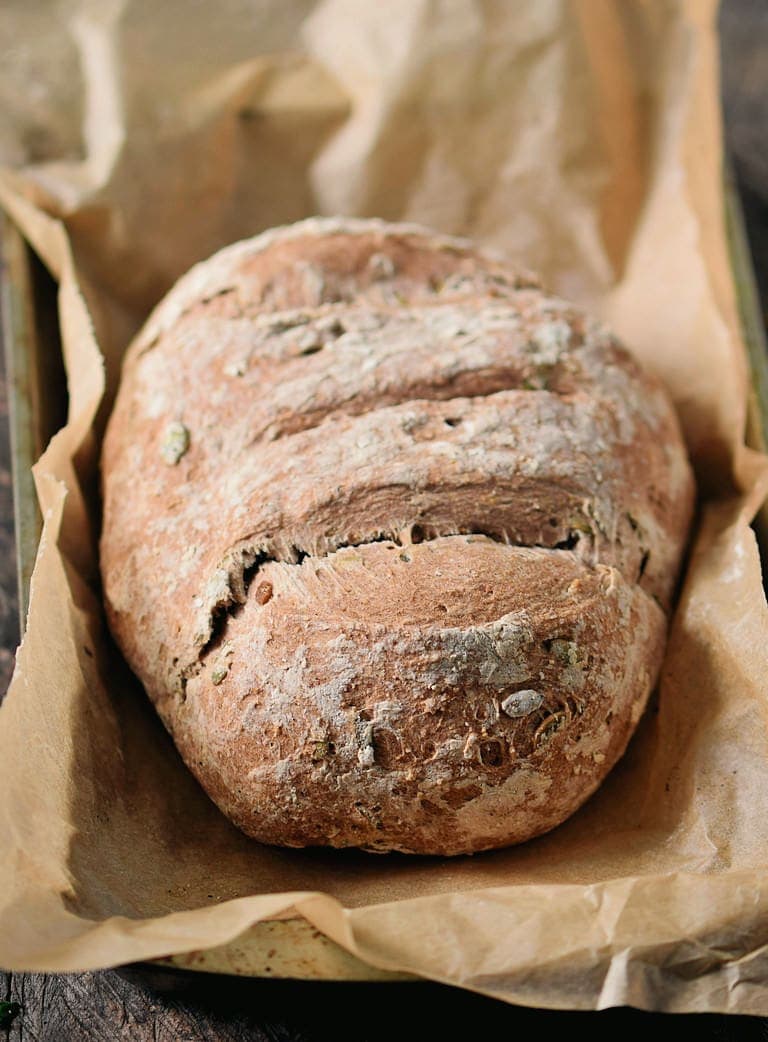
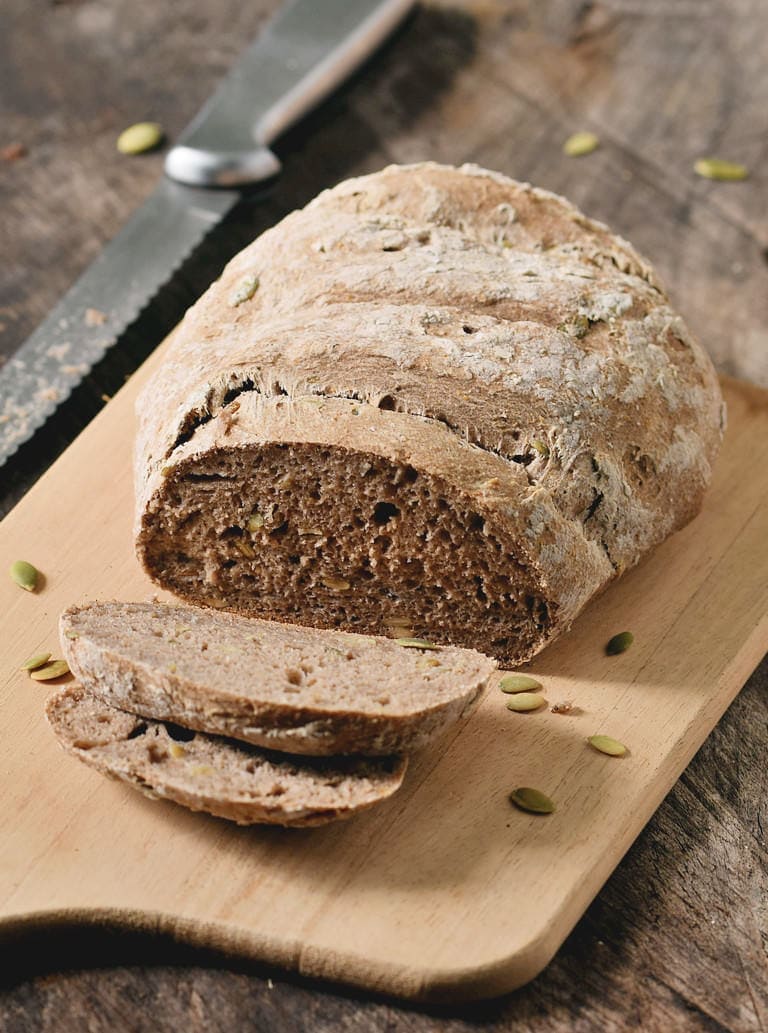
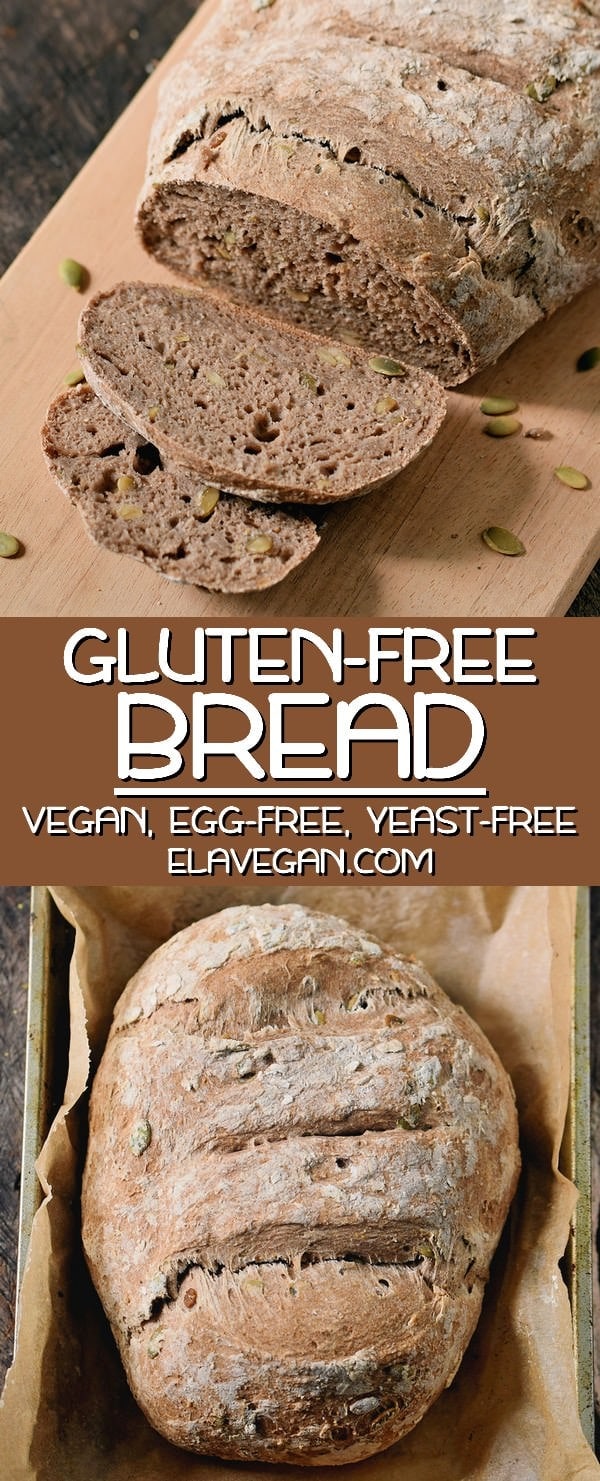
This is the best homemade gluten-free vegan bread recipe which is egg-free, dairy-free, yeast-free, and nutritious! This German bread is actually healthy since it contains psyllium husk powder. It’s crispy on the outside and soft on the inside!
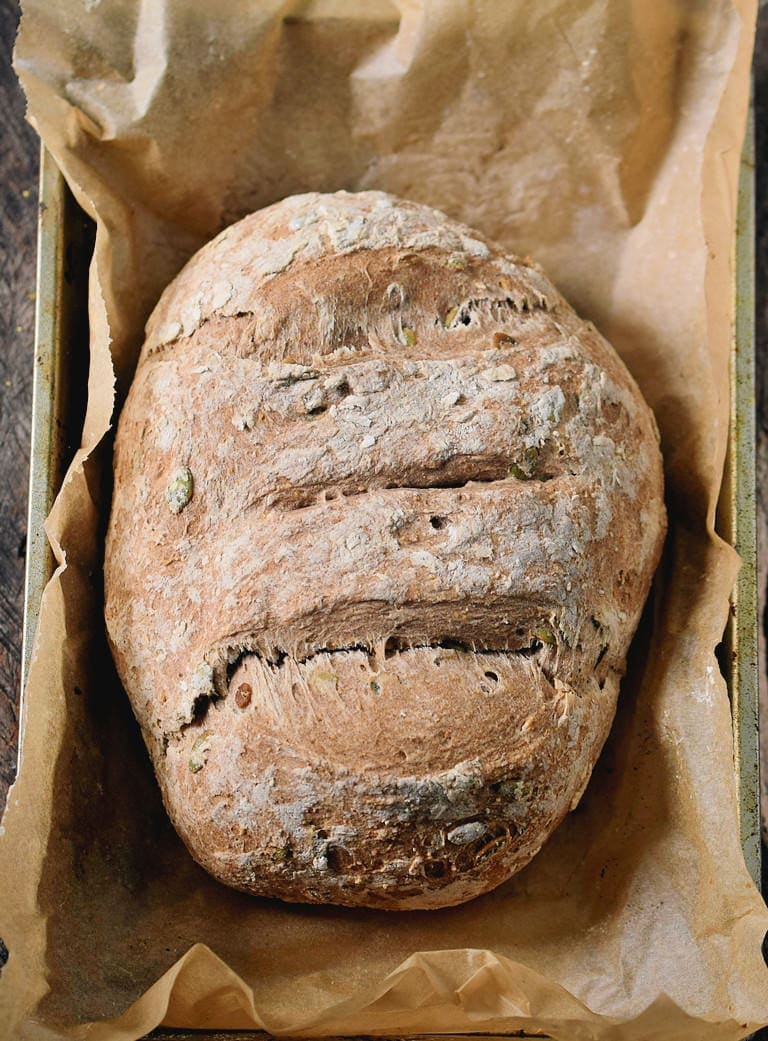
Homemade Gluten-Free Vegan Bread
I cannot tell you how many times I tried making the perfect gluten-free vegan bread… Actually, I lost count how many times I ended up throwing the towel because it’s damn hard to create good gluten-free bread without eggs.
But since I can be quite stubborn (haha) I actually never gave up and continued with the recipe testing…
Psyllium Husk Powder
One day, I started experimenting with gluten-free pizza crust that contains psyllium husk powder. The recipe turned out so good, that I got intrigued.
To make a long story short, I made an online search about homemade gluten-free vegan bread + psyllium husk and found a couple of different recipes that were using huge amounts of psyllium husk powder in their bread recipes.
One recipe was from a German blogger, and she inspired me to give psyllium husk a try. I tweaked her recipe and used a different flour blend and the bread turned out amazing!
I was shocked by how great it turned out, especially since the bread is wheat-free (and therefore gluten-free), and egg-free (vegan)! It did rise, even though it doesn’t contain yeast and it actually looked like German bread from a bakery.
Conclusion: Psyllium husk powder is a godsend for gluten-free vegan baked goods. It’s also very healthy, especially for our gut! So please do yourself and favor and buy it or order it online. It’s cheap and absolutely amazing!
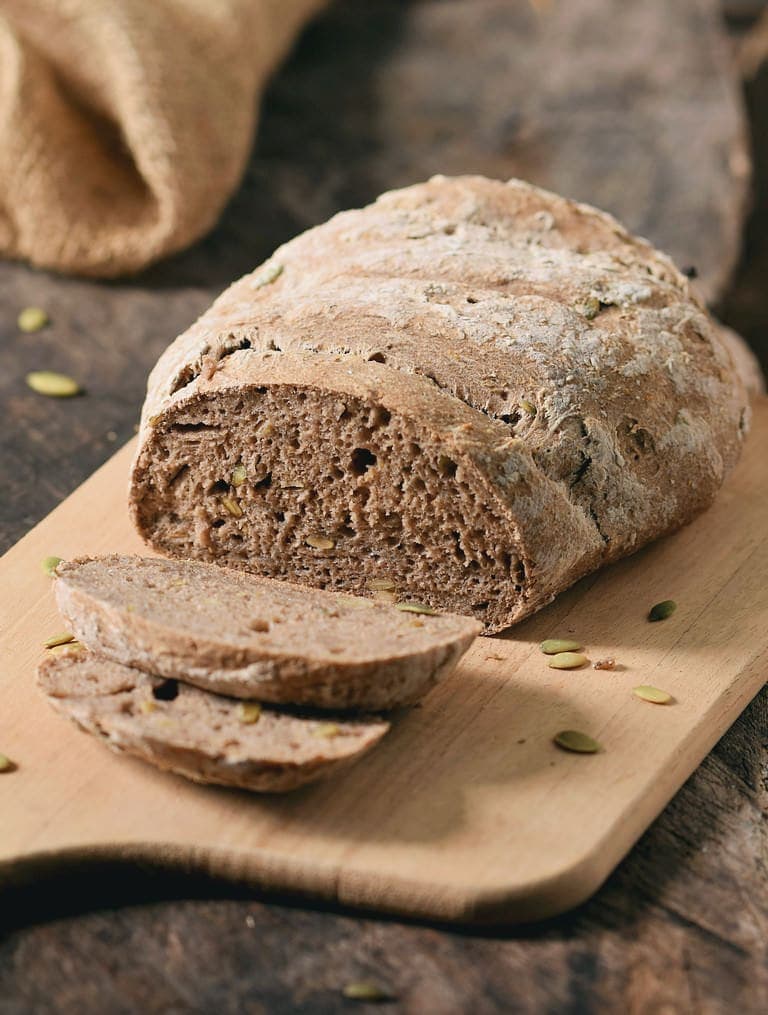
How To Make Gluten-Free Bread?
Check the video in the post to see how I made this amazing bread.
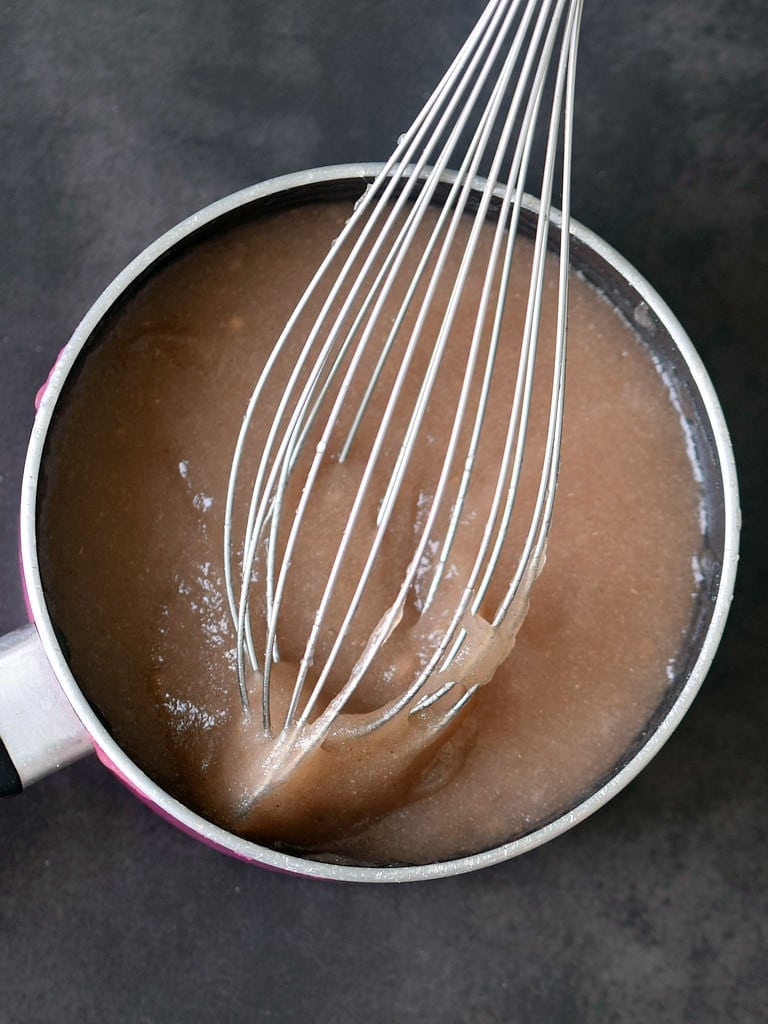
Step 1: Make the psyllium husk gel first. Mix the psyllium husk powder and water in a bowl. Try to be quick, because it gels instantly, within SECONDS. I always use a whisk, it works the best. Set aside and measure the dry bread ingredients in the meantime!
Step 2: It’s time to measure/weigh all dry ingredients and add them to a big bowl. You can also preheat your oven to 390 °F (ca. 200 °C) now.
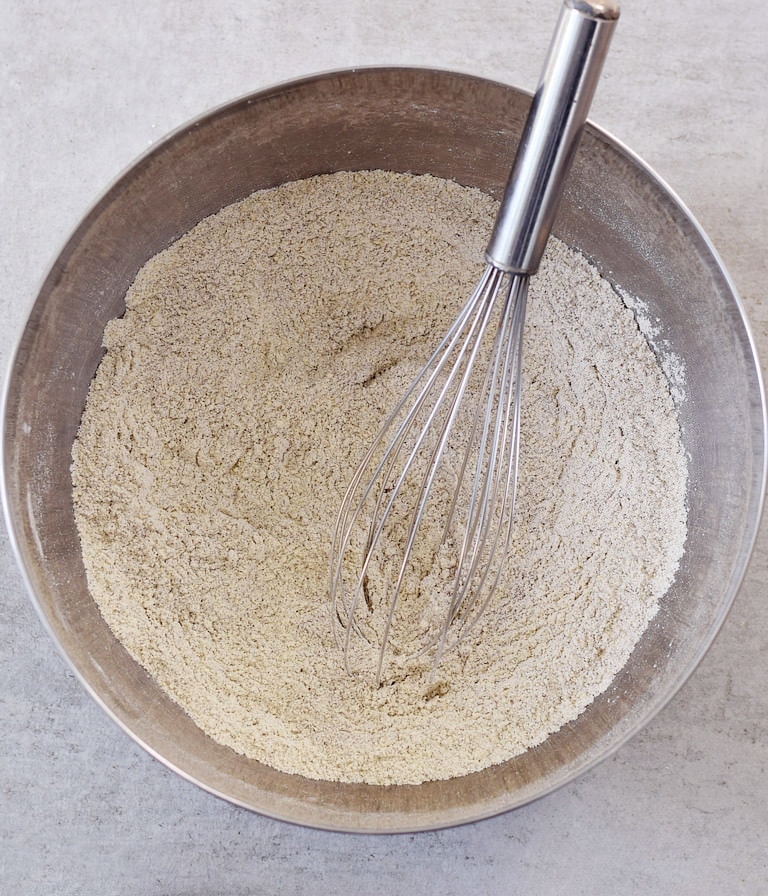
Step 3: Mix it all together: Add the psyllium gel to the big bowl and mix all ingredients with a hand mixer (use the dough hooks). You can also knead the dough with your hands or use a Kitchen Aid. It will take about 5-10 minutes until the dough comes together.
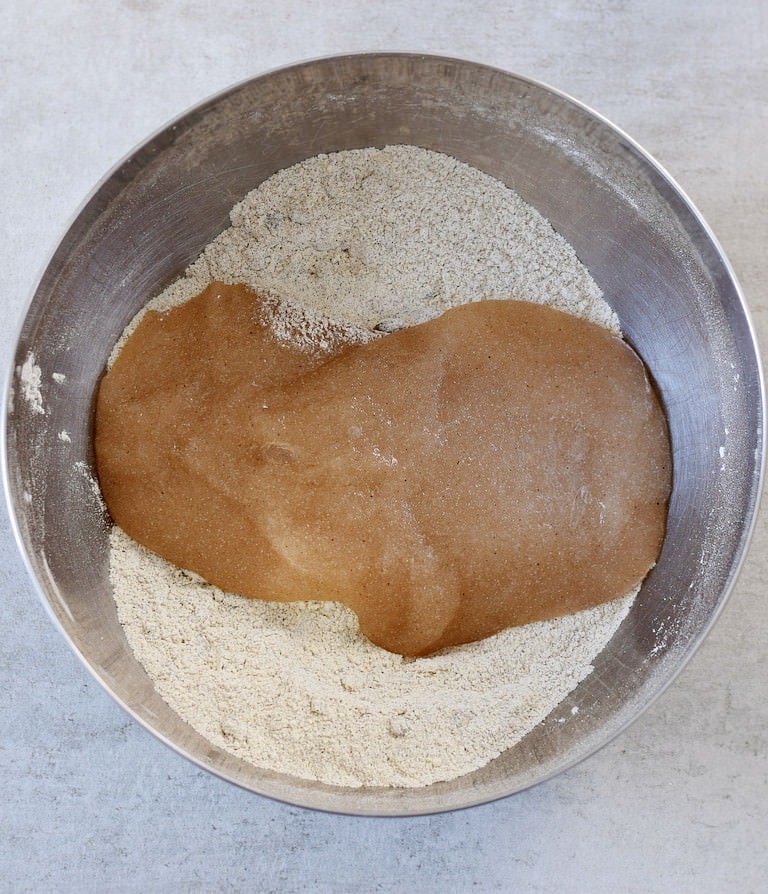
Step 4: Shape the dough and bake the bread in the oven for about 55-60 minutes. That’s it!
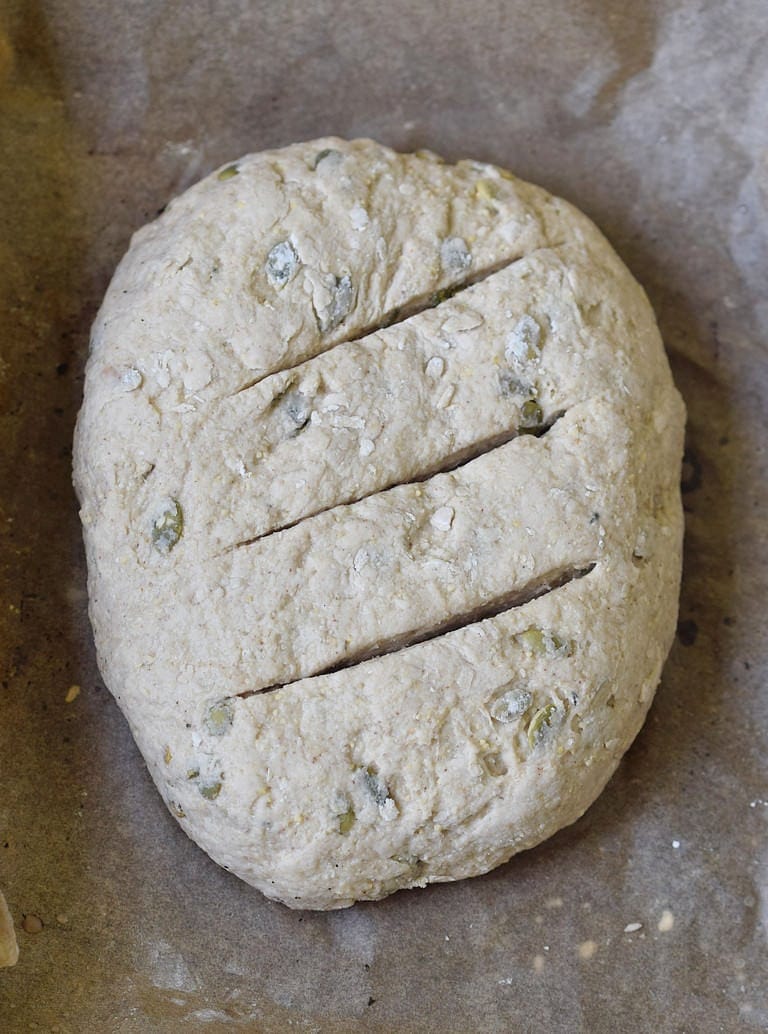
Add Seeds Of Choice
I love adding pumpkin seeds but you can also use sunflower seeds, sesame seeds or nuts of choice (e.g. hazelnuts, walnuts, cashews, almonds, etc).
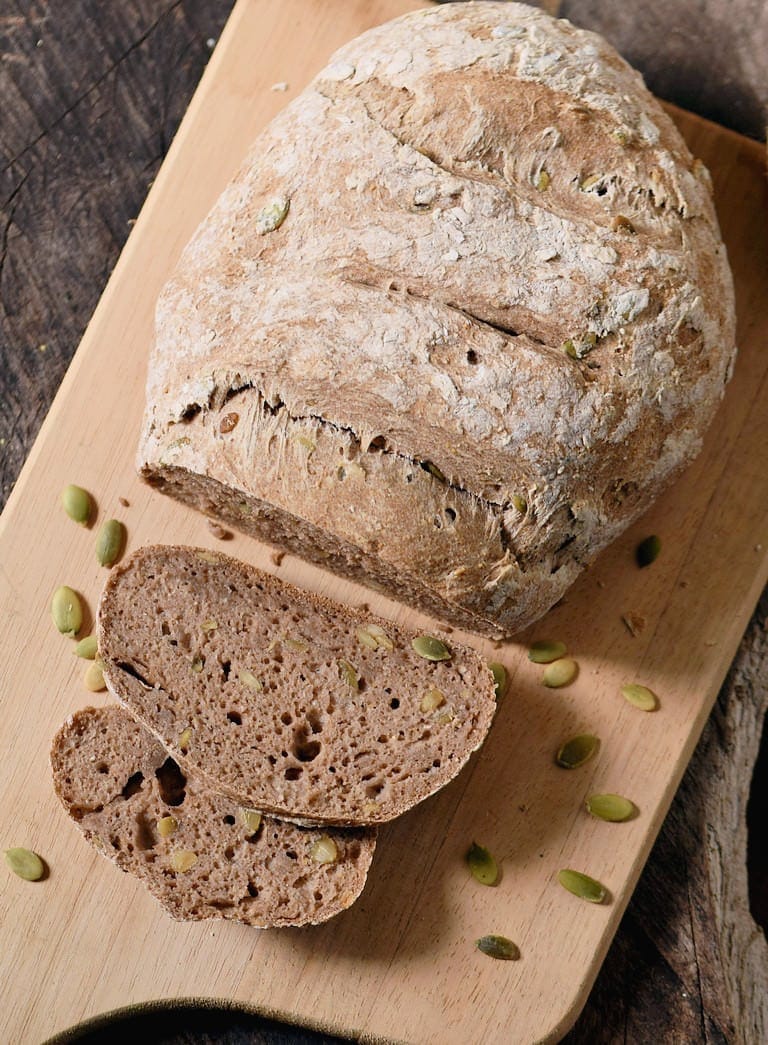
The Ingredients
You can find all the ingredients with measurements below in the recipe card! Please also check the recipe notes below where I list different substitutes.
My favorite flour combo is this:
- Buckwheat flour
- Rice Flour
- Chickpea Flour
- Tapioca Flour
Recipe Notes & Substitutes
- Some readers replaced the buckwheat flour with oat flour or sorghum flour (or a combo) and the bread still turned out amazing.
- Rice flour works great in this bread recipe, but feel free to experiment with lentil flour, teff flour, sorghum flour, or quinoa flour.
- You can use arrowroot flour instead of tapioca flour/starch. Cornstarch or potato starch will most likely work as well.
- Chickpea flour is the same as garbanzo bean flour. It adds plant-based protein and I love adding it to bread. Some readers had success using oat flour instead.
- Psyllium husk powder is the most important ingredient in this recipe and cannot be subbed by any other ingredient. Make sure to use psyllium husk POWDER. If you have psyllium husk (not the powder), you can blend it in a blender or electric spice/coffee grinder until it’s a fine powder.
Can I Freeze Gluten-Free Bread?
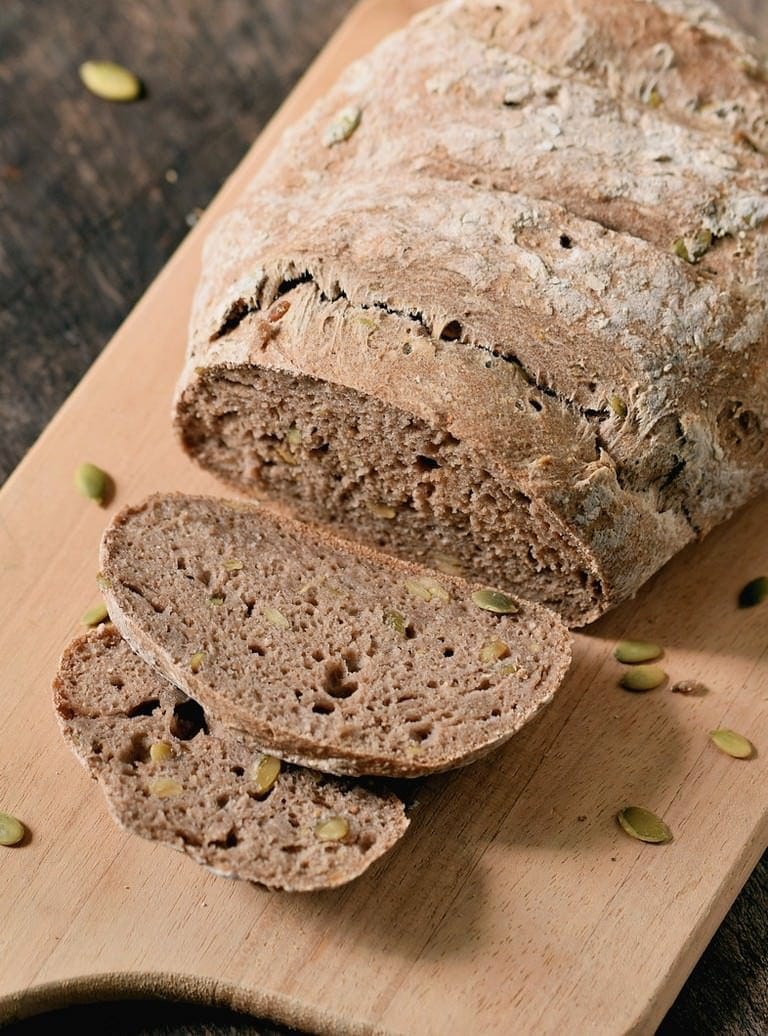
You can definitely freeze this gluten-free bread! Slice it and wrap all individual slices in wax paper or parchment paper. Put in zip lock bags and freeze for up to 3 months. Let thaw at room temperature and then toast the bread once you want to serve it.
Other Gluten-Free Bread Recipes
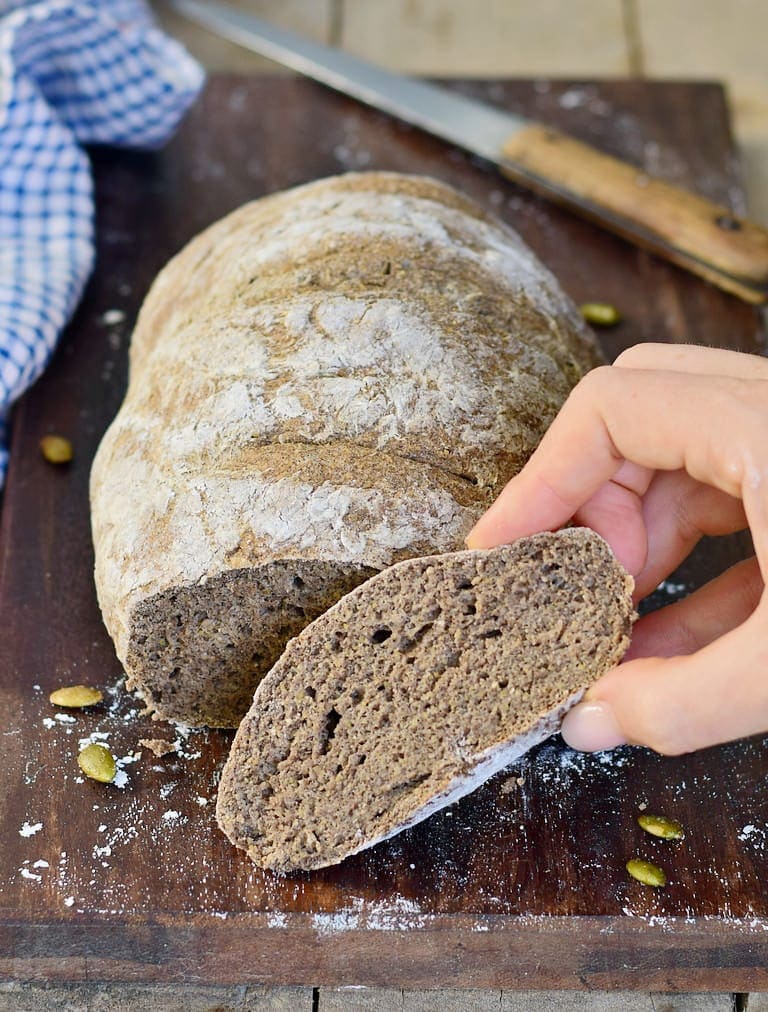
You can serve the bread with stews, soups and all kinds of comfort meals. Make sure to also check out my other vegan and gluten-free bread recipes:
- Gluten-Free Baguette
- Gluten-Free Pita
- Gluten Free Naan
- Gluten Free Buns
- Chocolate Chip Banana Bread
- Pumpkin Bread
- Moist Vegan Cornbread
- Marbled Banana Bread
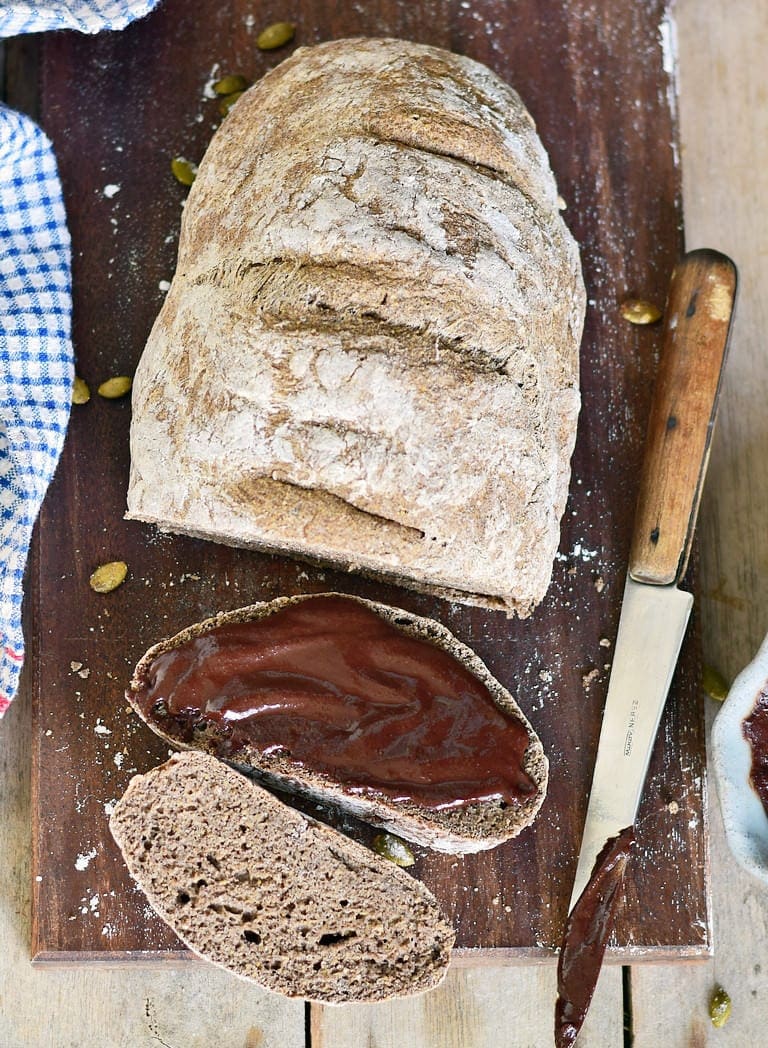
Should you give this gluten-free German bread recipe a try, please leave a comment and rating below and don’t forget to tag me in your Instagram or Facebook post with @elavegan and #elavegan because I love to see your remakes! 🙂

Gluten-Free Bread Recipe
Video
Ingredients
Dry ingredients:
- 100 g (¾ heaped cup) buckwheat flour (see notes)
- 100 g (⅔ cup) white rice flour
- 100 g (1 cup) chickpea flour
- 40 g (5 Tbsp) tapioca flour/starch (see notes)
- 1 tsp baking powder
- ½ tsp baking soda
- ¾-1 tsp sea salt
- 50 g (⅜ cup) pumpkin seeds (optional - see notes)
Psyllium mixture:
- 450 ml (1.8 cups) water
- 30 g (3 Tbsp) psyllium husk powder (see notes)
Instructions
- I recommend using the metric measurements for this recipe (grams/ml). In a bowl, combine the water with the psyllium husk powder and whisk well. It will gel instantly and become thick. Set aside for 20-30 minutes.
- Meanwhile, measure/weigh all the dry ingredients and add them to a large bowl. Preheat the oven to 390 °F (200 °C).
- Add the psyllium gel to the bowl and knead the ingredients with a hand/ stand mixer (use a dough hook). You can also knead the dough with your hands. It will take about 5-10 minutes for the dough to come together.
- If the dough appears too wet, sprinkle it with 1-2 Tbsp tapioca flour. If it feels too dry, add a little water.
- Shape the dough into a round or rectangular loaf and place it on a baking sheet lined with parchment paper (I sprinkled the paper with a bit of tapioca flour).
- Bake for 50-60 minutes. Let the bread cool completely, then slice and enjoy. The bread freezes well, for up to 3 months!
Notes
Video Of The Recipe
- Psyllium husk powder is the most important ingredient in this recipe and cannot be substituted by any other ingredient. Make sure to use psyllium husk POWDER. If you have whole psyllium husk (not the powder), you can blend it in a blender or electric spice/coffee grinder until it's a fine powder.
- A few people mentioned a weird smell in the bread (I didn't, and most other people didn't either), however, I received a few helpful comments.
- You can use whole-grain buckwheat flour or regular, both are fine. Some people replaced the buckwheat flour with oat flour or sorghum flour (or a combo) and the bread still turned out amazing.
- Rice flour works great in this bread recipe, but feel free to experiment with lentil flour, teff flour, sorghum flour, or quinoa flour.
- You can use arrowroot flour instead of tapioca flour/starch. Cornstarch or potato starch will most likely work as well.
- Chickpea flour is the same as garbanzo bean flour. It adds plant-based protein and I love adding it to bread. Some readers had success using oat flour instead.
- Please don't compare this bread with wheat bread which contains gluten and yeast or a gluten-free bread which was made with eggs and yeast. It's hard to make a gluten-free, yeast-free, vegan bread, but this is the best recipe I have tried so far, and it turns out amazing every time! Depending on the flour mixture, the bread might end up more fluffy or dense.
- Pumpkin seeds: You can use sunflower seeds instead, however, they will turn green due to a chemical reaction with the baking soda/powder. This is perfectly fine and shouldn't concern you.
Nutrition information is an estimate and has been calculated automatically
Equipment
 „Simple and Delicious Vegan“ Cookbook by ElaVeganCLICK HERE to order!
If you are using Pinterest, feel free to pin the following photo:
I love this recipe and make it regularly with a bunch of different variations. I can recommend this fruit and nut bread variation that I make regularly. Mix the following spices with the dry ingredients: half a teaspoon of cinnamon, a quarter tsp of nutmeg, cardamom, powdered ginger. After making the dough, add this to the mix. A handful of pecans or walnuts, 8 sulphate free apricots., a handful of currants. .
That sounds absolutely amazing, Emma! 😍
I love the idea of turning it into a fruit and nut bread—those warm spices with the apricots and nuts must make it so cozy and flavorful. Thank you so much for sharing your variation! 🧡
So surprised by this recipe! Like seriously amazing
Do you know if cooking it in a loaf tin would still work?
Yay, so glad you loved it, thank you, Laura! 🤩
And yes, you can definitely try baking it in a loaf tin! Just make sure to lightly oil or line the tin so it doesn’t stick. The baking time might be slightly longer depending on the depth of your tin—I’d check around the 60-minute mark and go from there. Let me know how it turns out! 😊
I.have rheumatoid arthritis and needed a exactly this bread recipe. I made it and it turned out beautifully. How can I make it a bit less dense?
Thank you for sharing this.
Vish
Hi Vish, I’m so glad the bread turned out beautifully and that the recipe is helpful for you! To make it a bit less dense, here are a few tips you can try:
1. Sift the Flours
Sifting the dry ingredients can help incorporate more air, resulting in a lighter texture.
2. Use Slightly Less Psyllium Husk Powder
Psyllium gives structure but can also make the bread more dense. Try reducing it to 25–27 g and see how the texture changes.
3. Add a Bit More Baking Powder
Increasing the baking powder slightly (e.g., to 1½ tsp) can improve rise and lightness. Make sure your baking powder is fresh, too!
4. Don’t Overmix the Dough
Mix just until everything is combined. Overworking the dough can make it heavier.
5. Try Adding a Touch of Apple Cider Vinegar
2-3 tsp of apple cider vinegar can react with the baking soda to create a better rise and fluffier crumb.
Let me know if you try one of these, I’d love to hear how it turns out!
Hi Ela
This is Vish. Thank you for your prompt response to my question and for the 5 suggestions for decreasing the density of the bread.
I used the first four suggestions together (skipped apple cider) and the bread is indeed less dense! The taste was not compromised in any way. Thank you!
Next time I will try the cinnamon raisin another reader suggested.
Keep up the good work 🙂
Vish
So happy to hear that! 🙂
I just made this today. It came out so good. I was worried that the dough was very watery and sticky. Sticky all on my fingers. So, I used rice flour may be 3-4 more tablespoons . Also my psyllium husk had sugar already mixed in it, but I actually liked the taste. Will definitely make it again. May be every week from now on. I wonder if I can double the recipe.
So happy you liked it, Rashmi! 😊 Just a heads-up: if your psyllium husk had sugar in it, it wasn’t 100% pure, that’s likely why the dough turned out sticky. For the best results, make sure to use pure psyllium husk powder with no additives!
And yes, if you double the recipe, it’s better to make two smaller loaves instead of one big one. That way it bakes more evenly and doesn’t end up gummy in the middle. 💚
Thanks I will try pure psyllium husk next time.
Omg help, I have made this countless times but can’t understand why unlike everyone else its NOT working, I have followed the recipe without changing but the mixture is always like cake mix & so wet it won’t mold into a loaf & doesn’t rise, desperate for it to be great like everyone says as I’ve made & only eaten fermented buckwheat bread for years & sick of it cause it’s not that great.
Sounds like you’re either not using psyllium husk powder or you’re not following the metric measurements—is that right?
After 4+ years of making this bread I can confidently say it’s one of the best bread recipes ever created. I have found that so long as the chickpea flour is kept at 1/4-1/3 of the blend, the remaining 2/3-3/4 blend is very forgiving with subs. Oat, rice, buckwheat, sorghum, quinoa, amaranth… I’ve tried many and they all come out amazing. I’ve turned this into cinnamon raisin bread, chocolate almond bread, and hot cross buns, and all have been great. I like to premix the dry ingredients and keep it in jars ready to mix up and bake as needed.
Wow, thank you so much for sharing your experience, Casey! After 4+ years, that kind of feedback is incredibly valuable. It’s amazing to hear how versatile and forgiving the recipe has been for you! Your variations like cinnamon raisin, chocolate almond, and even hot cross buns sound absolutely delicious! Premixing the dry ingredients in jars is such a smart and time-saving idea, too. Thanks again for your thoughtful input! 🙏
Great consistency and taste! Thank you for this recipe for my toddler who we have just found out is celiac! And we are vegan so this has been a life saver
I’m so glad to hear that! ❤️ It makes me really happy that the recipe worked so well for your little one. 🙂
thanks for this recipe. it looks great and I’m dying to try it. is it good for ppl who have high cholesterol pls?
You’re very welcome, Cats, I’m so glad the recipe caught your eye! It might be a good option for people with high cholesterol, since it’s plant-based, naturally cholesterol-free, and made with fiber-rich ingredients like psyllium husk and chickpea flour. Those elements are often part of a heart-healthy diet. That said, everyone’s health needs are different, so it’s always best to check with a doctor or dietitian if you’re unsure. 🙂
Hi! this was delicious! I replaced the buckwheat and rice flour with oat flour and it turned out awesome
thank you for the recipe!
Hi! So happy to hear you liked it, Mary! 😊 Oat flour sounds like a delicious swap, thanks for sharing your version, and I’m really glad it worked out so well. 🙂
this is a top notch recipe! I used sorghum flour instead of buckwheat flour and added sesame seeds, caraway and fennel. seeds. in all the GF breads I have made used psyllium husk instead of the powder and it can be gummy at times. the powder seems like the magic in getting this bread perfect. is there any reason why recipes that use the husk couldn’t be made with powder instead? if so, how to adjust the recipe?
Thank you! I’m so glad you liked the recipe, your version with sorghum flour and those aromatic seeds sounds delicious!
Great question about psyllium: Yes, in many recipes you can substitute psyllium husk powder for whole husks, but it’s best to use metric measurements for accuracy. The powder is much finer and more concentrated, so exact gram amounts are key to getting the right consistency (which is why I always include them). This is especially important in gluten-free baking, where even small variations can really affect the final texture.
Thanks for the information, and I completely agree that metric units and a scale or SO crucial in GF baking!
You are very welcome, Natalia. 🙂
I am obsessed with this bread for my wheat-allergic toddler and my only issue is needing more! Have you ever doubled the quantity? If so what would do you adjust the baking specs to?
Hi Holly! Yes, I’ve found it works really well to just double the recipe and make two loaves. You don’t need to adjust the baking temperature or time much, just bake them side by side. 🙂
I have been making this over and over for months now, and had to post a comment to thank yo. It is the healthiest, easiest, most delicious gluten-free bread that I have ever encountered. And high in protein too and no gums just fabulous fibre
Thank you so much!
That means so much – thank you for taking the time to leave a comment! 🥹 I’m so happy to hear the bread has become a regular in your kitchen. Thanks again!
Their bread is fire! 👏👏👏🔥🔥🔥 Went to get the weird flours today to make it and it’s Soo moist and delicious. Just came out of oven, so curious to see how it is tomorrow and over a few days as it comes to room temp. Thank you Ela for all your efforts creating this amazing recipe 👏👏👏👏🙏🙏🙏
Yesss, love the enthusiasm, Robin! So glad you went on the flour mission and it paid off! Thank you for the awesome feedback and good vibes! 🥰
Hello- I don’t have chick pea flour-any substitute for that?
Yes, you could try quinoa, sorghum, or millet flour.
After discovering a load of intolerances recently food had started to look a bit bleak for my husband. He LOVES bread. I can even tell you how grateful we are that you created and shared this receipe. Literally a game changer. Thank you very much.
That means so much – thank you for sharing, Heather! I’m truly happy it could bring a bit of joy (and bread!) back to your husband’s plate. Wishing you both lots of delicious, feel-good meals ahead. 💛
Excellent bread! Thank you for sharing this recipe.
So happy to hear that you enjoyed it, Ljubica! 😊 Thanks for trying the recipe and taking the time to leave a kind note — it means a lot! 💛
Thank you for this recipe. I followed the recipe as written except that I used Brown Rice Flour instead of white rice flour and I baked it in a bread tin. Totally delicious. Next time I will substitute the Besan flour with Sorghum as I found it a bit of a stronger taste..
You’re very welcome, and thank you for your lovely feedback, Grace! 😊 So glad to hear the recipe turned out delicious with your substitutions. Brown rice flour is a great swap — and baking it in a bread tin sounds perfect! Let me know how it turns out with sorghum flour next time. 💛
I’m wondering if instead of the different flours i’if i can just use gf baking flour which is a blend?
Yes, some readers tried out the following: “300g of bobs red mill and 40g of tapioca starch”.
Hello do you know any recipe for gluten free, yeast free, egg free and dairy free that can be made in an air fryer. Can we make the above in an air fryer?
thank you
Hey Sally, I haven’t tried making this recipe in an air fryer yet, but I believe it could work really well! The air fryer is great for achieving a nice crisp on the outside while keeping the inside soft. If you give it a try, let me know how it turns out! 😊
thank you ❤️
Hi, unfortunately my dough didn’t seem to come together in the mixer with the dough hook! I started to add a little tapioca flour but this didn’t seem to make much difference. I didn’t want to over kneed so took it out and shaped it by hand. It’s in the over I’ll let you know how it goes, but do you know where I may have gone wrong???
Thanks 😊
Hi Katie! It sounds like your psyllium gel might have been too thick, which made the dough too dry. Instead of adding more tapioca, a small splash of water (1–2 tablespoons) would have probably helped more.
However, you did the right thing by shaping it by hand and baking — it often still turns out great! Let me know how it baked up! 😊
i made it in air fryer – put on 170 for 30mins and the last 7 or 8 at 165 it was perfect!
Love that! Thanks for sharing your air fryer times – super helpful for others. So glad it turned out perfect! 😊💛
Love this bread !!!!
So glad you love it, Kasha! 😍
This is a wonderful recipe and I really appreciate having access to it. I actually used the quantities in the recipe but turned it into two large pizza bases. I baked the pizza bases for about 20 minutes initially and then topped with lots of veggies, pineapple and herbs and nutritional yeast. I then cooked my pizza for about 15 minutes. It was extremely filling and nice.. I will try making a loaf next.
That sounds amazing, Alison! 😍 Turning it into pizza bases is such a great idea, and your toppings sound delicious! Hope you love it as a loaf too—let me know how it turns out! 😊