

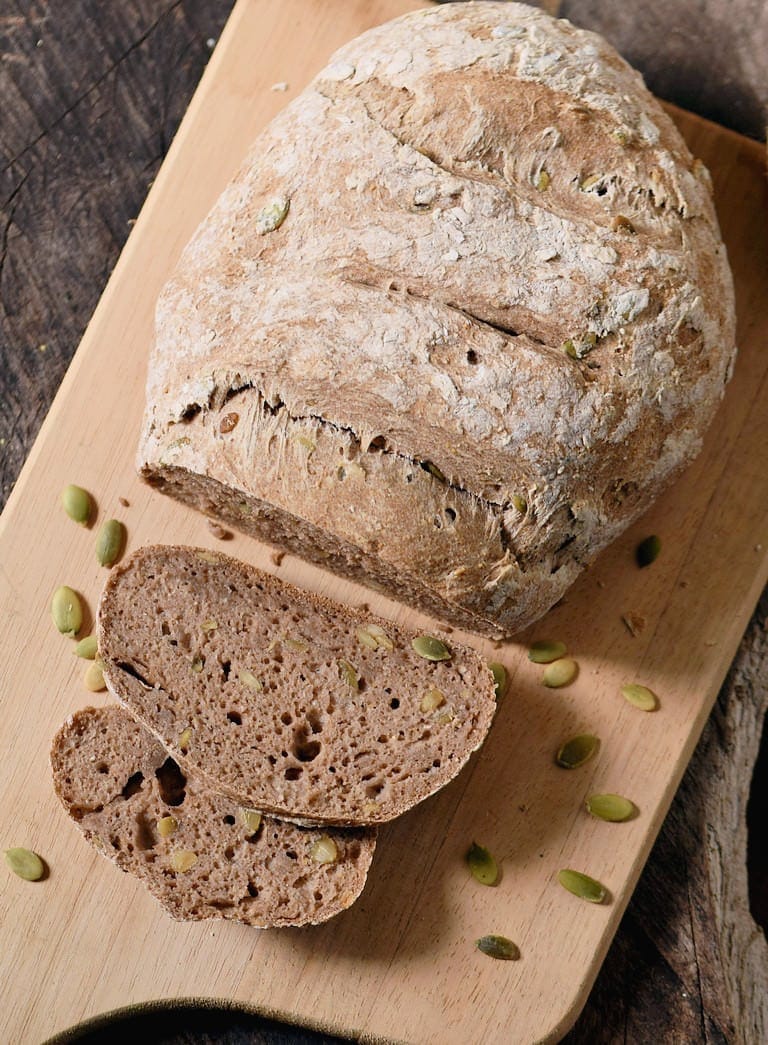
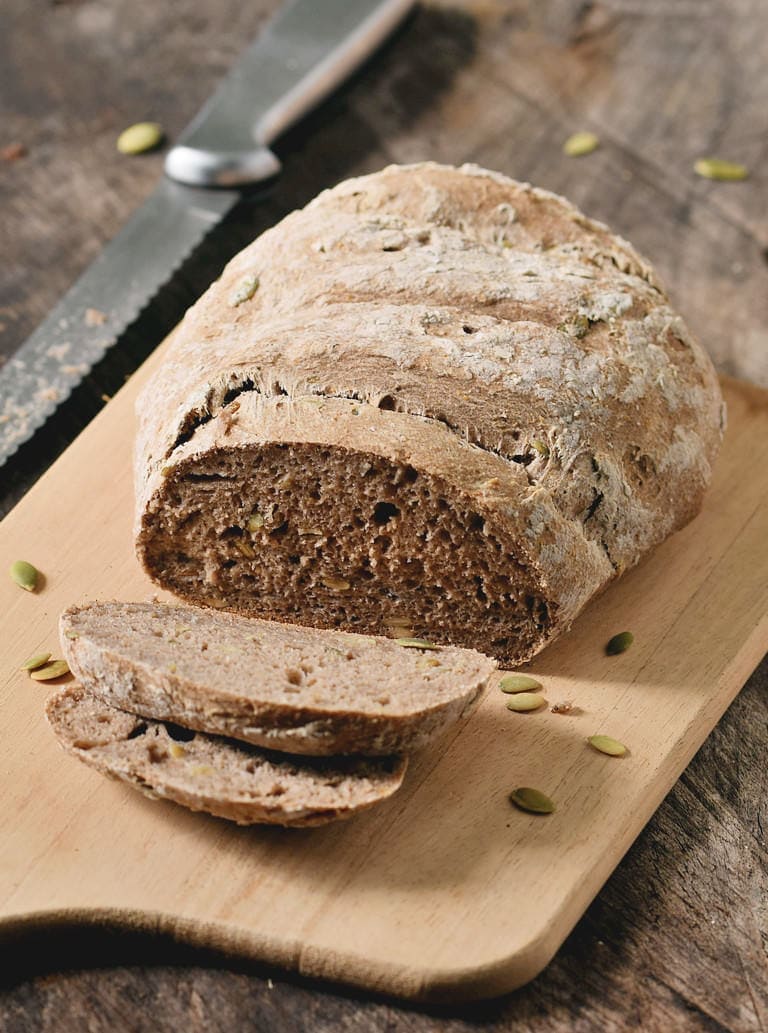
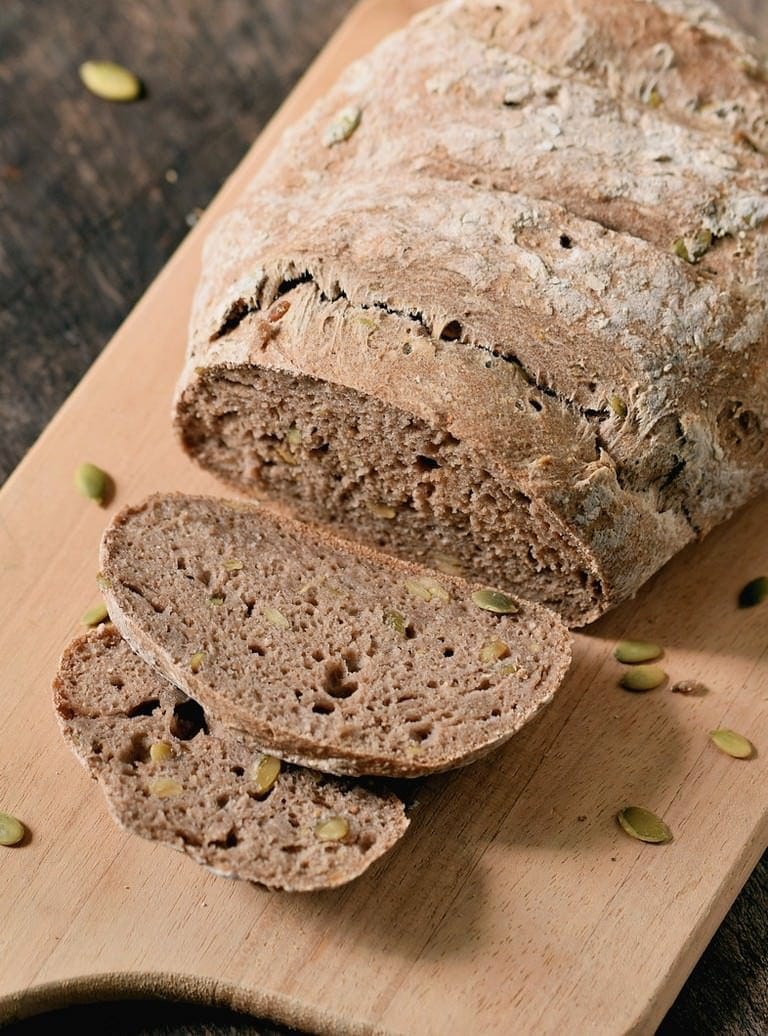
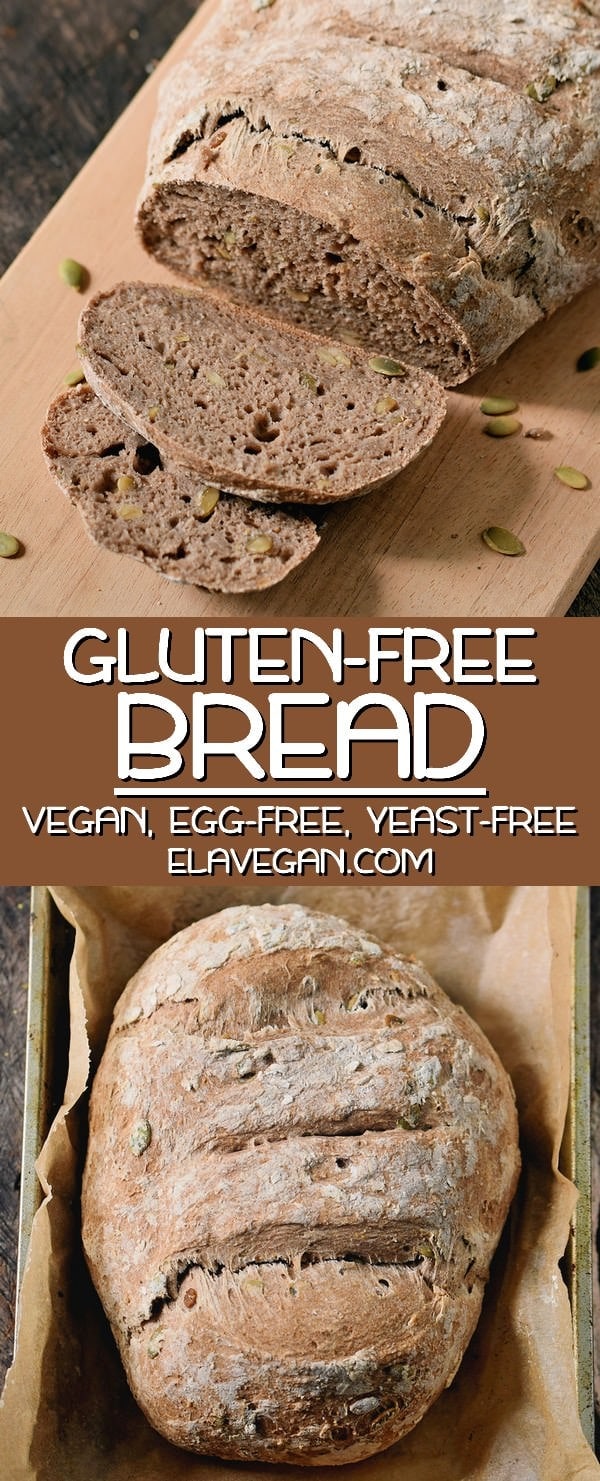
This is the best homemade gluten-free vegan bread recipe which is egg-free, dairy-free, yeast-free, and nutritious! This German bread is actually healthy since it contains psyllium husk powder. It’s crispy on the outside and soft on the inside!
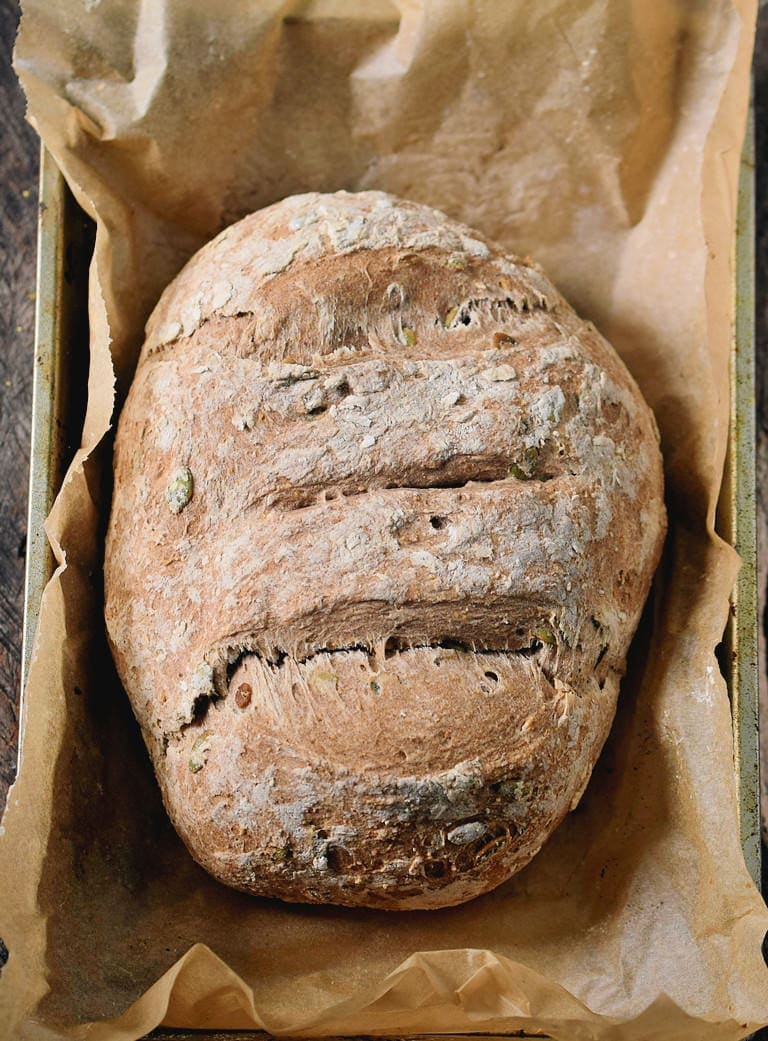
Homemade Gluten-Free Vegan Bread
I cannot tell you how many times I tried making the perfect gluten-free vegan bread… Actually, I lost count how many times I ended up throwing the towel because it’s damn hard to create good gluten-free bread without eggs.
But since I can be quite stubborn (haha) I actually never gave up and continued with the recipe testing…
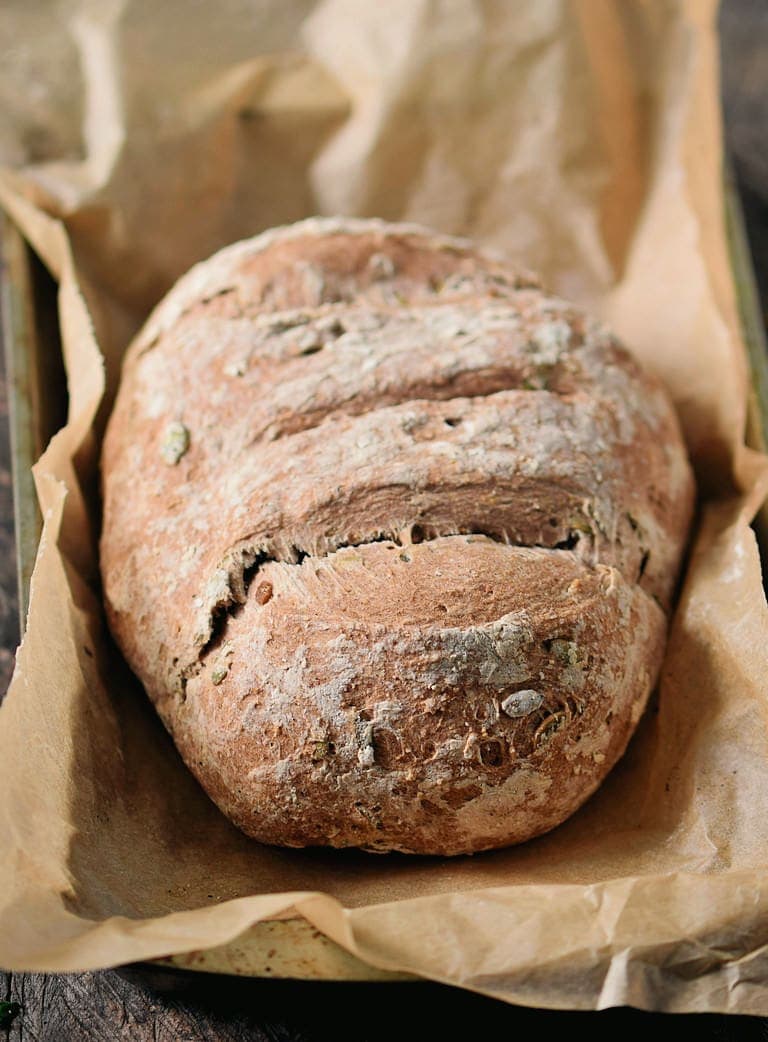
Psyllium Husk Powder
One day, I started experimenting with gluten-free pizza crust that contains psyllium husk powder. The recipe turned out so good, that I got intrigued.
To make a long story short, I made an online search about homemade gluten-free vegan bread + psyllium husk and found a couple of different recipes that were using huge amounts of psyllium husk powder in their bread recipes.
One recipe was from a German blogger, and she inspired me to give psyllium husk a try. I tweaked her recipe and used a different flour blend and the bread turned out amazing!
I was shocked by how great it turned out, especially since the bread is wheat-free (and therefore gluten-free), and egg-free (vegan)! It did rise, even though it doesn’t contain yeast and it actually looked like German bread from a bakery.
Conclusion: Psyllium husk powder is a godsend for gluten-free vegan baked goods. It’s also very healthy, especially for our gut! So please do yourself and favor and buy it or order it online. It’s cheap and absolutely amazing!
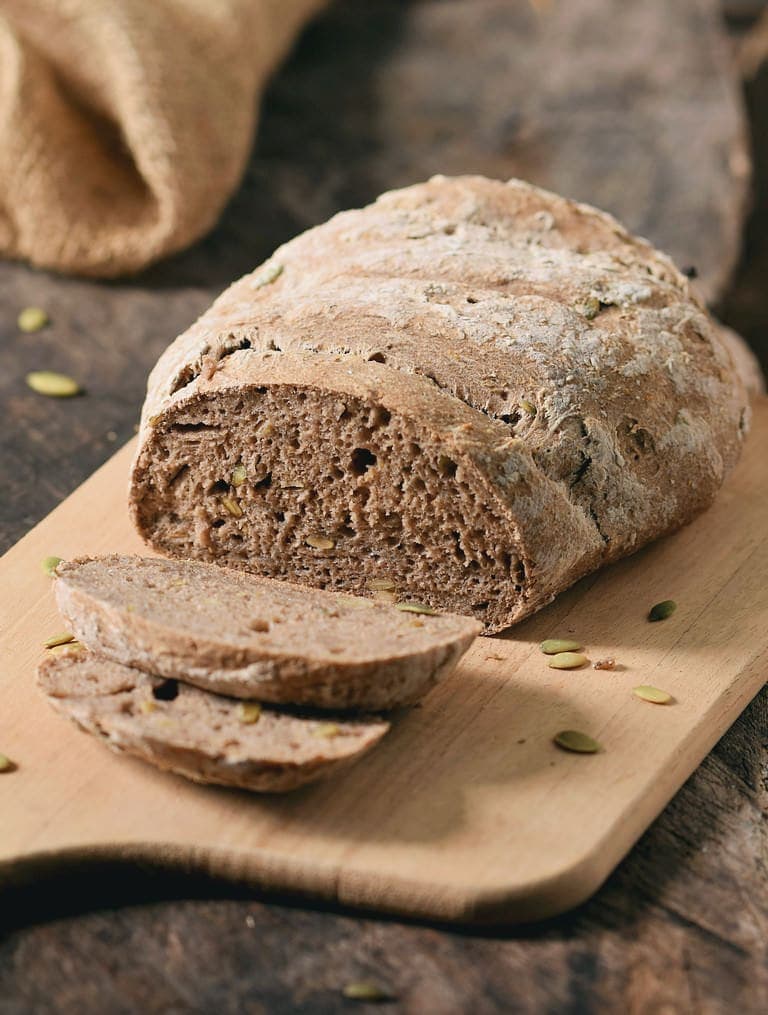
How To Make Gluten-Free Bread?
Check the video in the post to see how I made this amazing bread.
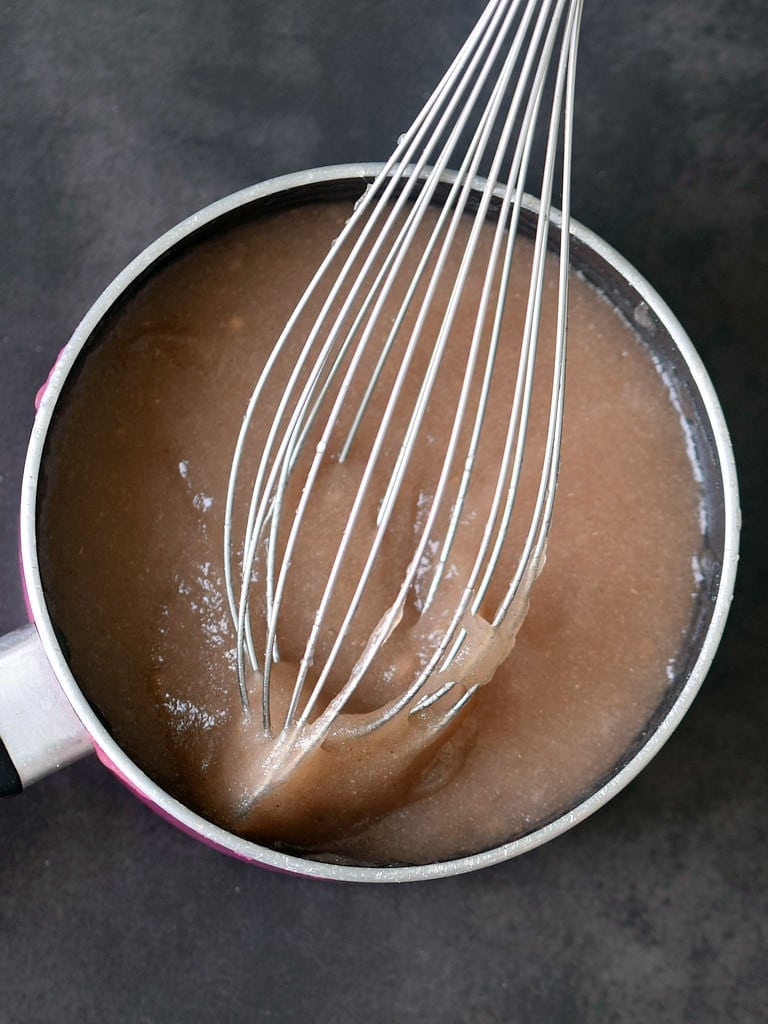
Step 1: Make the psyllium husk gel first. Mix the psyllium husk powder and water in a bowl. Try to be quick, because it gels instantly, within SECONDS. I always use a whisk, it works the best. Set aside and measure the dry bread ingredients in the meantime!
Step 2: It’s time to measure/weigh all dry ingredients and add them to a big bowl. You can also preheat your oven to 390 °F (ca. 200 °C) now.
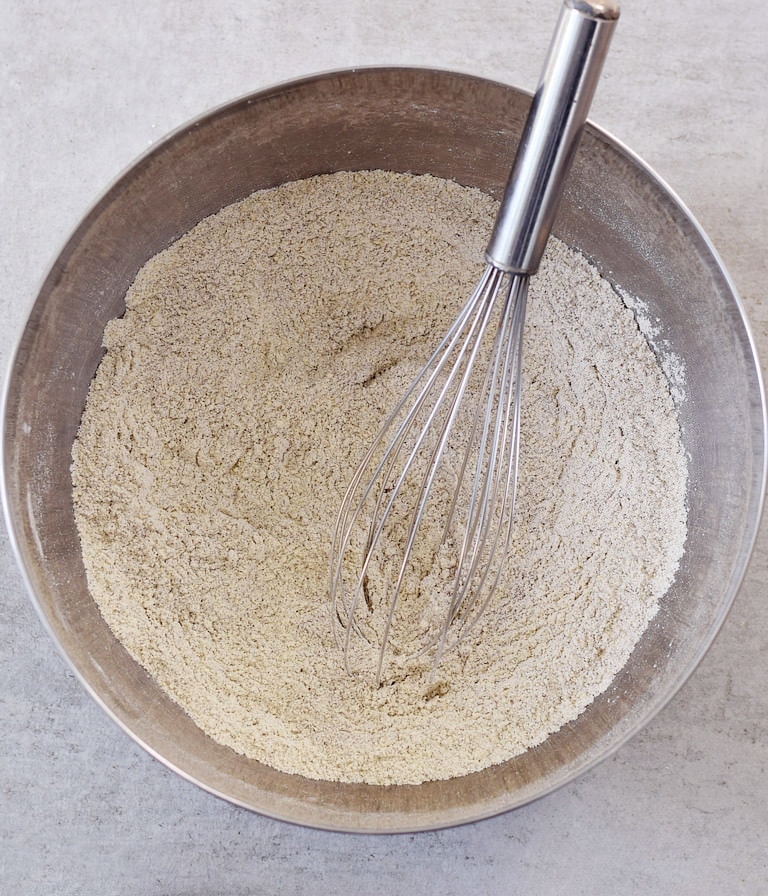
Step 3: Mix it all together: Add the psyllium gel to the big bowl and mix all ingredients with a hand mixer (use the dough hooks). You can also knead the dough with your hands or use a Kitchen Aid. It will take about 5-10 minutes until the dough comes together.
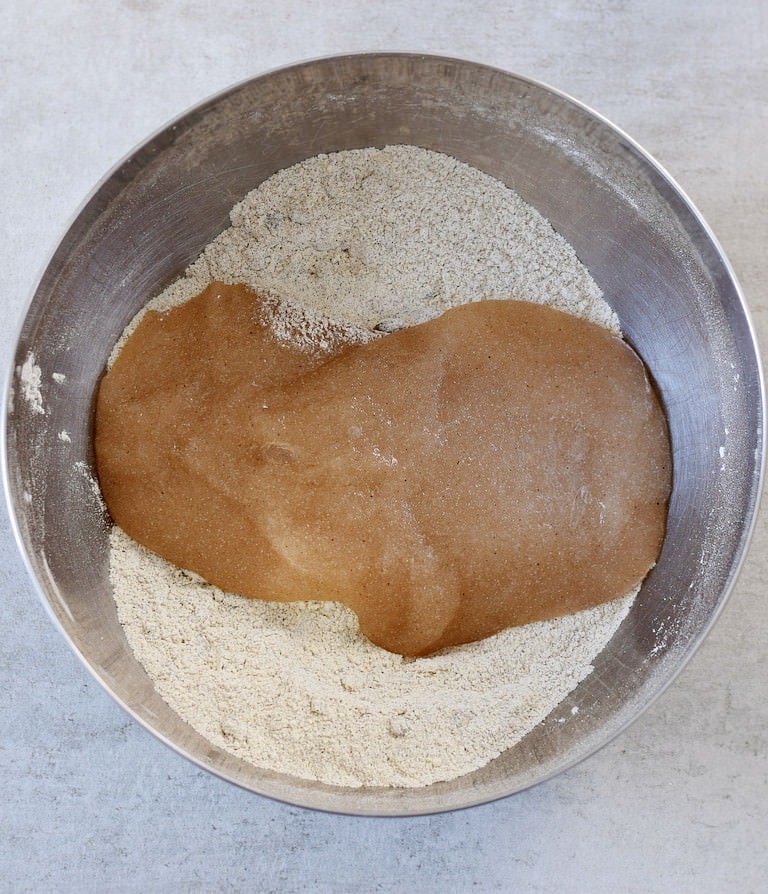
Step 4: Shape the dough and bake the bread in the oven for about 55-60 minutes. That’s it!
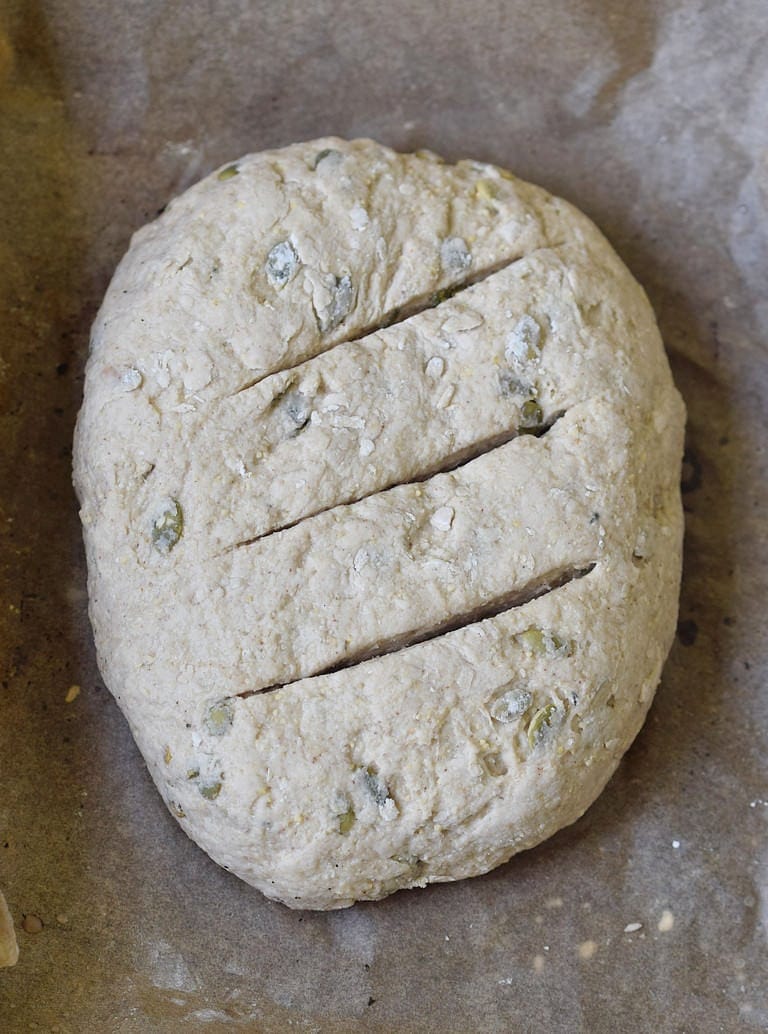
Add Seeds Of Choice
I love adding pumpkin seeds but you can also use sunflower seeds, sesame seeds or nuts of choice (e.g. hazelnuts, walnuts, cashews, almonds, etc).
The Ingredients
You can find all the ingredients with measurements below in the recipe card! Please also check the recipe notes below where I list different substitutes.
My favorite flour combo is this:
- Buckwheat flour
- Rice Flour
- Chickpea Flour
- Tapioca Flour
Recipe Notes & Substitutes
- Some readers replaced the buckwheat flour with oat flour or sorghum flour (or a combo) and the bread still turned out amazing.
- Rice flour works great in this bread recipe, but feel free to experiment with lentil flour, teff flour, sorghum flour, or quinoa flour.
- You can use arrowroot flour instead of tapioca flour/starch. Cornstarch or potato starch will most likely work as well.
- Chickpea flour is the same as garbanzo bean flour. It adds plant-based protein and I love adding it to bread. Some readers had success using oat flour instead.
- Psyllium husk powder is the most important ingredient in this recipe and cannot be subbed by any other ingredient. Make sure to use psyllium husk POWDER. If you have psyllium husk (not the powder), you can blend it in a blender or electric spice/coffee grinder until it’s a fine powder.
Can I Freeze Gluten-Free Bread?
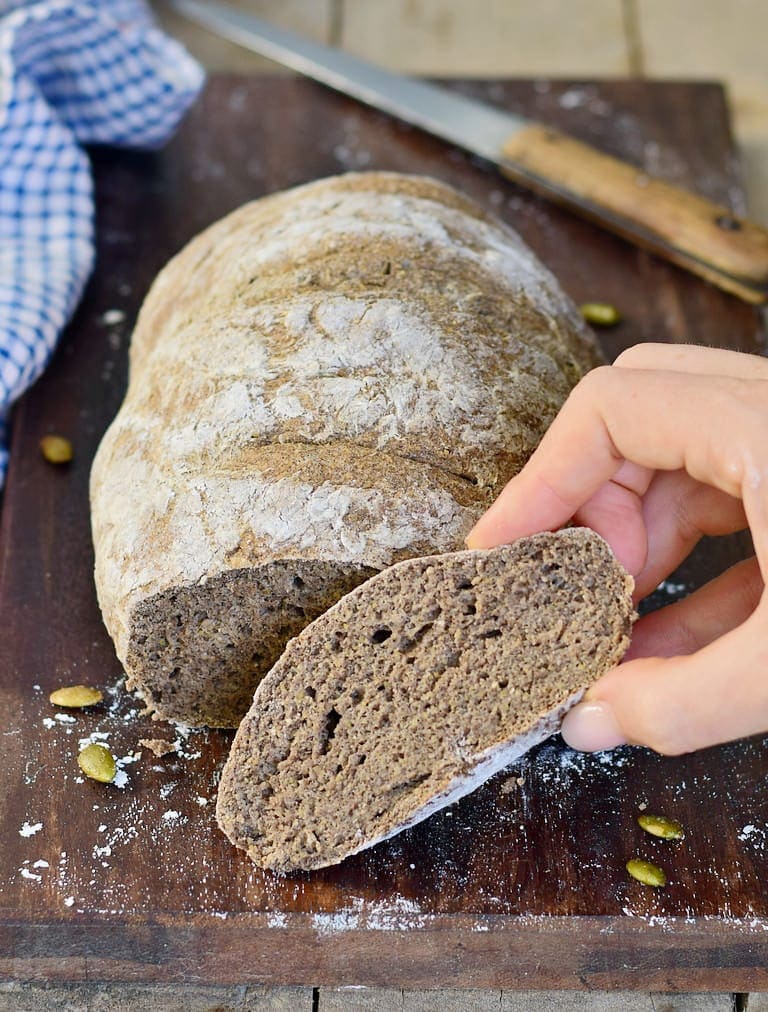
You can definitely freeze this gluten-free bread! Slice it and wrap all individual slices in wax paper or parchment paper. Put in zip lock bags and freeze for up to 3 months. Let thaw at room temperature and then toast the bread once you want to serve it.
Other Gluten-Free Bread Recipes
You can serve the bread with stews, soups and all kinds of comfort meals. Make sure to also check out my other vegan and gluten-free bread recipes:
- Gluten-Free Baguette
- Gluten-Free Pita
- Gluten Free Naan
- Gluten Free Buns
- Chocolate Chip Banana Bread
- Pumpkin Bread
- Moist Vegan Cornbread
- Marbled Banana Bread
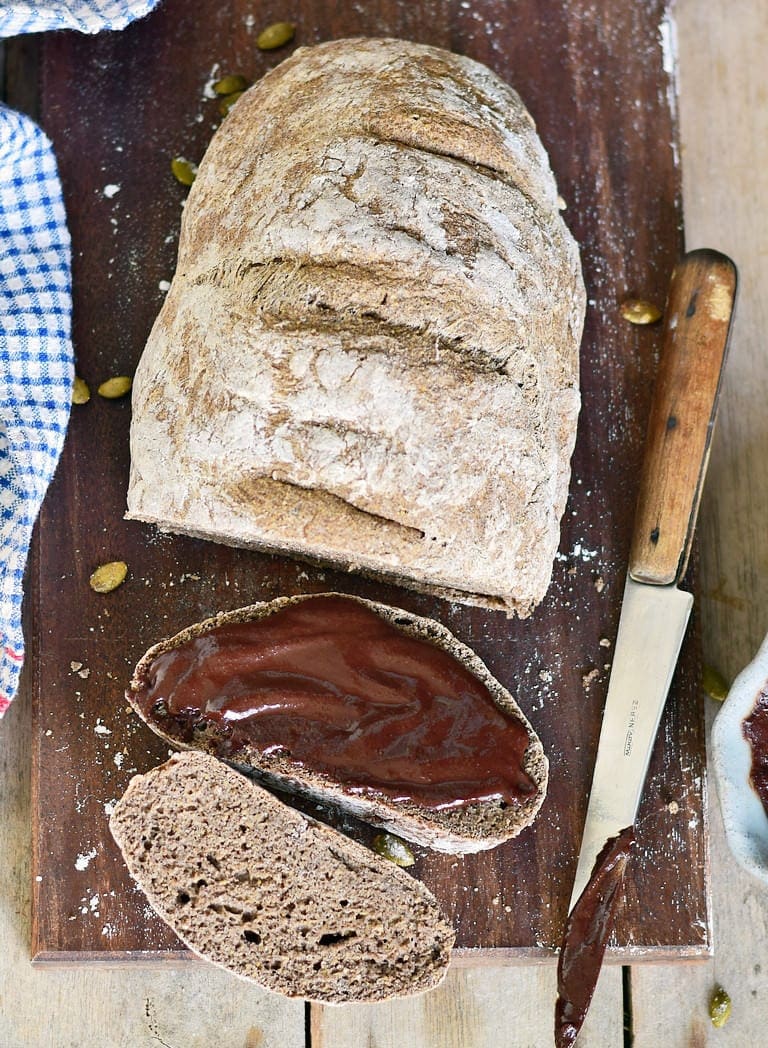
Should you give this gluten-free German bread recipe a try, please leave a comment and rating below and don’t forget to tag me in your Instagram or Facebook post with @elavegan and #elavegan because I love to see your remakes! 🙂

Gluten-Free Bread Recipe
Video
Ingredients
Dry ingredients:
- 100 g (¾ heaped cup) buckwheat flour (see notes)
- 100 g (⅔ cup) white rice flour
- 100 g (1 cup) chickpea flour
- 40 g (5 Tbsp) tapioca flour/starch (see notes)
- 1 tsp baking powder
- ½ tsp baking soda
- ¾-1 tsp sea salt
- 50 g (⅜ cup) pumpkin seeds (optional - see notes)
Psyllium mixture:
- 450 ml (1.8 cups) water
- 30 g (3 Tbsp) psyllium husk powder (see notes)
Instructions
- I recommend using the metric measurements for this recipe (grams/ml). In a bowl, combine the water with the psyllium husk powder and whisk well. It will gel instantly and become thick. Set aside for 20-30 minutes.
- Meanwhile, measure/weigh all the dry ingredients and add them to a large bowl. Preheat the oven to 390 °F (200 °C).
- Add the psyllium gel to the bowl and knead the ingredients with a hand/ stand mixer (use a dough hook). You can also knead the dough with your hands. It will take about 5-10 minutes for the dough to come together.
- If the dough appears too wet, sprinkle it with 1-2 Tbsp tapioca flour. If it feels too dry, add a little water.
- Shape the dough into a round or rectangular loaf and place it on a baking sheet lined with parchment paper (I sprinkled the paper with a bit of tapioca flour).
- Bake for 50-60 minutes. Let the bread cool completely, then slice and enjoy. The bread freezes well, for up to 3 months!
Notes
Video Of The Recipe
- Psyllium husk powder is the most important ingredient in this recipe and cannot be substituted by any other ingredient. Make sure to use psyllium husk POWDER. If you have whole psyllium husk (not the powder), you can blend it in a blender or electric spice/coffee grinder until it's a fine powder.
- A few people mentioned a weird smell in the bread (I didn't, and most other people didn't either), however, I received a few helpful comments.
- You can use whole-grain buckwheat flour or regular, both are fine. Some people replaced the buckwheat flour with oat flour or sorghum flour (or a combo) and the bread still turned out amazing.
- Rice flour works great in this bread recipe, but feel free to experiment with lentil flour, teff flour, sorghum flour, or quinoa flour.
- You can use arrowroot flour instead of tapioca flour/starch. Cornstarch or potato starch will most likely work as well.
- Chickpea flour is the same as garbanzo bean flour. It adds plant-based protein and I love adding it to bread. Some readers had success using oat flour instead.
- Please don't compare this bread with wheat bread which contains gluten and yeast or a gluten-free bread which was made with eggs and yeast. It's hard to make a gluten-free, yeast-free, vegan bread, but this is the best recipe I have tried so far, and it turns out amazing every time! Depending on the flour mixture, the bread might end up more fluffy or dense.
- Pumpkin seeds: You can use sunflower seeds instead, however, they will turn green due to a chemical reaction with the baking soda/powder. This is perfectly fine and shouldn't concern you.
Nutrition information is an estimate and has been calculated automatically
Equipment
 „Simple and Delicious Vegan“ Cookbook by ElaVeganCLICK HERE to order!
If you are using Pinterest, feel free to pin the following photo:
This is an amazing recipe. I have made my. own variation with 200grams buckwheat flour and 140grams cassava flour. instead of the other flour combinations.and starch. I also add around 60ml olive oil. and a little extra water. it comes out amazingly.
hi im curious how many eggs could i used if i wanted to add eggs in? i’ve found this recipe in search for my son who is off Gluten, dairy, yeast, sugar and nuts – he can have eggs so wanted to add them in.
thanks cant wait to try!
Hi 😊 I’m vegan myself, so I haven’t tested this recipe with eggs and can only really guess based on experience.
In theory, you could try replacing part of the liquid with 2–3 eggs, but since this recipe relies a lot on the psyllium for structure, you cannot remove that completely. Maybe reduce the water slightly and keep the psyllium as is.
The texture will likely be softer and a bit more cake-like. You might also need to adjust the flour a little if the dough feels too wet.
That said, it would honestly be best to just make the bread as written, since the recipe is designed to work really well this way 😊
I haven’t made this yet but I have a question. I am allergic to chickpeas. What can I best use as a substitute?
You could use quinoa flour or sorghum flour.
Even for this all thumbs Ehemann, dieses Brot ist sehr einfach. (How do you like my intro level Duolingo German? 😁) We don’t yet have dough hooks for our mixer, but the dough came together well enough with my heavy, metal spoon. The taste is interesting, but maybe I’ll replace a couple or few tablespoons of the water with apple cider vinegar, as others seem to have done. This is the fourth recipe that we have tried from EleVegan, and all have been very, very good. Thanks, Michaela!
Haha I love your German, sounds great! 😄
So glad the bread worked out for you even without dough hooks 😊 And yes, you can definitely experiment a bit with apple cider vinegar, just don’t replace too much of the water so the texture stays right.
That means a lot that you’ve tried several recipes already, thank you so much for your support! 💛
This is the very best bread I’ve tried making since being gluten-free and vegan! This recipe is consistently good – and easy, too. I’ve made variations, too (cinnamon raisin bread!), which also turned out great. I’m thankful this bread doesn’t have yeast or gluten or animal products. Thank you for your creativity and for sharing your creations with us! ❤️
That makes me so happy to hear, Christie, thank you so much! 😊💛
I love that you’ve even made variations like cinnamon raisin bread, that sounds delicious! And I’m really glad the recipe works so well for you.
Thank you for your kind words and support! ❤️
Hi Christie, would you mind sharing how you made the variation to this recipe to make a cinnamon raisin bread please? 🙂
I love this recipe so much! At this point I’ve made it enough times I’ve memorized the recipe. I’ve also used a greased cast iron pan to bake it and it turned out great! Thanks for posting this recipe!
That makes me so happy to hear! 😊 Wow, memorizing the recipe is the best compliment. Thanks for your lovely feedback, Abigail! 💛
This is my favorite bread recipe so far.
So happy to hear that! 😊 I’m really glad you like the bread. Thanks so much for your lovely feedback! 💛
Can I use freee gluten flour blend instead of the different mixes?
It depends on the blend. The result will be different, so I’d recommend to stick to my recipe if you want the same great result.
I’ve been making this for a few months now. I braid it to make “challah” and it gets rave reviews. I’ve made it with and without the buckwheat, and with different brands of psyllium. My current mix is chickpea flour, sorghum flour, and white or brown rice flour.
On my first batch, I did not work the dough long enough and it was very sticky. The bread was a funny purple color (due to the buckwheat and the brand of psyllium), and it was lumpy — not pretty! But the crust was pleasingly crunchy and the flavor and texture were great. Every single loaf has had a pleasingly crunchy crust and great flavor and texture. Thank you so much for this recipe!
Thank you so much for sharing your experience, Donna! I love the idea of braiding it into a challah, that sounds wonderful. It’s great to hear that you experimented with different flours and psyllium brands and still had such good results.
Yes, the purple color can definitely happen depending on the psyllium and sometimes buckwheat too, but as you noticed, it’s completely harmless. Thanks a lot for taking the time to leave such a detailed comment! 😊
Your other bread recipes I have made has the oven set at 360 Fahrenheit degrees, but this is 390 degrees. Is this correct? Will the extra heat cook the outside before the inside has a chance to rise and bake correctly? Also, can brown rice flour be used instead of white rice flour or will it change the bread too much.
Yes, 390°F is correct for this recipe. The slightly higher temperature helps the bread set and rise properly. As long as the oven is fully preheated and the bread is baked for the recommended time, the inside should cook through just fine.
You can use brown rice flour instead of white rice flour, but it will change the bread a bit. Brown rice flour tends to make the texture slightly denser and the flavor a little more nutty. It still works, though. If you prefer a lighter texture, white rice flour usually gives the best result.
Bonjour,
Je viens de faire ce pain, il est délicieux.
Merci beaucoup 😊
Merci beaucoup pour votre gentil message, ça me fait très plaisir ! 😊
Je suis ravie que le pain vous plaise. Bon appétit et à bientôt avec une autre recette !
Love the simplicity of the recipe. To make it sandwich size though I increased the recipe by 50%. Also used an equal combination of buckwheat, millet flour, and oat flour each and tastes great. I Can finally make my own bread without using questionable ingredients or someone’s proprietary flour mix.
So happy to hear that, thanks for sharing your changes! It’s great to know the 50% increase worked well for a sandwich-size loaf, and your flour combination sounds really nice. Enjoy your homemade bread!
First, I am not a baker so taking this on was a lot for me. This bread came out fabulous. I shared it with 3 non gluten eaters and they all agreed it was very good. I even messed up the measurements…it was so sticky. I just added more of each flour., Will continue to make this recipe!!
That’s amazing, Janine, especially if you don’t consider yourself a baker! 🙌
I love that you trusted your instincts and adjusted the flours when it felt too sticky. That’s exactly how you build confidence in baking. And the fact that three non gluten eaters approved it is such a win.
So happy it turned out fabulous for you. It will only get easier from here. 💛
not sure what happened but I was careful at measuring all ingredients and it turned out very wet. I spent over an hour adding more and more flour and mixing over and over until I finally gave up and baked it. it turned out ok i guess. pretty dense and didn’t rise much but then I didn’t have any baking powder and only used baking soda. Not sure what went wrong but I found another very similar recipe using 6T of psyllium and 500g flours, just need to check their amount of water. looks like everyone else had success here so not sure where I went wrong?! .
Hi Rob, are you sure you used psyllium husk powder? Did it form a gel after you mixed it with water and did it have the same consistency as the one I show in the video?
Triumph! What a find, this recipe! It is the most like real bread in texture I have ever found and works in sandwiches etc just like bread should. And it tastes like it has real nutrition in it (which it does!), unlike a lot of the supermarket gluten-free products which are gluten-free but such white refined rubbish. Plus no corn, which I also cannot eat.
Cannot thank you enough for sharing this!
Hey Teresa 🙂 I’m so happy it gave you that real bread texture. That was exactly the goal, something that feels and works like proper bread for sandwiches, not just something that is “good for gluten free.”
And yes, so many store bought options are technically gluten free but still very refined and not very nourishing. I’m really glad this one ticks the boxes for you, especially being corn free as well.
Thank you so much for sharing your experience. Comments like this truly make my day. 💛
Can you provide a descriptor of how wet the dough should be? Should I be able to form it into its shape or more like a super thick sticky batter that I pour onto the pan and shape try to shape with a spatula? Thank you
Hi Angie, you should be able to form it into its shape. You can see it in the step-by-step pics in the blog post and in the video.
Why is oil missing in this bread recipe? Doesnt oil keep the bread from drying out?
Good question, and you’re right in general oil can help keep bread moist.
In this recipe though, it’s intentionally left out.
The psyllium husk is doing a lot of the work here. It binds a large amount of water and holds on to that moisture very well, even after baking. That’s why the bread doesn’t dry out the same way many other gluten free breads do. The combination of psyllium, tapioca and chickpea flour already gives a flexible, slightly elastic crumb without needing fat.
Oil would also soften the crumb and reduce structure. For this specific bread I wanted it to be sturdy, sliceable and not greasy, more like a rustic loaf than a soft sandwich bread.
That said, you can add oil if you like. The texture will be a bit softer and richer, just slightly less “bread-like” and a bit more cake-like.
So it’s not missing by accident, it’s a deliberate choice. But feel free to tweak it to your preference 😊
Hi. I put olive oil on my hands when kneading and shaping, less than a tsp maybe?
That way a little bit of oil is added and my hands are ‘cleaner’.
That’s a great tip, Ann! 😊 Thanks for sharing! 💛
Good recipe, thank you. I am a vegan chef, trying out gluten free to see if I have an intolerance. This bread is nice and crusty. I have made it only once, next time I will sub the chickpea flour for another gf flour, because of the flavour. The bread is denser than in your photo. I have a couple of questions: Why add baking powder AND baking soda? Why add baking soda without adding acid? Have you tried using yeast instead? Thanks again for sharing your recipe.
Hi Alison!
Baking powder + baking soda: They do slightly different jobs here. Baking powder gives the main lift, while the baking soda helps with additional expansion and structure during baking. In gluten-free breads, relying on just one leavener often isn’t enough to get a decent rise.
Baking soda without added acid: Even though there’s no obvious acidic ingredient listed, ingredients like chickpea flour and psyllium husk are naturally slightly acidic and do activate the baking soda. That said, the baking soda isn’t the primary leavener here, it’s more of a support act to help the crumb and oven spring. However, I often add 1-2 Tbsp of apple cider vinegar nowadays and will include it in the recipe soon.
Density: If it came out noticeably denser than mine, the most common reasons are slightly too much liquid, psyllium differences between brands, or not baking long enough. Weighing everything and using very finely ground flours makes a big difference.
Yeast: I’ve tested yeast versions, but without gluten (and without fermentation time plus sugar), yeast doesn’t perform well in this kind of dough. There’s nothing strong enough to trap the gas, so you don’t really get a good rise, just more complexity and a heavier loaf. For this specific recipe, chemical leavening works far more reliably.
Thanks again for trying it.
I love this bread. My sister shared your recipe.
I would like to know if the recipes in your book are all gluten free?
Thank you so much, that makes me really happy 😊
And how lovely that your sister shared it with you.
Yes, all recipes in my book are gluten free. If oats are used, they are always meant to be certified gluten free.
This is the recipe that started it all. I was vegan myself a few times and the last time, I found this recipe. That put me on your trail now that my husband has joined me in the plant based life.
You have a niche with the gluten free people of the world. I think what really bothers me is American wheat, not gluten. But I love your recipes! You seem to understand me. I spent many years modifying recipes to bake gluten free items when the children were at home. I don’t bake much anymore. But I just purchased your cookbook and have been perusing your recipes online. I’m sure I will be baking again so we can serve delicious desserts to our unsuspecting friends.
This honestly made my day 🥹
Knowing that one recipe was the starting point and that it’s now part of your shared plant based journey with your husband means so much to me.
And yes, you’re definitely not alone with American wheat. I hear this all the time. So many people do fine with other grains or European wheat, but not with what’s commonly used in the US. That’s exactly why I care so much about gluten free recipes that don’t feel like a compromise.
Thank you for trusting my recipes and for getting the cookbook. It really means a lot. 💚
it could be the pesticides\herbicides sprayed onto the wheat rather than the specific wheat species.
As a private chef always looking for the best recipes for GF, this is one of them!!
That truly means a lot, thank you! 😊 Especially coming from a private chef. I’m so happy this recipe made it onto your GF favorites list!