

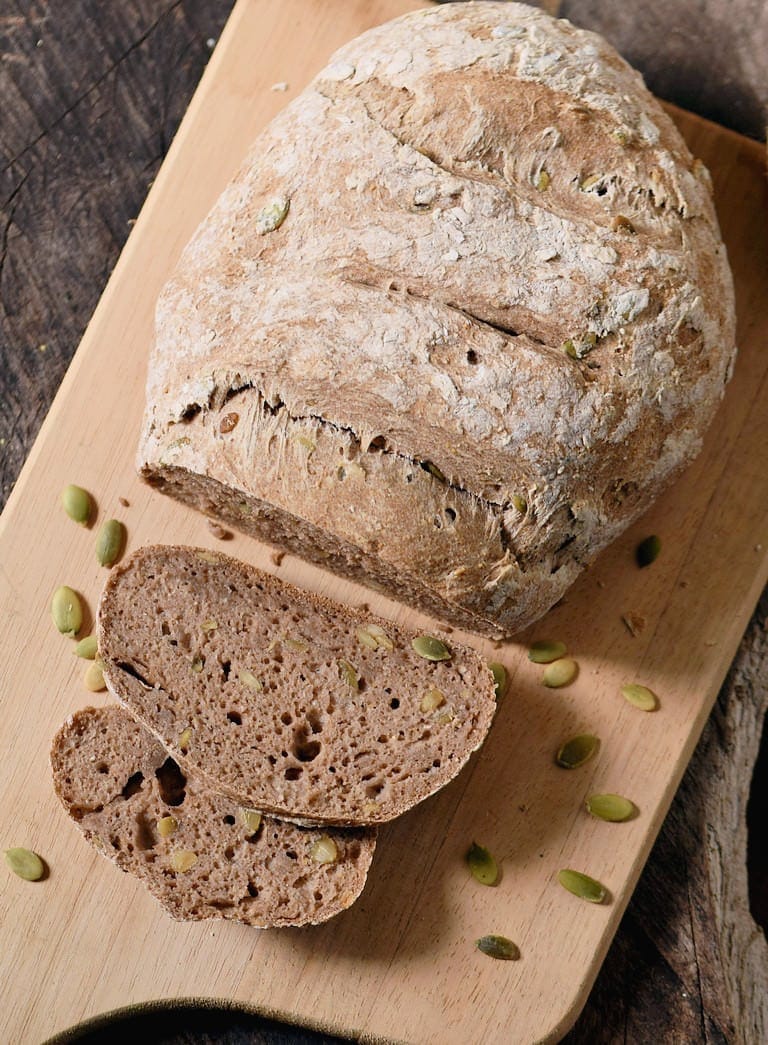
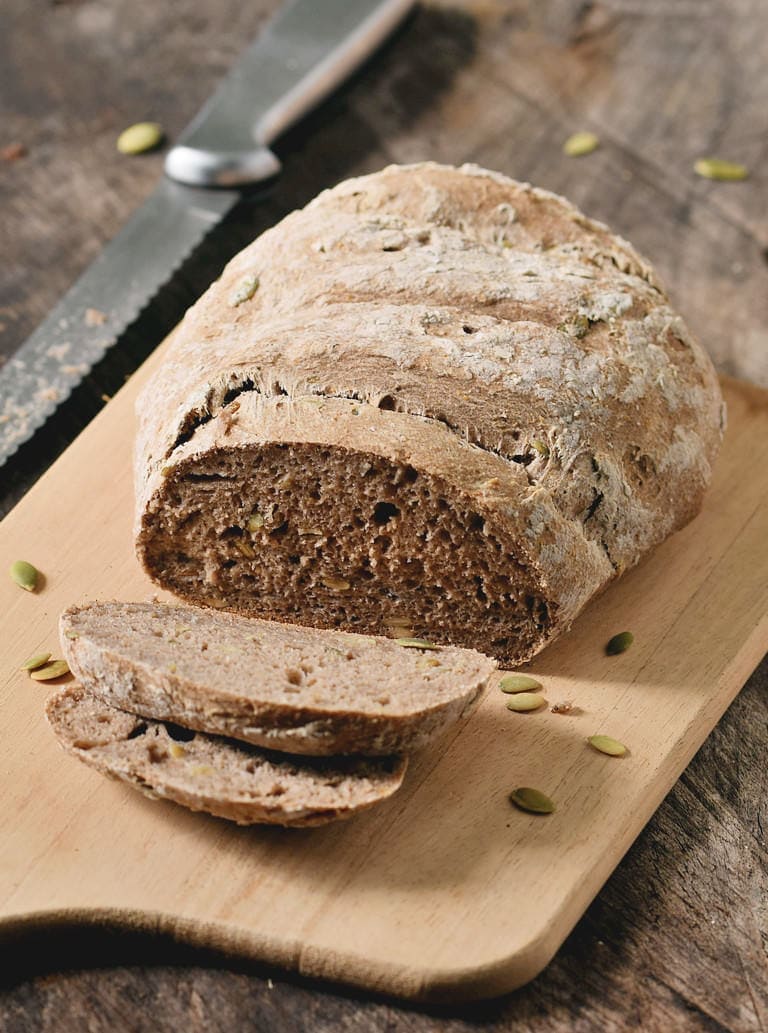
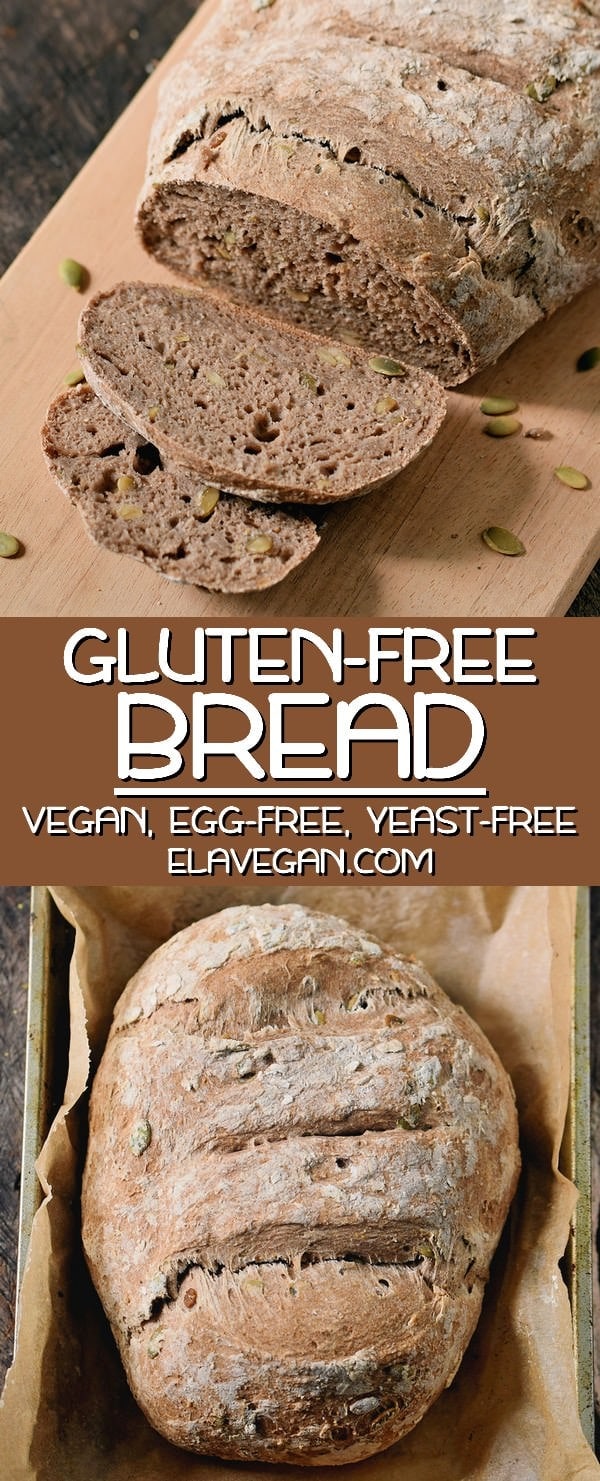
This is the best homemade gluten-free vegan bread recipe which is egg-free, dairy-free, yeast-free, and nutritious! This German bread is actually healthy since it contains psyllium husk powder. It’s crispy on the outside and soft on the inside!
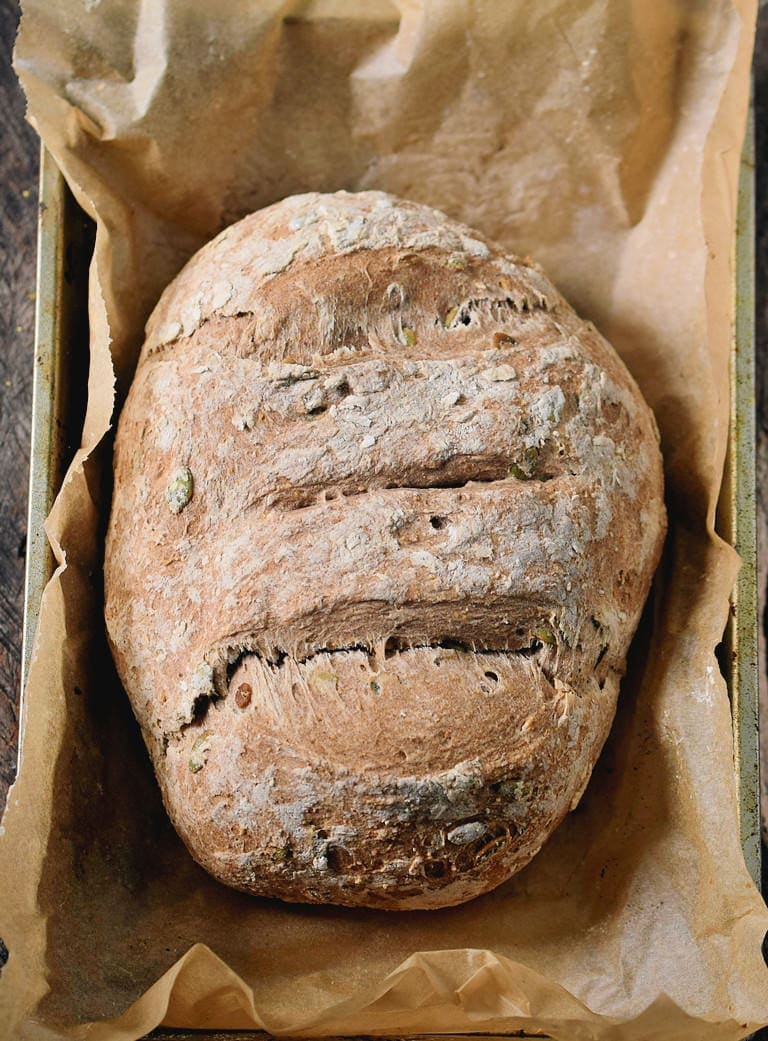
Homemade Gluten-Free Vegan Bread
I cannot tell you how many times I tried making the perfect gluten-free vegan bread… Actually, I lost count how many times I ended up throwing the towel because it’s damn hard to create good gluten-free bread without eggs.
But since I can be quite stubborn (haha) I actually never gave up and continued with the recipe testing…
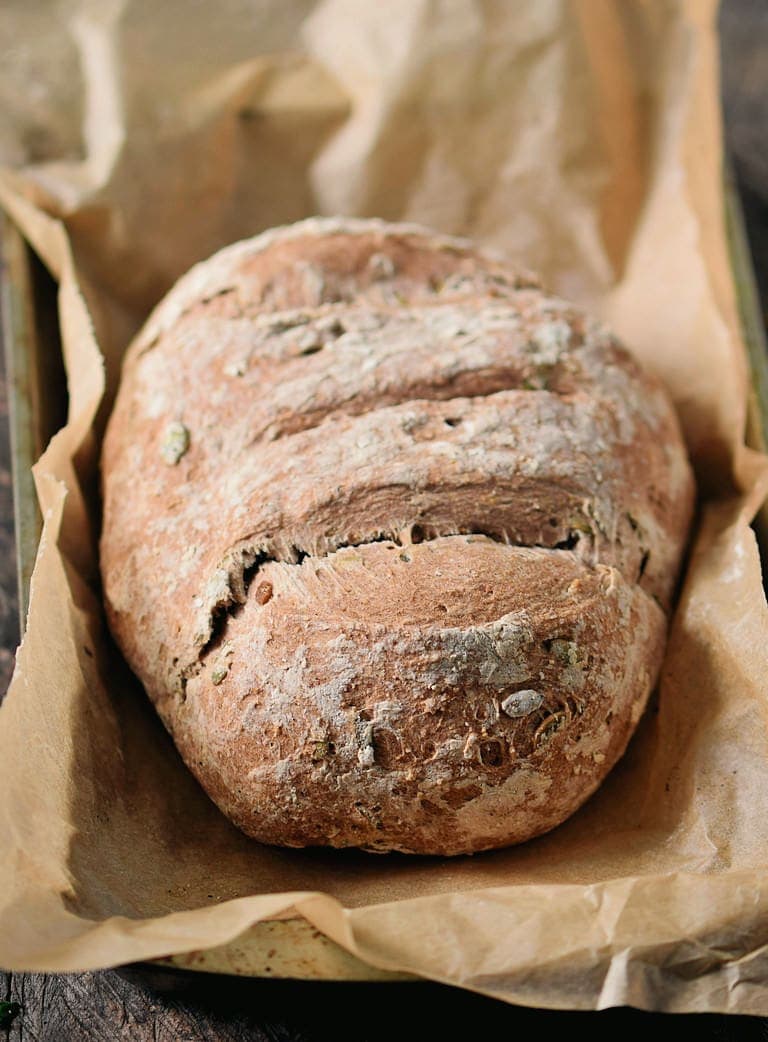
Psyllium Husk Powder
One day, I started experimenting with gluten-free pizza crust that contains psyllium husk powder. The recipe turned out so good, that I got intrigued.
To make a long story short, I made an online search about homemade gluten-free vegan bread + psyllium husk and found a couple of different recipes that were using huge amounts of psyllium husk powder in their bread recipes.
One recipe was from a German blogger, and she inspired me to give psyllium husk a try. I tweaked her recipe and used a different flour blend and the bread turned out amazing!
I was shocked by how great it turned out, especially since the bread is wheat-free (and therefore gluten-free), and egg-free (vegan)! It did rise, even though it doesn’t contain yeast and it actually looked like German bread from a bakery.
Conclusion: Psyllium husk powder is a godsend for gluten-free vegan baked goods. It’s also very healthy, especially for our gut! So please do yourself and favor and buy it or order it online. It’s cheap and absolutely amazing!
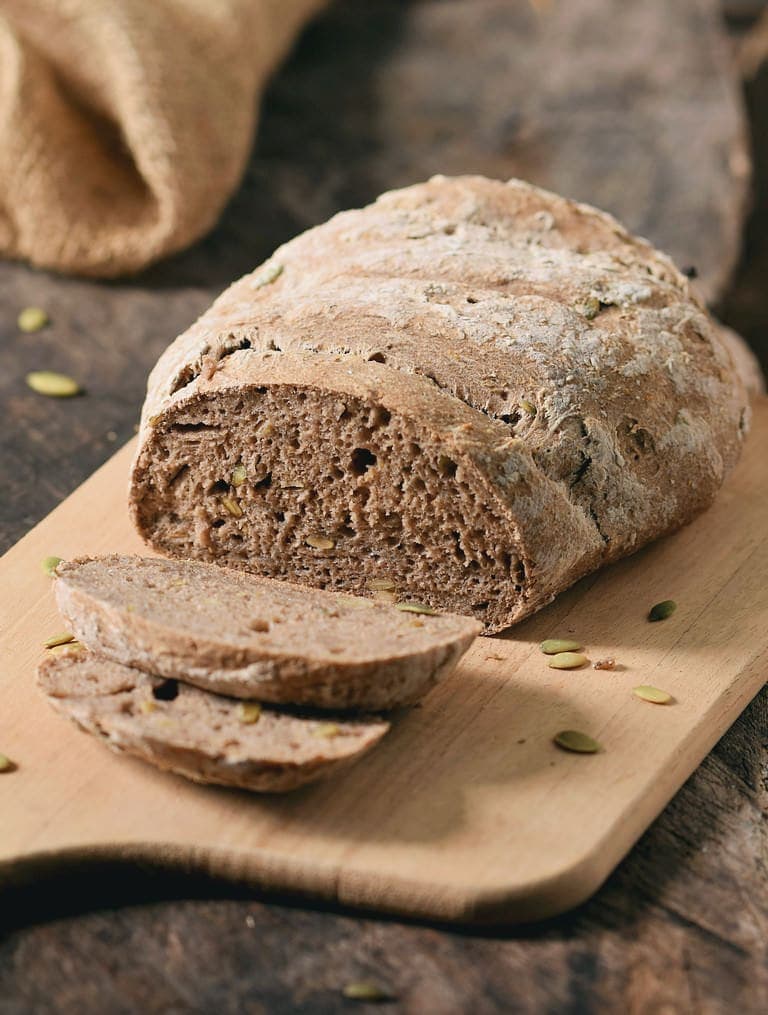
How To Make Gluten-Free Bread?
Check the video in the post to see how I made this amazing bread.
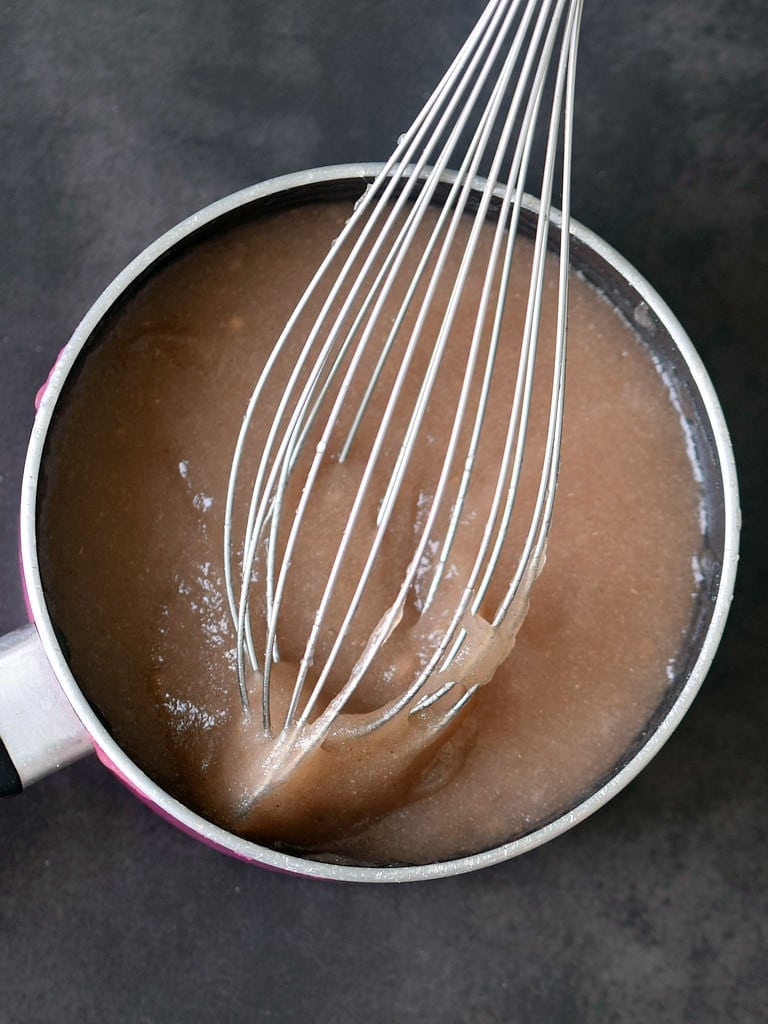
Step 1: Make the psyllium husk gel first. Mix the psyllium husk powder and water in a bowl. Try to be quick, because it gels instantly, within SECONDS. I always use a whisk, it works the best. Set aside and measure the dry bread ingredients in the meantime!
Step 2: It’s time to measure/weigh all dry ingredients and add them to a big bowl. You can also preheat your oven to 390 °F (ca. 200 °C) now.
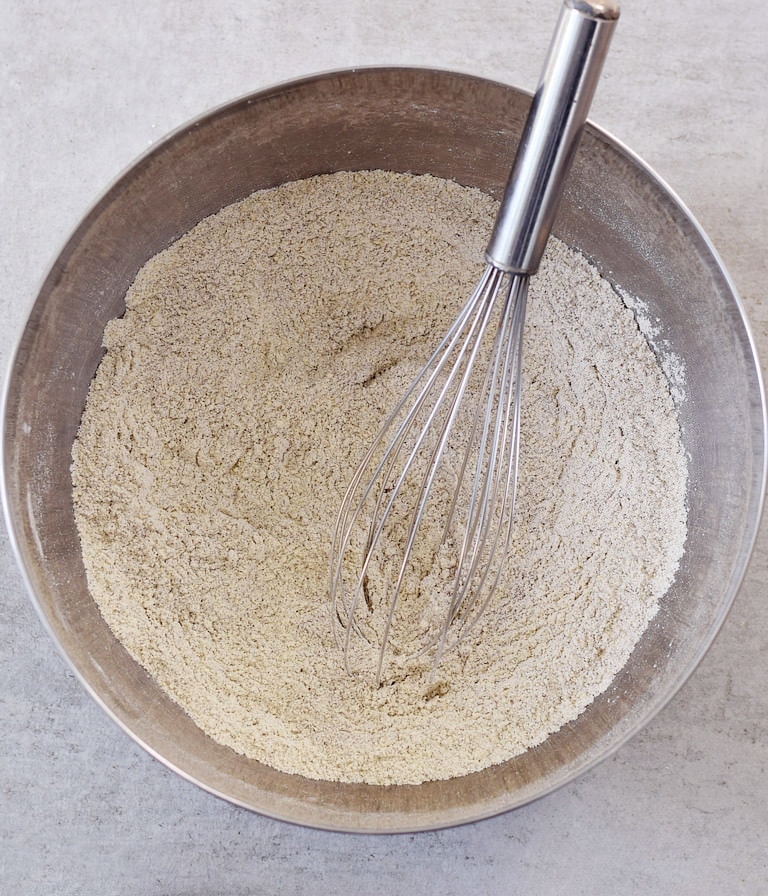
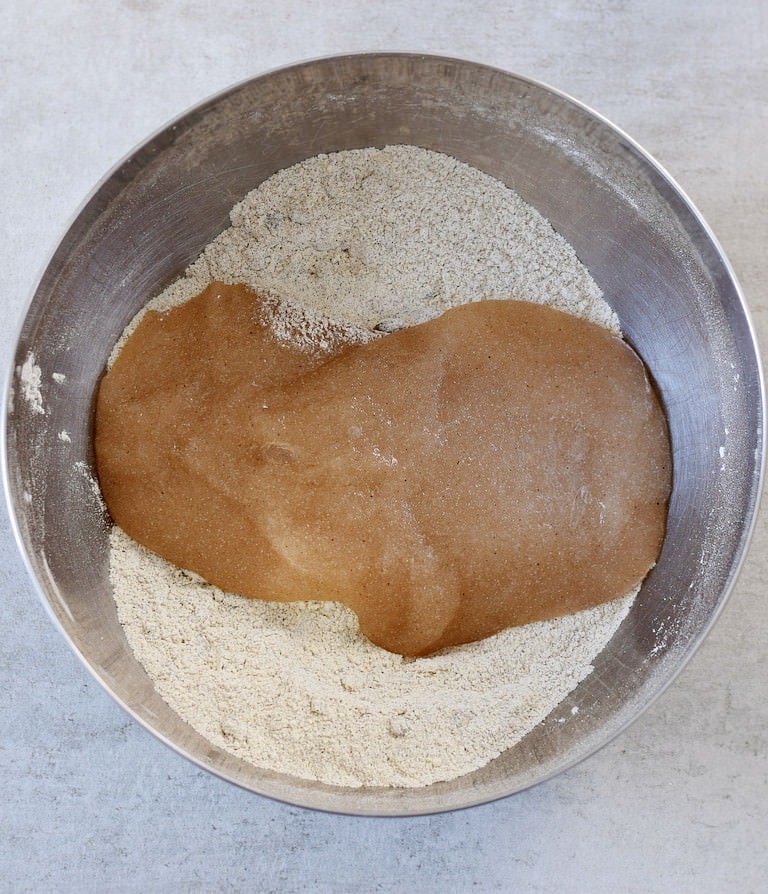
Step 3: Mix it all together: Add the psyllium gel to the big bowl and mix all ingredients with a hand mixer (use the dough hooks). You can also knead the dough with your hands or use a Kitchen Aid. It will take about 5-10 minutes until the dough comes together.
Step 4: Shape the dough and bake the bread in the oven for about 55-60 minutes. That’s it!
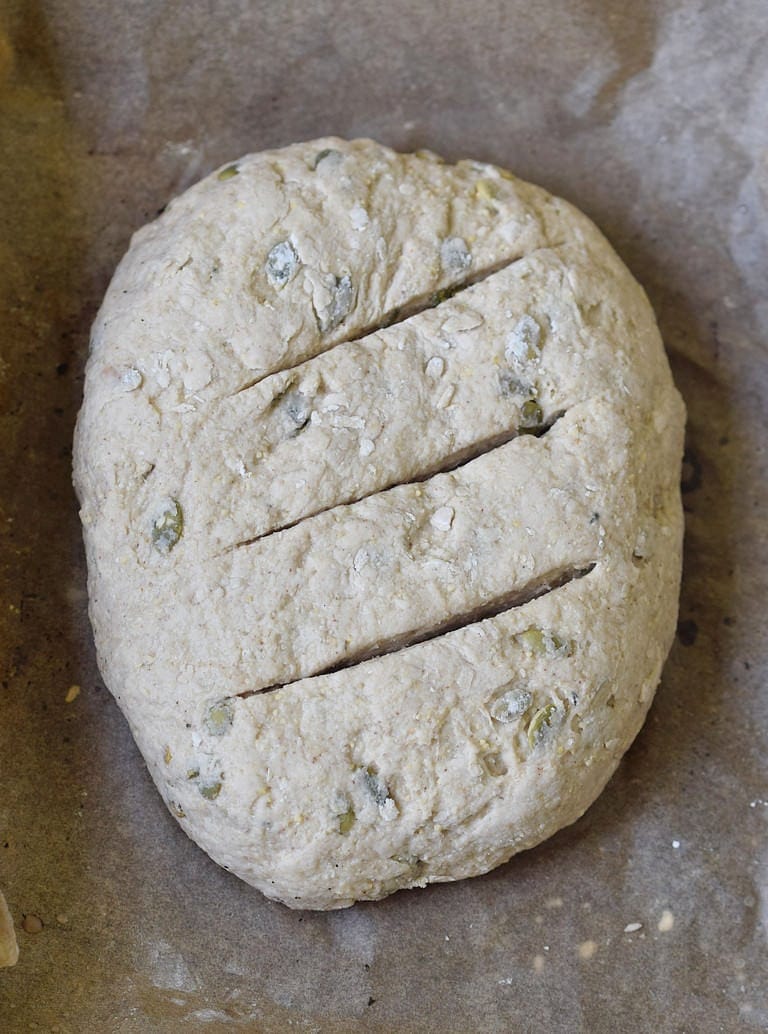
Add Seeds Of Choice
I love adding pumpkin seeds but you can also use sunflower seeds, sesame seeds or nuts of choice (e.g. hazelnuts, walnuts, cashews, almonds, etc).
The Ingredients
You can find all the ingredients with measurements below in the recipe card! Please also check the recipe notes below where I list different substitutes.
My favorite flour combo is this:
- Buckwheat flour
- Rice Flour
- Chickpea Flour
- Tapioca Flour
Recipe Notes & Substitutes
- Some readers replaced the buckwheat flour with oat flour or sorghum flour (or a combo) and the bread still turned out amazing.
- Rice flour works great in this bread recipe, but feel free to experiment with lentil flour, teff flour, sorghum flour, or quinoa flour.
- You can use arrowroot flour instead of tapioca flour/starch. Cornstarch or potato starch will most likely work as well.
- Chickpea flour is the same as garbanzo bean flour. It adds plant-based protein and I love adding it to bread. Some readers had success using oat flour instead.
- Psyllium husk powder is the most important ingredient in this recipe and cannot be subbed by any other ingredient. Make sure to use psyllium husk POWDER. If you have psyllium husk (not the powder), you can blend it in a blender or electric spice/coffee grinder until it’s a fine powder.
Can I Freeze Gluten-Free Bread?
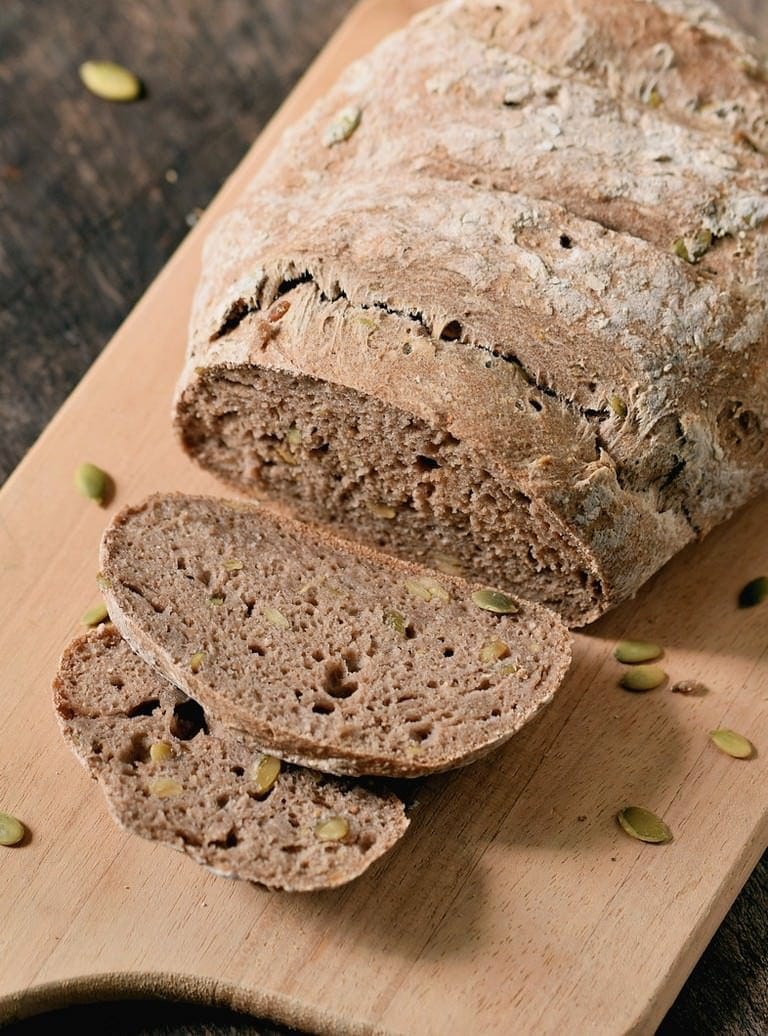
You can definitely freeze this gluten-free bread! Slice it and wrap all individual slices in wax paper or parchment paper. Put in zip lock bags and freeze for up to 3 months. Let thaw at room temperature and then toast the bread once you want to serve it.
Other Gluten-Free Bread Recipes
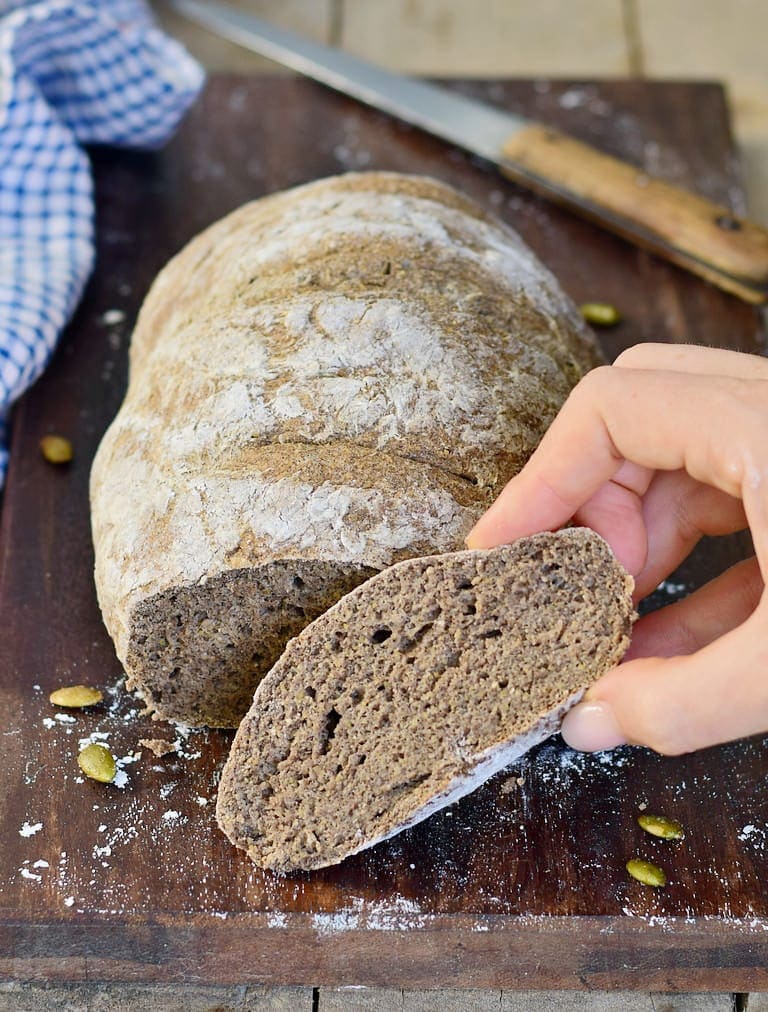
You can serve the bread with stews, soups and all kinds of comfort meals. Make sure to also check out my other vegan and gluten-free bread recipes:
- Gluten-Free Baguette
- Gluten-Free Pita
- Gluten Free Naan
- Gluten Free Buns
- Chocolate Chip Banana Bread
- Pumpkin Bread
- Moist Vegan Cornbread
- Marbled Banana Bread
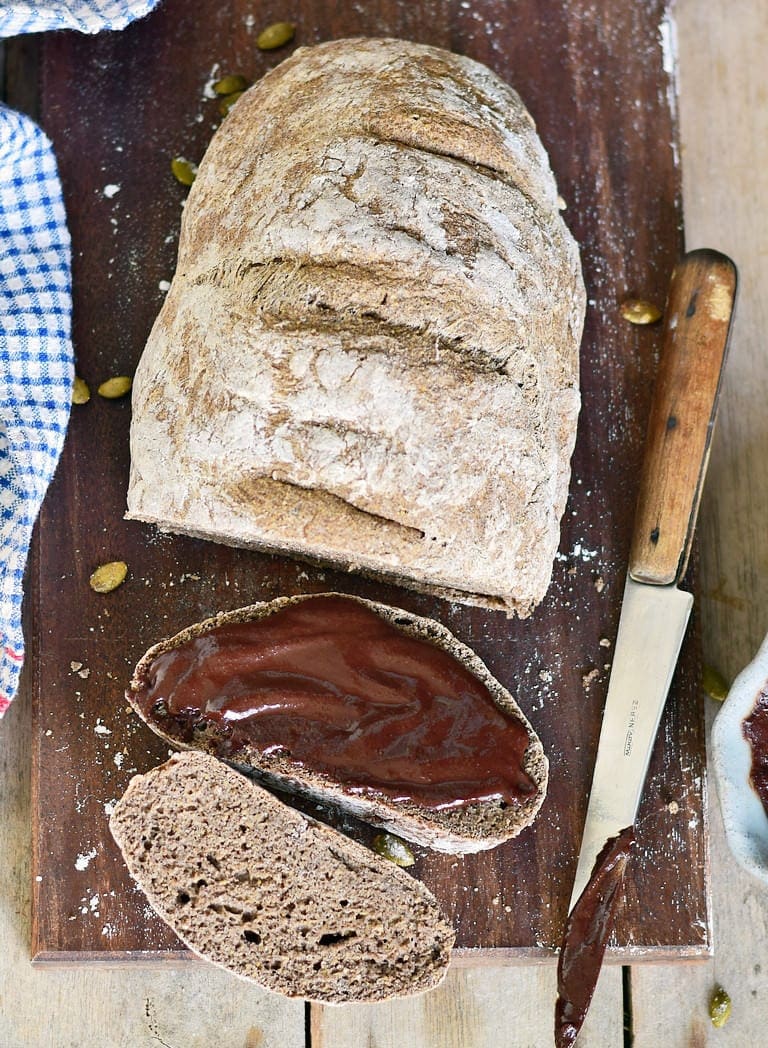
Should you give this gluten-free German bread recipe a try, please leave a comment and rating below and don’t forget to tag me in your Instagram or Facebook post with @elavegan and #elavegan because I love to see your remakes! 🙂

Gluten-Free Bread Recipe
Video
Ingredients
Dry ingredients:
- 100 g (¾ heaped cup) buckwheat flour (see notes)
- 100 g (⅔ cup) white rice flour
- 100 g (1 cup) chickpea flour
- 40 g (5 Tbsp) tapioca flour/starch (see notes)
- 1 tsp baking powder
- ½ tsp baking soda
- ¾-1 tsp sea salt
- 50 g (⅜ cup) pumpkin seeds (optional - see notes)
Psyllium mixture:
- 450 ml (1.8 cups) water
- 30 g (3 Tbsp) psyllium husk powder (see notes)
Instructions
- I recommend using the metric measurements for this recipe (grams/ml). In a bowl, combine the water with the psyllium husk powder and whisk well. It will gel instantly and become thick. Set aside for 20-30 minutes.
- Meanwhile, measure/weigh all the dry ingredients and add them to a large bowl. Preheat the oven to 390 °F (200 °C).
- Add the psyllium gel to the bowl and knead the ingredients with a hand/ stand mixer (use a dough hook). You can also knead the dough with your hands. It will take about 5-10 minutes for the dough to come together.
- If the dough appears too wet, sprinkle it with 1-2 Tbsp tapioca flour. If it feels too dry, add a little water.
- Shape the dough into a round or rectangular loaf and place it on a baking sheet lined with parchment paper (I sprinkled the paper with a bit of tapioca flour).
- Bake for 50-60 minutes. Let the bread cool completely, then slice and enjoy. The bread freezes well, for up to 3 months!
Notes
Video Of The Recipe
- Psyllium husk powder is the most important ingredient in this recipe and cannot be substituted by any other ingredient. Make sure to use psyllium husk POWDER. If you have whole psyllium husk (not the powder), you can blend it in a blender or electric spice/coffee grinder until it's a fine powder.
- A few people mentioned a weird smell in the bread (I didn't, and most other people didn't either), however, I received a few helpful comments.
- You can use whole-grain buckwheat flour or regular, both are fine. Some people replaced the buckwheat flour with oat flour or sorghum flour (or a combo) and the bread still turned out amazing.
- Rice flour works great in this bread recipe, but feel free to experiment with lentil flour, teff flour, sorghum flour, or quinoa flour.
- You can use arrowroot flour instead of tapioca flour/starch. Cornstarch or potato starch will most likely work as well.
- Chickpea flour is the same as garbanzo bean flour. It adds plant-based protein and I love adding it to bread. Some readers had success using oat flour instead.
- Please don't compare this bread with wheat bread which contains gluten and yeast or a gluten-free bread which was made with eggs and yeast. It's hard to make a gluten-free, yeast-free, vegan bread, but this is the best recipe I have tried so far, and it turns out amazing every time! Depending on the flour mixture, the bread might end up more fluffy or dense.
- Pumpkin seeds: You can use sunflower seeds instead, however, they will turn green due to a chemical reaction with the baking soda/powder. This is perfectly fine and shouldn't concern you.
Nutrition information is an estimate and has been calculated automatically
Equipment
 „Simple and Delicious Vegan“ Cookbook by ElaVeganCLICK HERE to order!
If you are using Pinterest, feel free to pin the following photo:
I am so thrilled about finding your site and this recipe! Thank you for sharing your best with the world.
I have been baking raw buckwheat sourdough bread for many years now, But as I haven’t really found good vegan and gluten free white bread recipe that works, to get it from the store is rather expensive in our country, so it hasn’t been part of my daily diet. And finally it can be part of my daily diet because this one is so easy to make and tasty too. Thank you!
Just a fun fact, Ela means to live in Estonian, and your blog’s name is Living Vegan 🙂
Thanks so much for your thorough feedback, Daire! I am so glad the recipe is helpful. And I love your note about “Living Vegan”. So lovely. 🙂
Amazing result. Could not believe the rise. I am avoiding gluten, dairy, yeast and eggs that I have discovered I am intolerant to them in a blood test- hoping to alleviate life long eczema symptoms- the bread was sorely missed! Until now… wow!!
Fantastic! I am so glad you can now enjoy bread again. 🙂
I want to use the cups conversion, but your conversions are not equal to the original recipe.. For example, the recipe calls for 100g of buckwheat flour, but your conversion only equals to ninety grams of flour. Should I just guess or is there a more accurate measurement?
Debbie, cup measurements are never accurate, therefore I always recommend measuring the ingredients in grams, especially for gluten-free recipes.
0.83 us cup of buckwheat flour equals 100 grams.
2/3 cup of rice flour equals 105 grams.
Hope this helps! 🙂
Love this recipe, made it multiple times and always so satisfied!!
That’s awesome, Cinzia! I am glad you love the bread recipe. 🙂
Hi Ela
It looks very testy. I glad you have some oil-free recipes, I will definitely browse here more. I wonder about the Psyllium Husk Powder. What exactly is it?
Thanks
ShaKed
Psyllium is a fiber that absorbs a lot of liquid. It’s great for gluten-free baking and also for maintaining regular digestive health.
Thank you so much for posting this awesome vegan gluten free, Corn free, milk, Nut, oil, and gum free bread! I’m extremely allergic to gluten and corn, dairy, eggs etc where I go into cardiac and respiratory distress. I had resigned myself to not eating bread anymore because of no luck finding any gluten free bread without corn, dairy or eggs in store and none of my attempts of making bread ever turned out until now. Your recipe came out awesome. I made a few adjustments though. I put 90g of buckwheat flour instead of 100g and used 100g of lentil flour instead of chickpea flour. I also reduced the sea salt to 1/4 tsp to better suit my needs. Perfect. Thanks again.
That’s wonderful, Jennifer! I am so glad it turned out amazing. Happy you can enjoy bread again. 🙂
Hi.
We are OK with yeast and would rather use that. Any ideas on how to make the bread with yeast?
I tires, but it was very sticky. Sorry, I’m new at this.
Also its something that makes a little sand feeling to it.. Do you know what that would be?
Used home made buckwheat flour, arrowroot, garbanzo and sorghum flour..
Thanks for your help.
Hi Astrid, I don’t know how to make this specific recipe with yeast. You can check out the recipe for my buns here: Gluten Free Buns (Bread Rolls)
The “sand feeling” might be due to the homemade flour which most likely wasn’t super fine.
Hope this helps! 🙂
Hi would lentil flour work in replace of the chickpea flour? Also, is the salt necessary?
Lentil flour should work fine, Jennifer! 🙂 Yes, the salt is necessary for the taste, otherwise, the bread will taste completely bland.
Tried it…. bread was so wet that I had to add way more flour and I guess that made it dense and in my case tasted awful…. I might attempt it one more time but can’t understand why my batter was sooo wet
Hi Hanna! Sounds something must have gone wrong. Did you use psyllium husk powder? Did it have the same consistency after mixing it with water (compared to the one in my video)? Which flour combination did you use?
So good!! And so easy to make!! I am so glad I found this recipe and this website! I’ve made the Vegan Chocolate Muffins and they were very yummy!! I’m excited to try more recipes!
That’s wonderful, Kristin! I am so glad you enjoyed these recipes. 🙂
has anyone made this recipe using the measuring conversions from grams to cups?
For your reference:
1 cup of buckwheat flour weighs 120 grams
1 cup of rice flour weighs 160 grams
1 cup of chickpea flour weighs 95-100 grams
1 tbsp of tapioca flour weighs 8 grams
This means you could use the following measurements:
3/4 cup buckwheat flour (90 grams)
3/4 cup rice flour (120 grams)
1 cup of chickpea flour (95-100 grams)
5 tbsp tapioca flour (40 grams)
I definitely recommend buying a kitchen scale though.
I’m very excited to say that my bread did turn out as far as texture and bread like consistency. The only thing is it tastes and smells very strong. I only had buckwheat flour and brown rice flour to use this time. Would it taste and smell strong because of the psyllium powder or buckwheat flour? Or possibility that my flour was rancid? It has been in the freezer though. It didn’t smell strong when I scooped it out. Any idea?
Hi Denise, I am glad it turned out great. It might be the buckwheat flour, but I am not 100% sure. Maybe you can make it again with a different flour mixture next time by using less buckwheat flour? 🙂
I have learned that there is a HUGE difference between buying the buckwheat groats and grinding into fresh flour, right before using, and using pre-ground buckwheat flour! It goes bad soo fast, I thought I hated buckwheat before trying this! I just through the groats into my Vitamix to grind.
That’s so interesting! Thanks for sharing. 🙂
I made this bread tonight. It is excellent. The family loved it. It is so good as is with nothing on it!
Fantastic! I am so glad you loved the recipe, Michelle. 🙂
Hi! I was very excited to try your recipe. I did all the correct measurements and times – it took WAY longer and at 1:30hours it was still gooey on the inside.
What’d I do wrong?
Thanks!
Hi Hannah! So sorry it didn’t turn out good, it seems something went wrong. Did you knead the dough for at least 5 minutes? Did you use the flours mentioned in the recipe? And did you use psyllium husk powder?
Thank you so much for such a great recipe!
I’ve tried other GF. vegan, oil-free bread recipes but they were all horrible and brick-like. This one is fantastic! I’m so excited that o can have bread again ????
That’s great, Heather! I am happy you love it as much as I do. 🙂
Hi, I want to bake this again before I rate it. This is probably the best gf, egg free, yeast free, dairy free bread bread I’ve ever had, but I have a couple of questions:
1. My dough was very wet. I added a LOT of tapioca flour. Since I added a few tablespoons at a time, I didn’t measure how much, but in the end it might have been 1/4 cup at least. Even then it was still sticking to my hands like crazy. I finally managed to form a loaf and just baked it because I was afraid of it getting too dry. But it was much wetter than yours in the video.
It turned out wonderfully! It rose nicely, has a perfect crust, and is a lovely little bread!
2. You mentioned that Buckwheat flour was important to the recipe. I find the flavour too strong for me. What’s unique to buckwheat flour that makes it work out best in this bread? Is there another flour with similar qualities that I could use for half the buckwheat?
In spite of these 2 issues, I’m absolutely delighted with this recipe as I’m finding my new diet restrictions challenging, as this bread is better than any other I’ve tried, and they’re easily $8-$10.00 a loaf!
Thank you for your efforts and for sharing!
Hello Brigitte, I will try to answer your questions:
1) Did you use psyllium husk powder? Did the psyllium gel have the same texture/consistency as mine in the video? Maybe the psyllium husk you were using doesn’t soak up as much liquid and therefore the dough turned out too wet.
2) I think there were a few readers who made the recipe without buckwheat flour and it still turned out good. I made it once without buckwheat flour and it turned out OK. I remember I made so many versions and one was without buckwheat flour and the bread wasn’t as fluffy and big but still very delicious. Please try it out without buckwheat flour and report back. I would recommend lentil flour, sorghum flour, quinoa flour or teff flour. Hope this helps!
Goodmorning,
I tried this bread, it is verry good but it had a bit a weird taste. Is it possible that i made my bread a bit to thick and its not completely cooked? (It is stil a little bit moiste at the inside) or is it one of the flours i used that gives the taste i dont know? To be honest its the first time i use rice, chickpea, boukweit,… flours 🙂
Greetz gert
Hello Gert, if it’s still too moist inside it might not have been cooked through. I recommend baking it for a bit longer next time or try out a different flour mix. Maybe you personally don’t like the taste of chickpea flour, so you could use a different flour next time. You could read through the comments, there are people who successfully used other flour combinations. 🙂
Do you think it would be possible to use cassava flour instead of chickpea flour as I don’t like the taste, if so would it be the same ratio? Thanks, Abbey.
I think it could work, and yes, I would use the same ratio. Please report back if you give it a try. 🙂
This recipe is wonderful! Due to allergies I tweaked the recipe and used homemade quinoa flour and arrowroot flour in place of the white rice flour and chickpea flour with the same measurement ratios and this recipe turned out great! It’s of course more dense than any fluffy white bread, but a month in to extreme diet changes because of allergies for all 3 members of my family, we are excited to have an option for bread that works for us! It actually reminds me of the bread served at Longhorns.
Thank you for sharing this recipe!
You are very welcome, Krystal! I am so glad it turned out amazing. 🙂
This is the best gluten free bread I have ever tasted. And it was easy to make. Mine didn’t turn out quite as dark coloured as yours is in the photos, but it was still crunchy on the outside and soft inside. Next time I might cook it a little hotter or a little longer. Thank you so much for the recipe, Avril
Yay! So glad it turned out amazing, Avril! Thanks so much for your amazing feedback. 🙂
Hello Ela,
I have to say that since I found your blog I am in love with your recipes and I have made many of them successfully. But THE BREAD! OMG the bread…. I love it. It’s easy and simple and delicious. I have made it a few times, but I’ve been skipping the chickpea flour lately as it always bloats me for some reason and I usually replace it with half millet flour and half glutinous rice flour as I have to use the millet. I wanted to try and see if it would work as burger buns and baguettes and I divided the dough in 4 parts and made two kinda large buns, one baguette and one sort of ciabatta style and they came out great. I love the fact that I can have a burger bun or a baguette without all the additives in gluten free bread that you can buy. Also as I will be moving to Japan in a few months I am so happy that I can make the bread over there because I can find all the ingredients, but vegan gluten free bread is very hard to find…so far I haven’t…lol….
A big thank you!
Wow, thank you so much for your wonderful and HELPFUL feedback! I appreciate it so much, and I am sure my readers will too!
Lots of love 🙂