

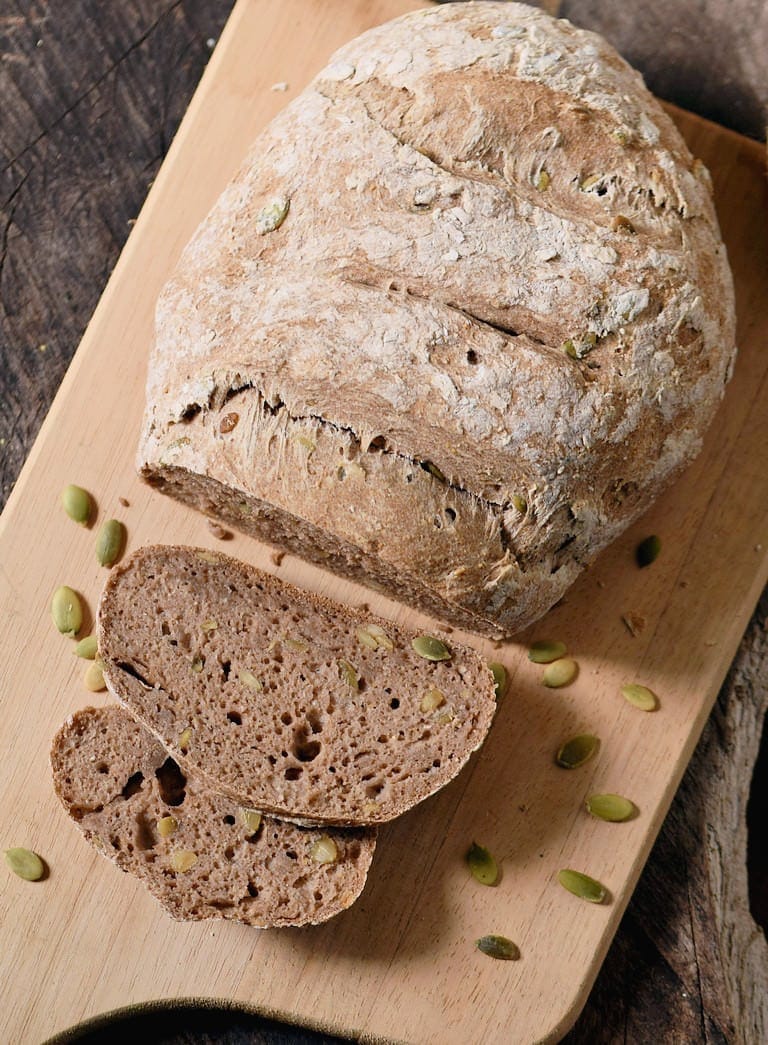
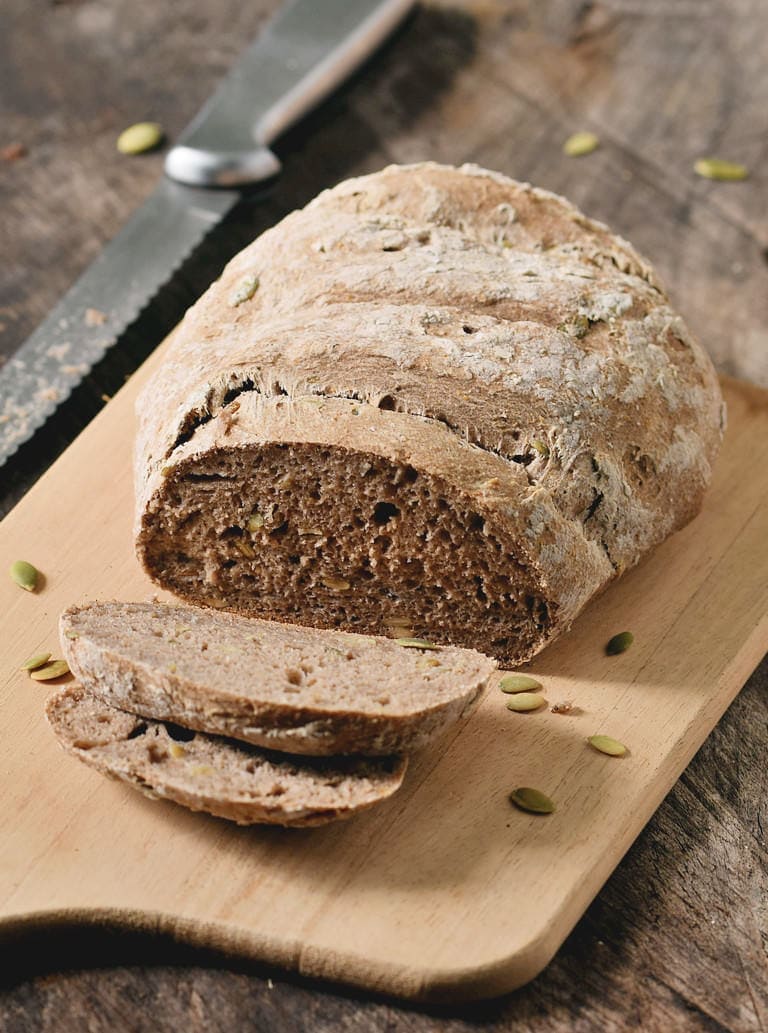
This is the best homemade gluten-free vegan bread recipe which is egg-free, dairy-free, yeast-free, and nutritious! This German bread is actually healthy since it contains psyllium husk powder. It’s crispy on the outside and soft on the inside!
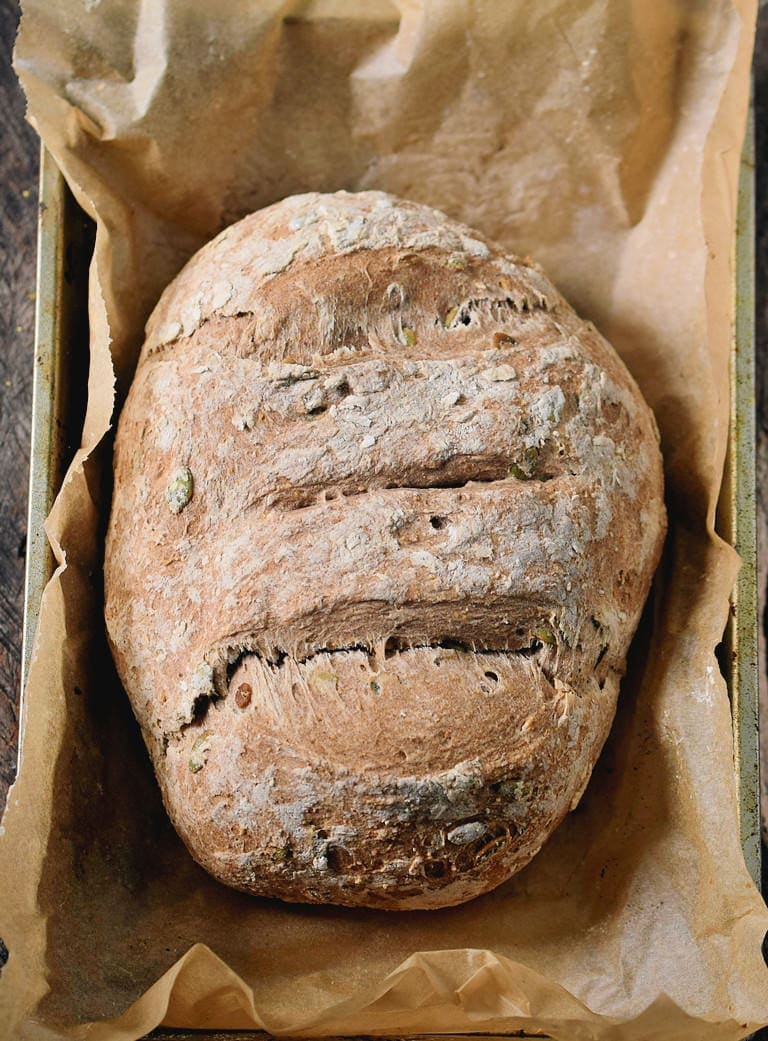
Homemade Gluten-Free Vegan Bread
I cannot tell you how many times I tried making the perfect gluten-free vegan bread… Actually, I lost count how many times I ended up throwing the towel because it’s damn hard to create good gluten-free bread without eggs.
But since I can be quite stubborn (haha) I actually never gave up and continued with the recipe testing…
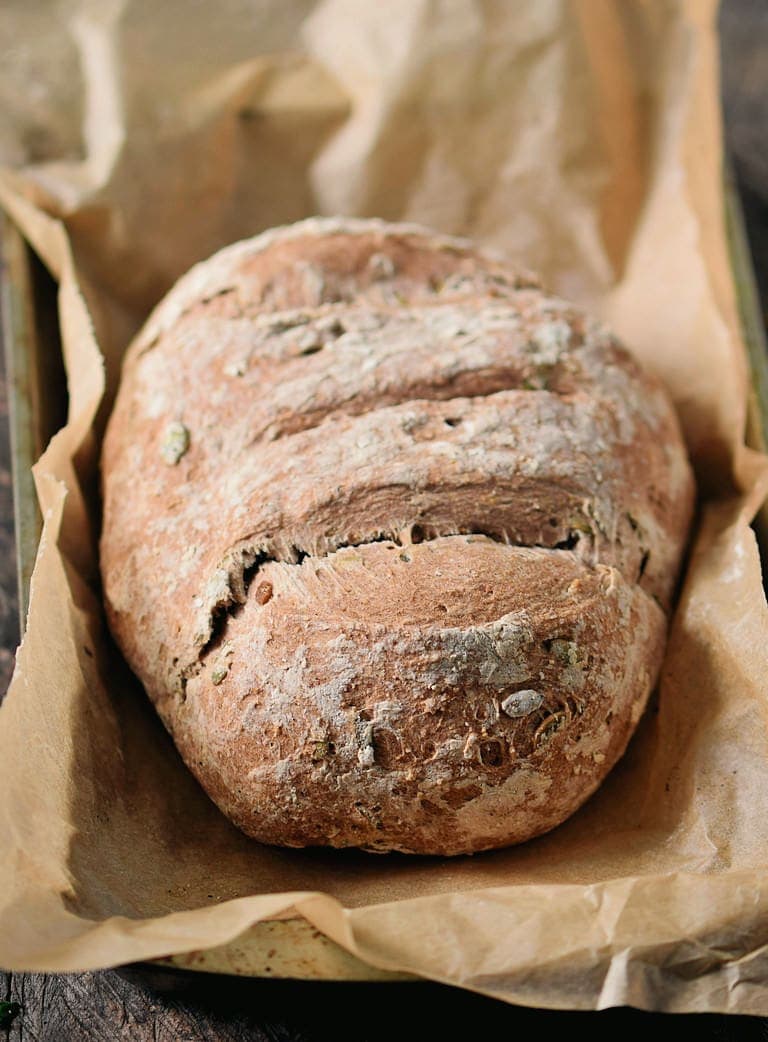
Psyllium Husk Powder
One day, I started experimenting with gluten-free pizza crust that contains psyllium husk powder. The recipe turned out so good, that I got intrigued.
To make a long story short, I made an online search about homemade gluten-free vegan bread + psyllium husk and found a couple of different recipes that were using huge amounts of psyllium husk powder in their bread recipes.
One recipe was from a German blogger, and she inspired me to give psyllium husk a try. I tweaked her recipe and used a different flour blend and the bread turned out amazing!
I was shocked by how great it turned out, especially since the bread is wheat-free (and therefore gluten-free), and egg-free (vegan)! It did rise, even though it doesn’t contain yeast and it actually looked like German bread from a bakery.
Conclusion: Psyllium husk powder is a godsend for gluten-free vegan baked goods. It’s also very healthy, especially for our gut! So please do yourself and favor and buy it or order it online. It’s cheap and absolutely amazing!
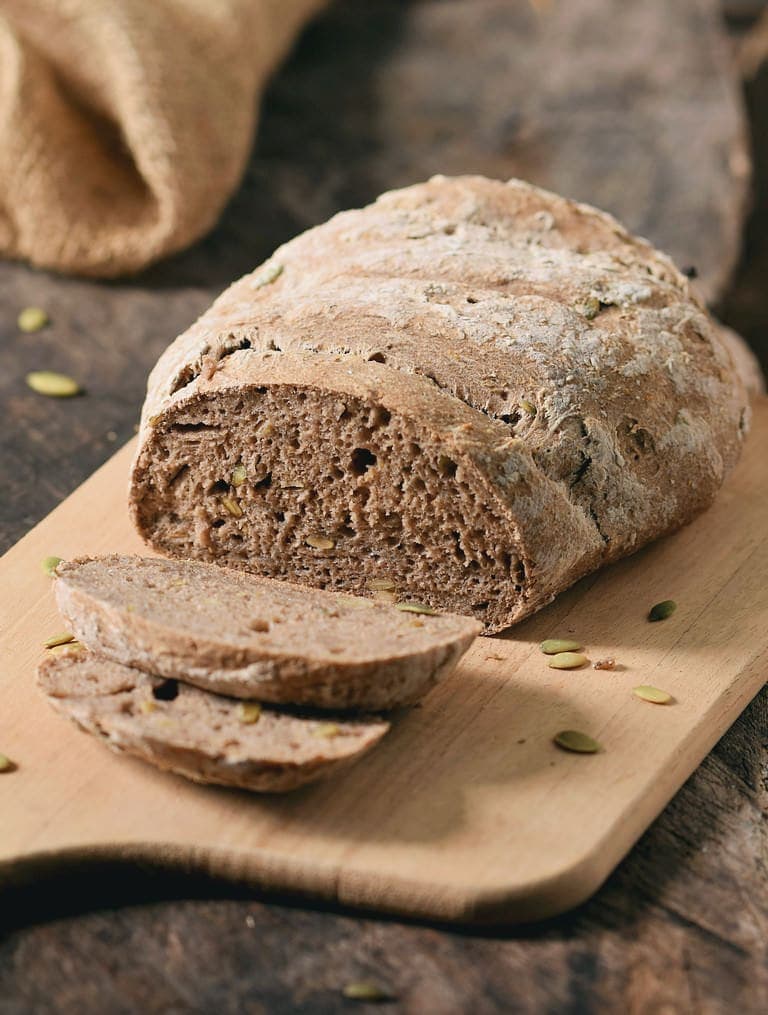
How To Make Gluten-Free Bread?
Check the video in the post to see how I made this amazing bread.
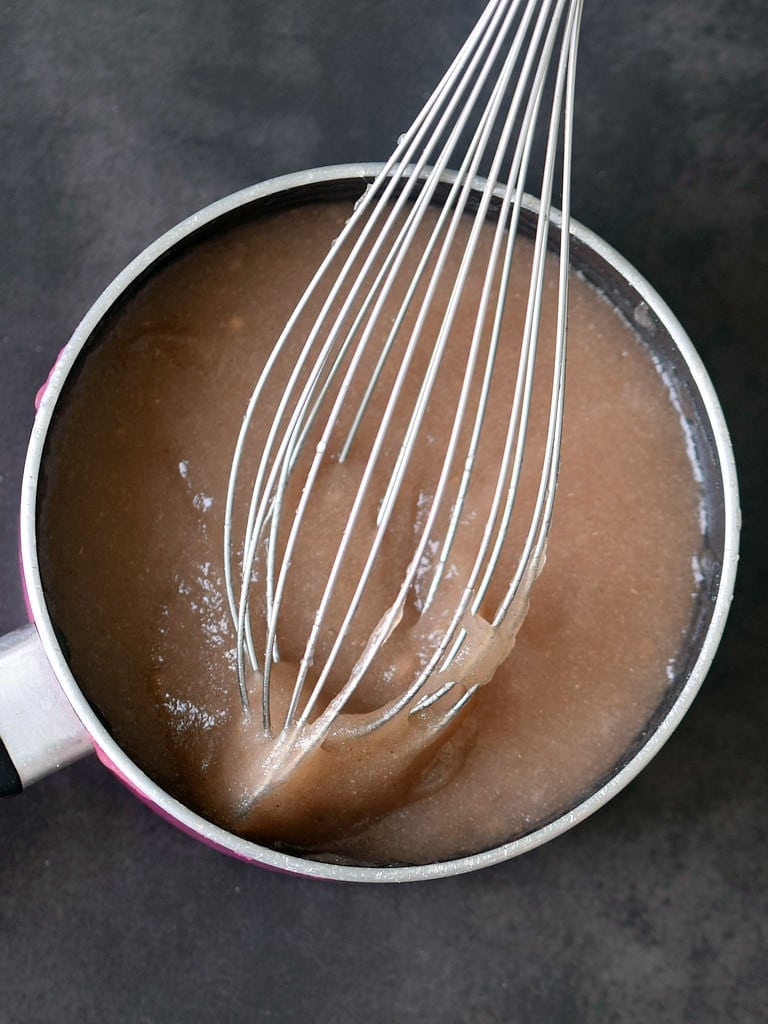
Step 1: Make the psyllium husk gel first. Mix the psyllium husk powder and water in a bowl. Try to be quick, because it gels instantly, within SECONDS. I always use a whisk, it works the best. Set aside and measure the dry bread ingredients in the meantime!
Step 2: It’s time to measure/weigh all dry ingredients and add them to a big bowl. You can also preheat your oven to 390 °F (ca. 200 °C) now.
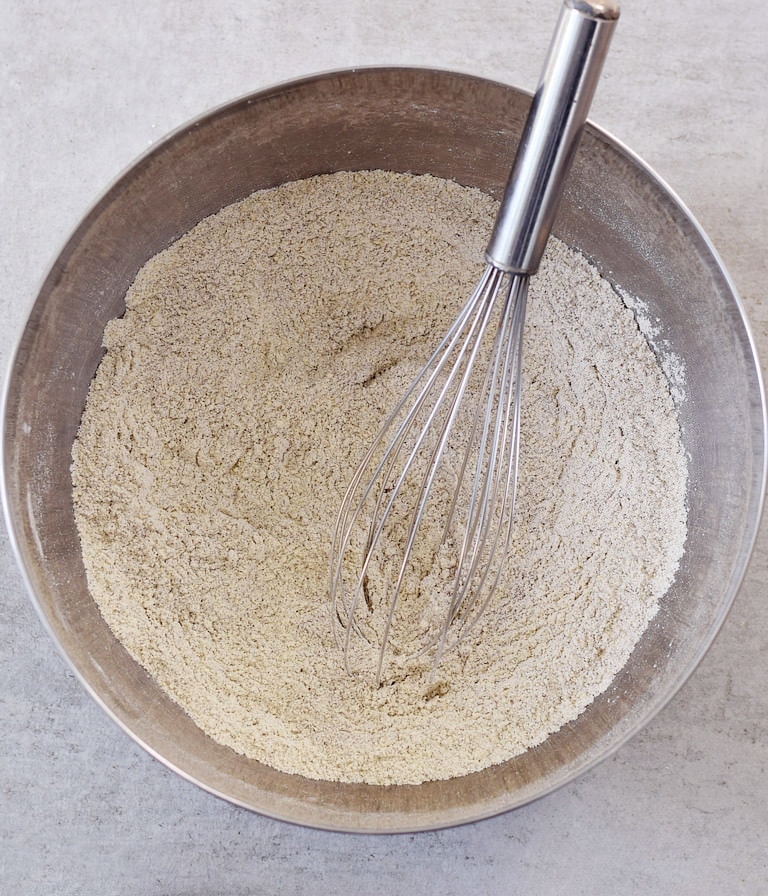
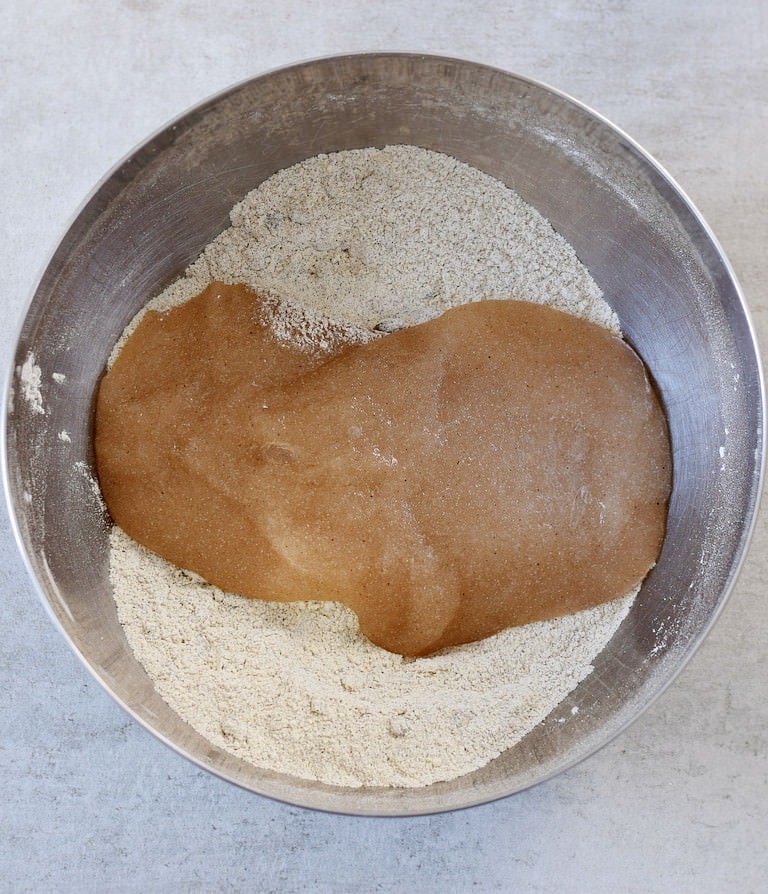
Step 3: Mix it all together: Add the psyllium gel to the big bowl and mix all ingredients with a hand mixer (use the dough hooks). You can also knead the dough with your hands or use a Kitchen Aid. It will take about 5-10 minutes until the dough comes together.
Step 4: Shape the dough and bake the bread in the oven for about 55-60 minutes. That’s it!
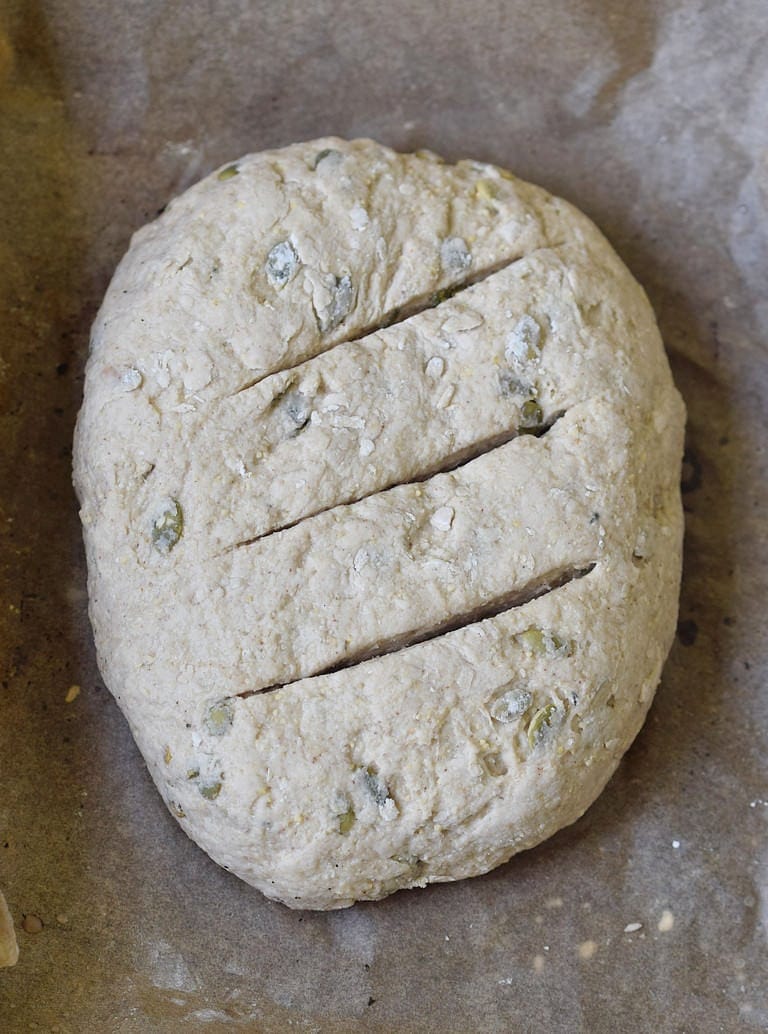
Add Seeds Of Choice
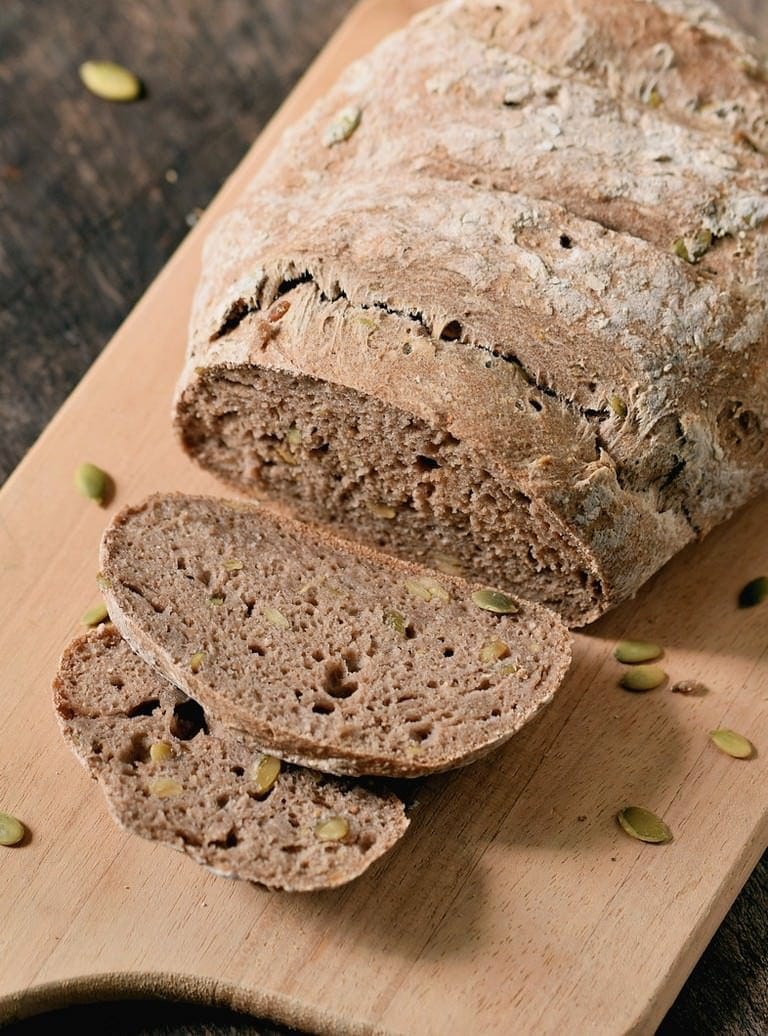
I love adding pumpkin seeds but you can also use sunflower seeds, sesame seeds or nuts of choice (e.g. hazelnuts, walnuts, cashews, almonds, etc).
The Ingredients
You can find all the ingredients with measurements below in the recipe card! Please also check the recipe notes below where I list different substitutes.
My favorite flour combo is this:
- Buckwheat flour
- Rice Flour
- Chickpea Flour
- Tapioca Flour
Recipe Notes & Substitutes
- Some readers replaced the buckwheat flour with oat flour or sorghum flour (or a combo) and the bread still turned out amazing.
- Rice flour works great in this bread recipe, but feel free to experiment with lentil flour, teff flour, sorghum flour, or quinoa flour.
- You can use arrowroot flour instead of tapioca flour/starch. Cornstarch or potato starch will most likely work as well.
- Chickpea flour is the same as garbanzo bean flour. It adds plant-based protein and I love adding it to bread. Some readers had success using oat flour instead.
- Psyllium husk powder is the most important ingredient in this recipe and cannot be subbed by any other ingredient. Make sure to use psyllium husk POWDER. If you have psyllium husk (not the powder), you can blend it in a blender or electric spice/coffee grinder until it’s a fine powder.
Can I Freeze Gluten-Free Bread?
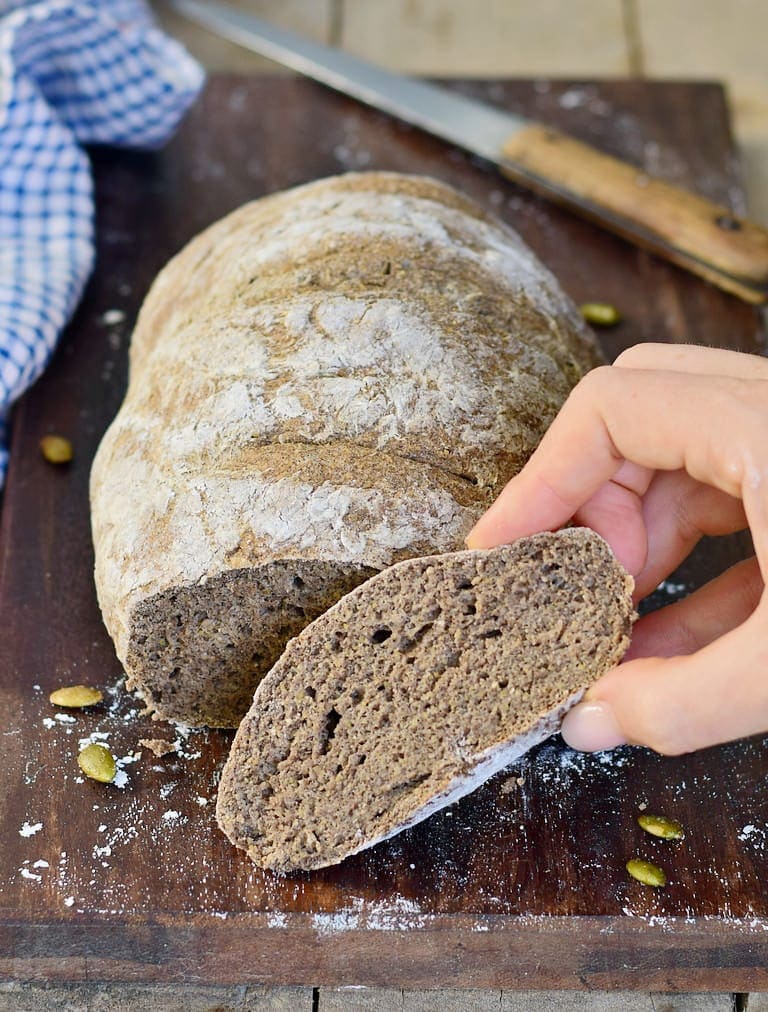
You can definitely freeze this gluten-free bread! Slice it and wrap all individual slices in wax paper or parchment paper. Put in zip lock bags and freeze for up to 3 months. Let thaw at room temperature and then toast the bread once you want to serve it.
Other Gluten-Free Bread Recipes
You can serve the bread with stews, soups and all kinds of comfort meals. Make sure to also check out my other vegan and gluten-free bread recipes:
- Gluten-Free Baguette
- Gluten-Free Pita
- Gluten Free Naan
- Gluten Free Buns
- Chocolate Chip Banana Bread
- Pumpkin Bread
- Moist Vegan Cornbread
- Marbled Banana Bread
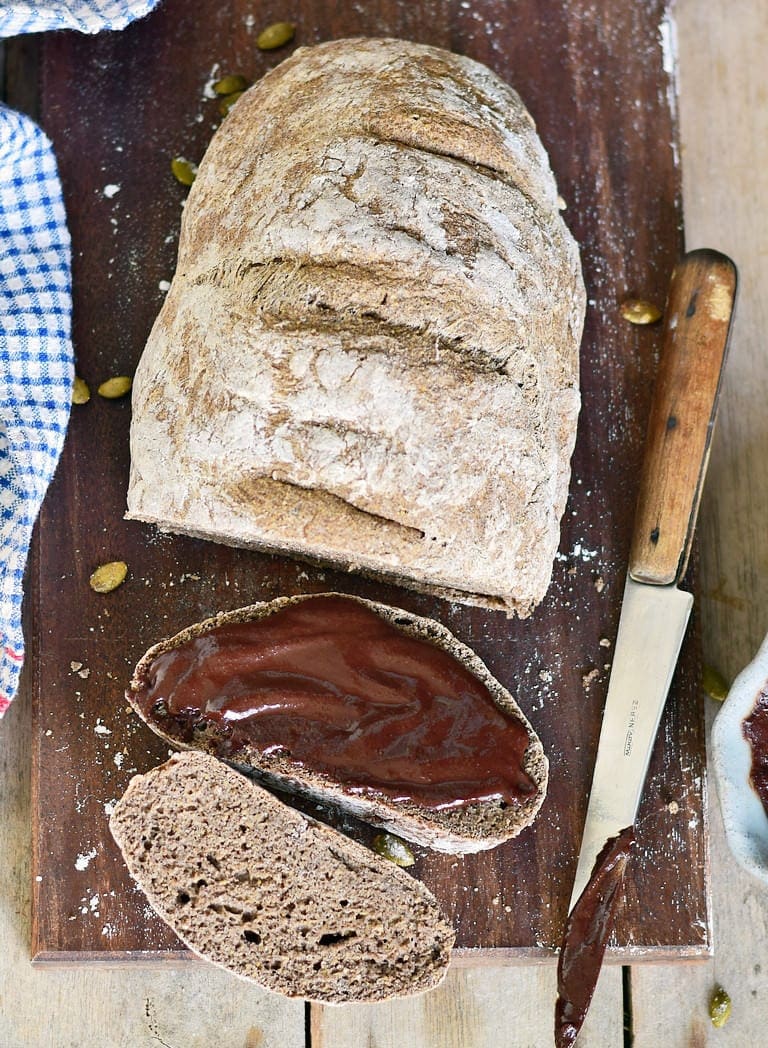
Should you give this gluten-free German bread recipe a try, please leave a comment and rating below and don’t forget to tag me in your Instagram or Facebook post with @elavegan and #elavegan because I love to see your remakes! 🙂

Gluten-Free Bread Recipe
Video
Ingredients
Dry ingredients:
- 100 g (¾ heaped cup) buckwheat flour (see notes)
- 100 g (⅔ cup) white rice flour
- 100 g (1 cup) chickpea flour
- 40 g (5 Tbsp) tapioca flour/starch (see notes)
- 1 tsp baking powder
- ½ tsp baking soda
- ¾-1 tsp sea salt
- 50 g (⅜ cup) pumpkin seeds (optional - see notes)
Psyllium mixture:
- 450 ml (1.8 cups) water
- 30 g (3 Tbsp) psyllium husk powder (see notes)
Instructions
- I recommend using the metric measurements for this recipe (grams/ml). In a bowl, combine the water with the psyllium husk powder and whisk well. It will gel instantly and become thick. Set aside for 20-30 minutes.
- Meanwhile, measure/weigh all the dry ingredients and add them to a large bowl. Preheat the oven to 390 °F (200 °C).
- Add the psyllium gel to the bowl and knead the ingredients with a hand/ stand mixer (use a dough hook). You can also knead the dough with your hands. It will take about 5-10 minutes for the dough to come together.
- If the dough appears too wet, sprinkle it with 1-2 Tbsp tapioca flour. If it feels too dry, add a little water.
- Shape the dough into a round or rectangular loaf and place it on a baking sheet lined with parchment paper (I sprinkled the paper with a bit of tapioca flour).
- Bake for 50-60 minutes. Let the bread cool completely, then slice and enjoy. The bread freezes well, for up to 3 months!
Notes
Video Of The Recipe
- Psyllium husk powder is the most important ingredient in this recipe and cannot be substituted by any other ingredient. Make sure to use psyllium husk POWDER. If you have whole psyllium husk (not the powder), you can blend it in a blender or electric spice/coffee grinder until it's a fine powder.
- A few people mentioned a weird smell in the bread (I didn't, and most other people didn't either), however, I received a few helpful comments.
- You can use whole-grain buckwheat flour or regular, both are fine. Some people replaced the buckwheat flour with oat flour or sorghum flour (or a combo) and the bread still turned out amazing.
- Rice flour works great in this bread recipe, but feel free to experiment with lentil flour, teff flour, sorghum flour, or quinoa flour.
- You can use arrowroot flour instead of tapioca flour/starch. Cornstarch or potato starch will most likely work as well.
- Chickpea flour is the same as garbanzo bean flour. It adds plant-based protein and I love adding it to bread. Some readers had success using oat flour instead.
- Please don't compare this bread with wheat bread which contains gluten and yeast or a gluten-free bread which was made with eggs and yeast. It's hard to make a gluten-free, yeast-free, vegan bread, but this is the best recipe I have tried so far, and it turns out amazing every time! Depending on the flour mixture, the bread might end up more fluffy or dense.
- Pumpkin seeds: You can use sunflower seeds instead, however, they will turn green due to a chemical reaction with the baking soda/powder. This is perfectly fine and shouldn't concern you.
Nutrition information is an estimate and has been calculated automatically
Equipment
 „Simple and Delicious Vegan“ Cookbook by ElaVeganCLICK HERE to order!
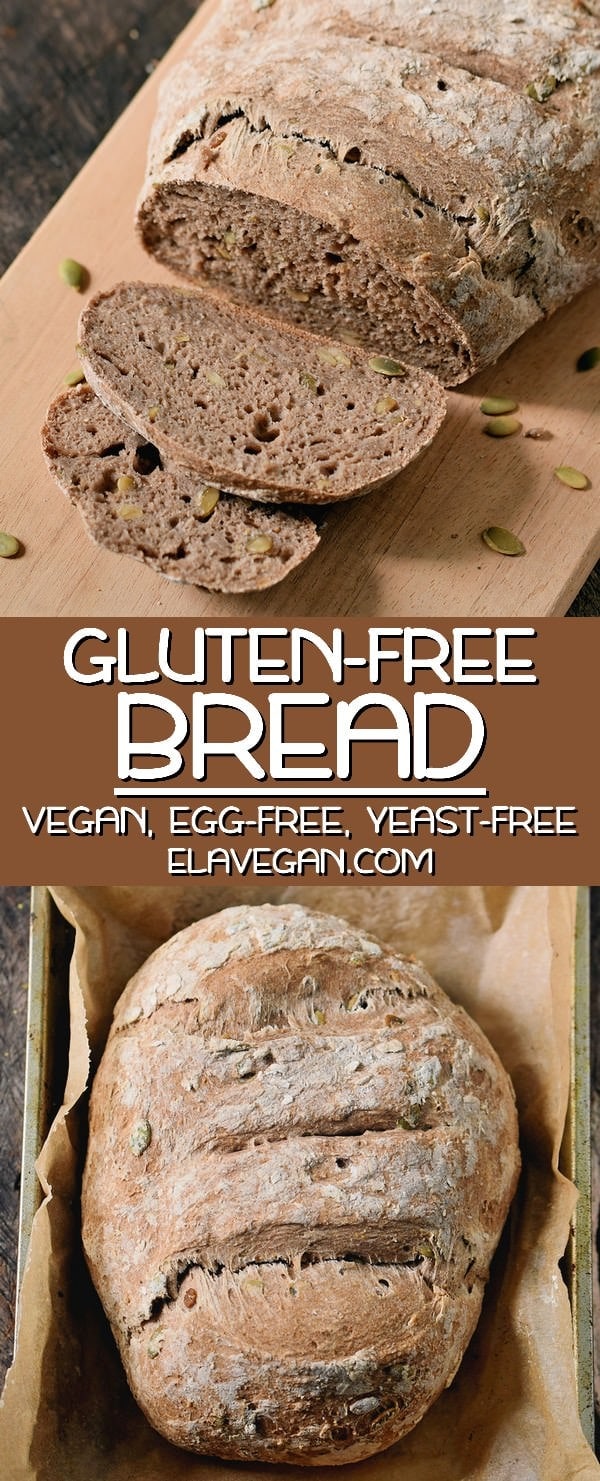
If you are using Pinterest, feel free to pin the following photo:
Can I use oat flour instead rice flour things
It might turn out good but I cannot say for sure because I never tried this combination. 🙂
Hi Ela, could I replace the baking soda or omit it completely from the recipe? Thank you!
You should use more baking powder instead. I would suggest 2 teaspoons.
I would love to try this but using gluten free sourdough starter instead of baking powder and baking soda. Any tips for how much starter to use and what other changes should be made?
Hi Emilye, I have no experience working with sourdough, so I don’t have tips for you. Please report back if you give it a try. 🙂
I made it (the normal way, using baking powder and baking soda), but subbed mung bean flour for the chickpea flour and potato starch for tapioca starch, used dark buckwheat flour and threw in some sunflower seeds.. It came out great! Wonderful texture and flavor; the crumb was light and fluffy. So happy with the results; thanks for this recipe! I might try it using sourdough next time to see how it would turn out.
That’s wonderful, Emilye! I am glad it turned amazing! Your flour blend sounds interesting. 🙂
Hi Ela, do I really need the baking soda? Or baking powder is enough?
You can try to not use it but I had the best result with the combo!
thanks to ela for the recipe
this bread very delicious and soft
I really like the texture
so perfect
????
I am so glad you like it! 🙂
Such an amazing gluten free bread ! For the first time, no need to bake it in a mould, like any gluten free bread ! I just love the texture, the smell when it was in the oven and the taste. So perfect, as it is or toasted ! It’s going to be my number one bread recipe.
Thank you so much for sharing.
Wow, that makes me super happy! Thanks so much for your wonderful feedback, Nathalie! 🙂
Hi Ela,
Is the nutrition facts for one or two slices?
For one, if you cut the bread into 12 slices. 🙂
What brand of psyllium powder do you use? Bread is in oven but the dough doesn’t taste good. 🙁 A very strong taste of what I’m assuming is psyllium but could be the garbanzo or buckwheat. I’ve cooked with buckwheat though and don’t think that’s what I’m tasting. Garbanzo or psyllium us my best guess.
The dough never tastes good but the finished bread does! 🙂
Great recipe! I altered chickpea flour with pumpkin seed flour and it came out awesome. Thank you Ella!
Very helpful! Thanks for your comment, Annamaria. 🙂
I have just came across your website and I think I shall be cooking your recipes every night this week as they all sound so amazing!
I just received a bread machine for Christmas, do you think this could work in the maker possibly?
Aww, that’s so kind of you to say! Yes, I think it should be fine using the bread machine. 🙂
Dont know how to post picture here, but it came out amazing .
Really good bread texture !
I am so glad you like it, Bojana! You can upload a photo on Pinterest or Instagram and tag me with @elavegan and #elavegan 🙂
Hi Ela! Just wondering what cup measures the flours should be? I don’t have scales! 🙂
Hi Brittany, first, it would be awesome if you could get a kitchen scale because it’s very important for gluten-free baking. Second, please read the comment I wrote on December 18th. I will copy and paste it for you:
Hi Ela,
I would like to use potato flour (not starch) in this bread recipe. Which flour can I substitute with the potato flour? And how much should I use?
Hi Ary, I never tried it, so I really don’t know. Maybe replace the rice flour with it but you will need to experiment. 🙂
Ela, I rarely comment. But this bread recipe is the BEST GF/EF/YF vegan recipe I have tried. It rose nicely and tastes delicious. I used teff flour instead of white rice, as I only had brown rice flour on hand.. This will definitely be my go to for bread. Thank you so much!!!
Thank you, Janice! Would you consider rating the recipe? That would be very kind and helpful. I am so glad you loved it! 🙂
Thank you for this recipe! I made the bread with millet flour instead of rice flour and it came out perfect 🙂 This is the only gluten free bread I ever made that has a texture of real bread. Will be definitely making it again.
PS. For those kneading by hands: don’t be scared looking at the ratio of flour to the psyllium husk ‘gelly’, It will absorb all the flour 🙂
Yay! Sounds great with millet flour. Thanks for your amazing feedback, Victoria. 🙂
Hi Victoria! I;m looking to replace the rice flour with millet too, did you use the same amount of millet as the recipe calls for rice flour?
Hi Angela, that should be fine. And yes, use the same amount. 🙂
Thanks Ela!:)
I switched the Rise flour for oat flour and it turned out amazing!
Thanks a lot for letting me know, Natalie! Never tried it but it sounds great. 🙂
You are a genius! By far one of the best gluten free bread I have made ( including ones with eggs, chia eggs, oils and yeast) and I have made a lot! Looks amazing, I love that it has an actual crust and air pockets in the dough. It’s perfect! I replaced the chickpea flour with teff flour and use arrowroot instead of tapioca starch just because I didn’t have the first ingredients but absolutely had to make the bread when I saw the picture! Thank you so much!
That’s awesome! I am so glad you loved the bread. Thanks for sharing your flour substitutes. It’s definitely very helpful. 🙂
Happy holidays!
I am also gluten-free and was looking for a gluten-free and yeast-free bread. I haven’t had a good bread in ages! Very excited to try your recipe, I also use psyllium husk powder fas an egg substitute for many of my recipes!
Thanks a lot for the recipe and let’s see how it will turn out!
I hope you will love it! 🙂
Can you give us picture for all kinds of flours you used in the recipe .I’m none English speaker
Thank you
Hi Amal, I don’t know what you mean. You can see a video of how I made the bread. 🙂
Hi! I don’t own a food scale, so I’m wondering what the estimated amount of “cups” should be per flour. I would love to try this so that the kids and I have bread to eat with our meal for Christmas dinner. Any suggestions would be great!
Hi Leah! I answered a similar comment before, so I will copy and paste it for you:
That’s difficult since this recipe can be made with different flours. Some are lighter than others and if you follow cup measurements, it just won’t be as accurate.
For your reference:
1 cup of buckwheat flour weighs 120 grams
1 cup of rice flour weighs 160 grams
1 cup of chickpea flour weighs 95-100 grams
1 tbsp of tapioca flour weighs 8 grams
This means you could use the following measurements:
3/4 cup buckwheat flour (90 grams)
3/4 cup rice flour (120 grams)
1 cup of chickpea flour (95-100 grams)
5 tbsp tapioca flour (40 grams)
I definitely recommend buying a kitchen scale though.
I hope this answers your question! 🙂