

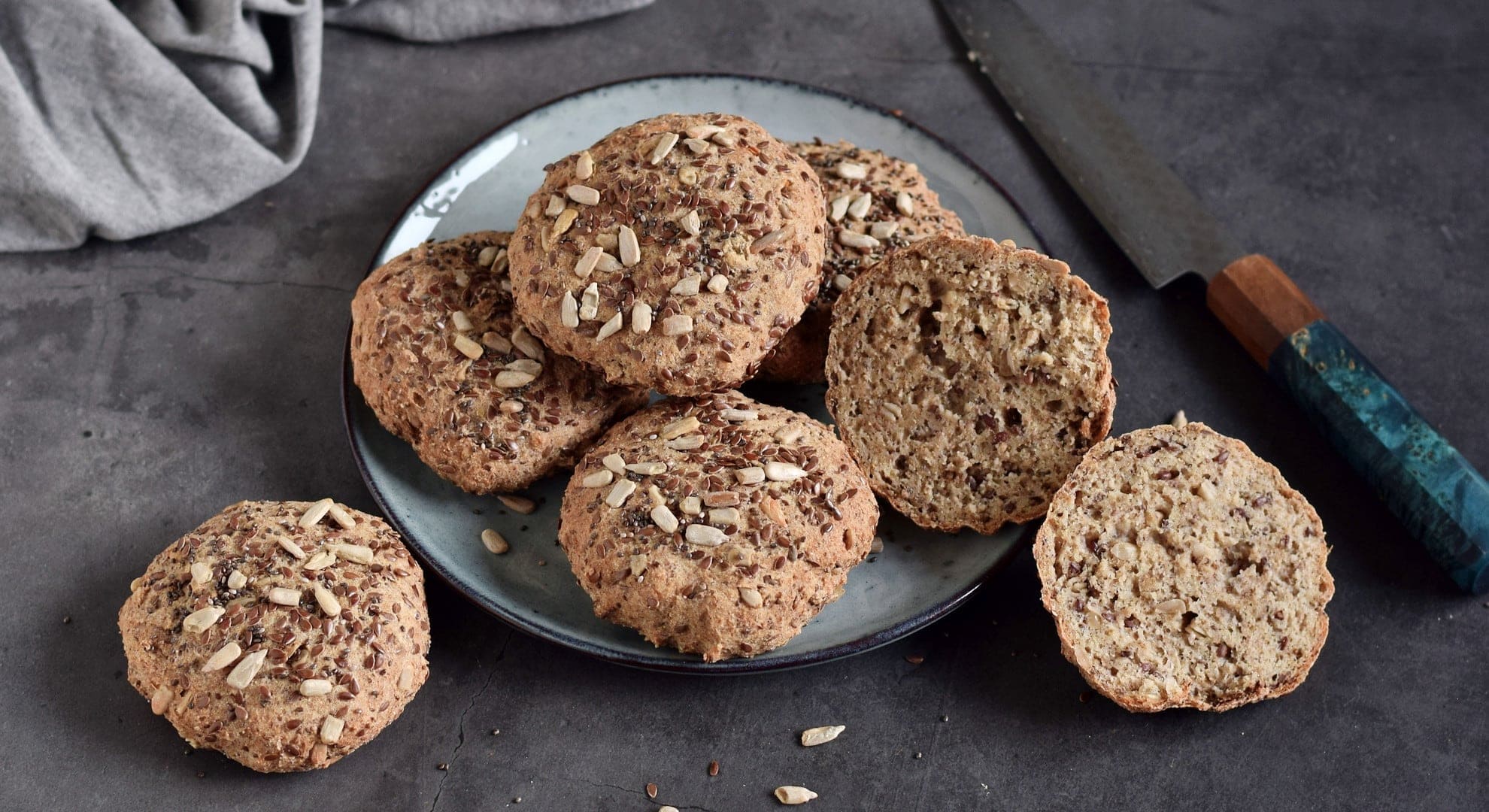
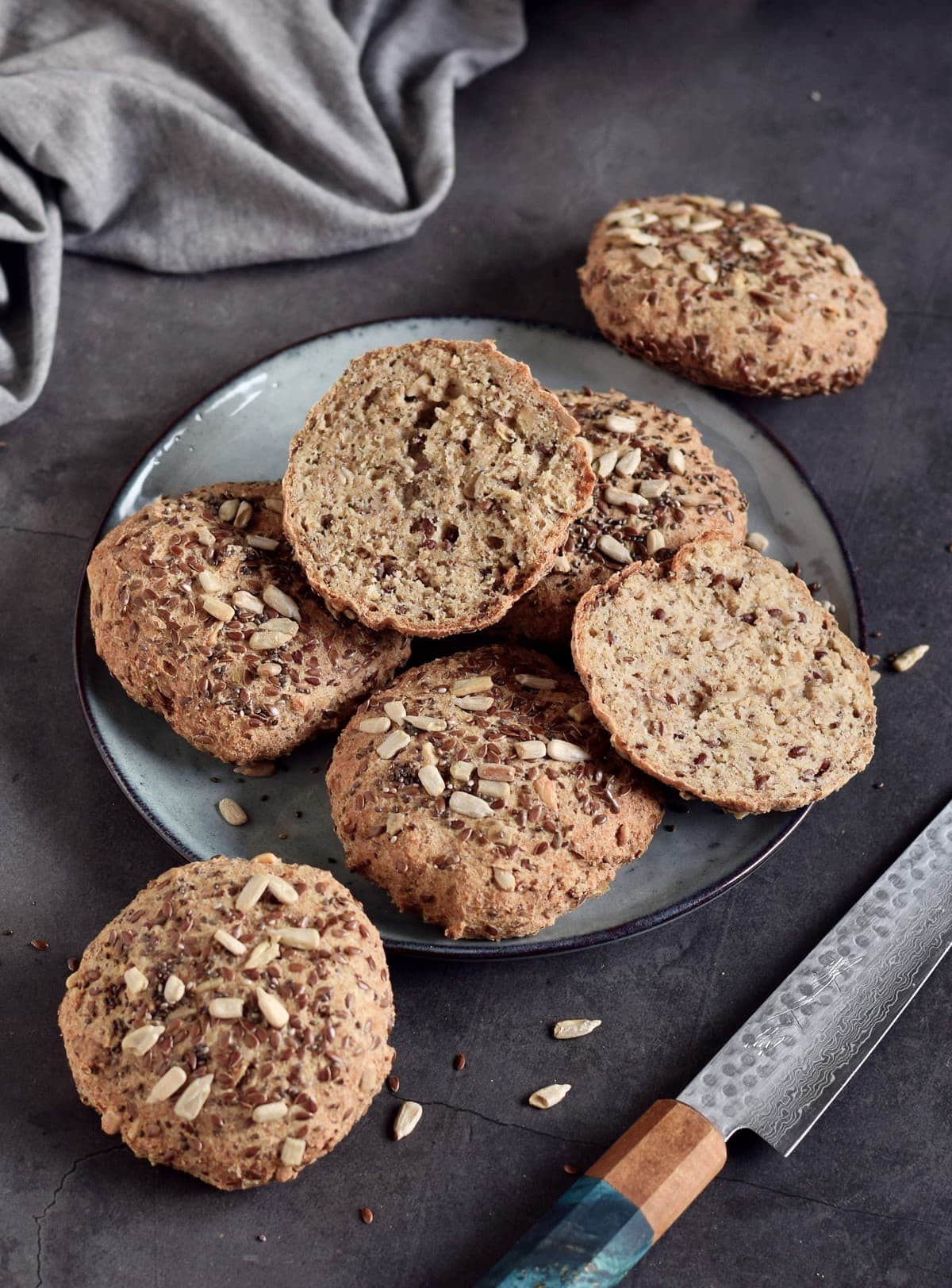
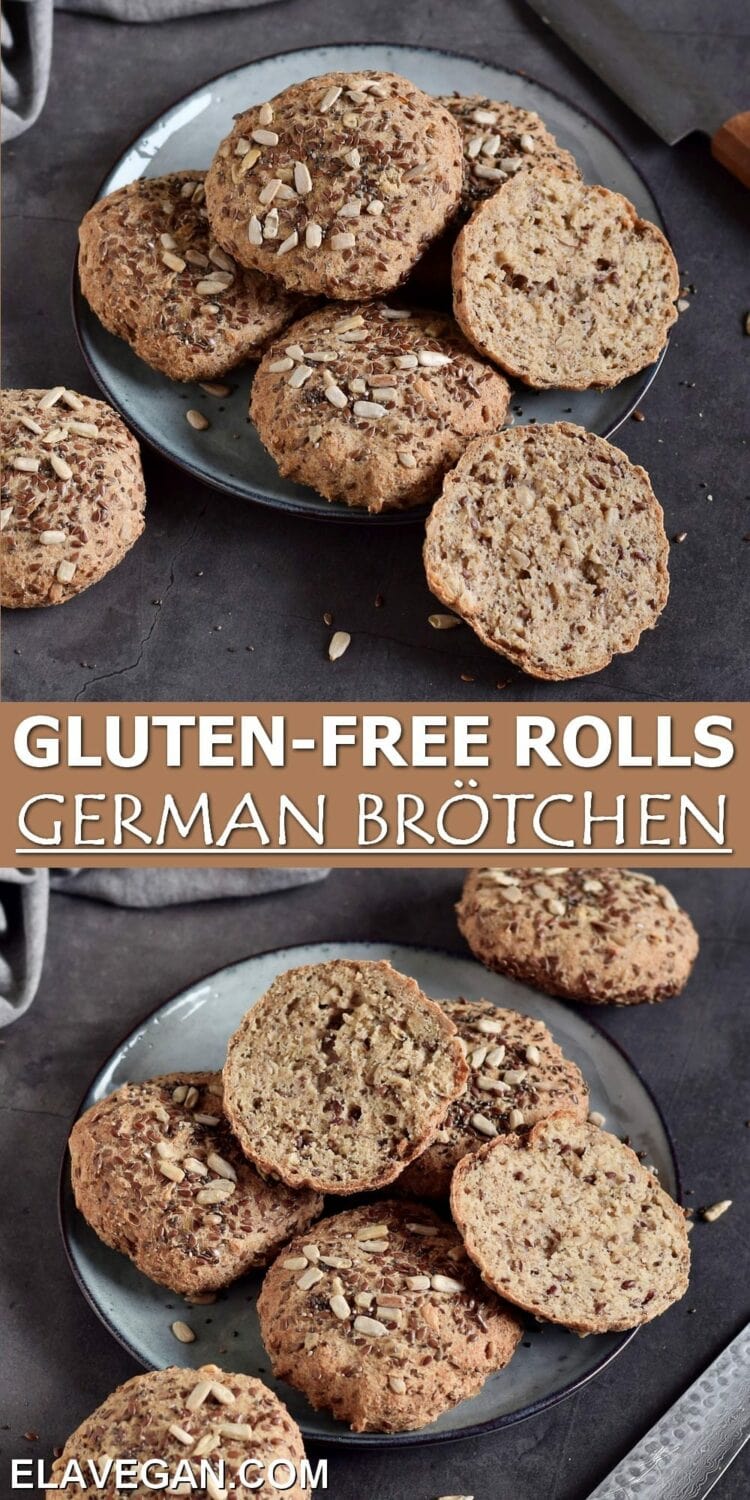
These gluten-free multigrain bread rolls (aka German Brötchen) with a crusty outside and tender middle are filled with whole grains. They’re perfect for breakfast and dinner, plus the recipe is 100% vegan (egg-free, dairy-free) and yeast-free- no proofing required!
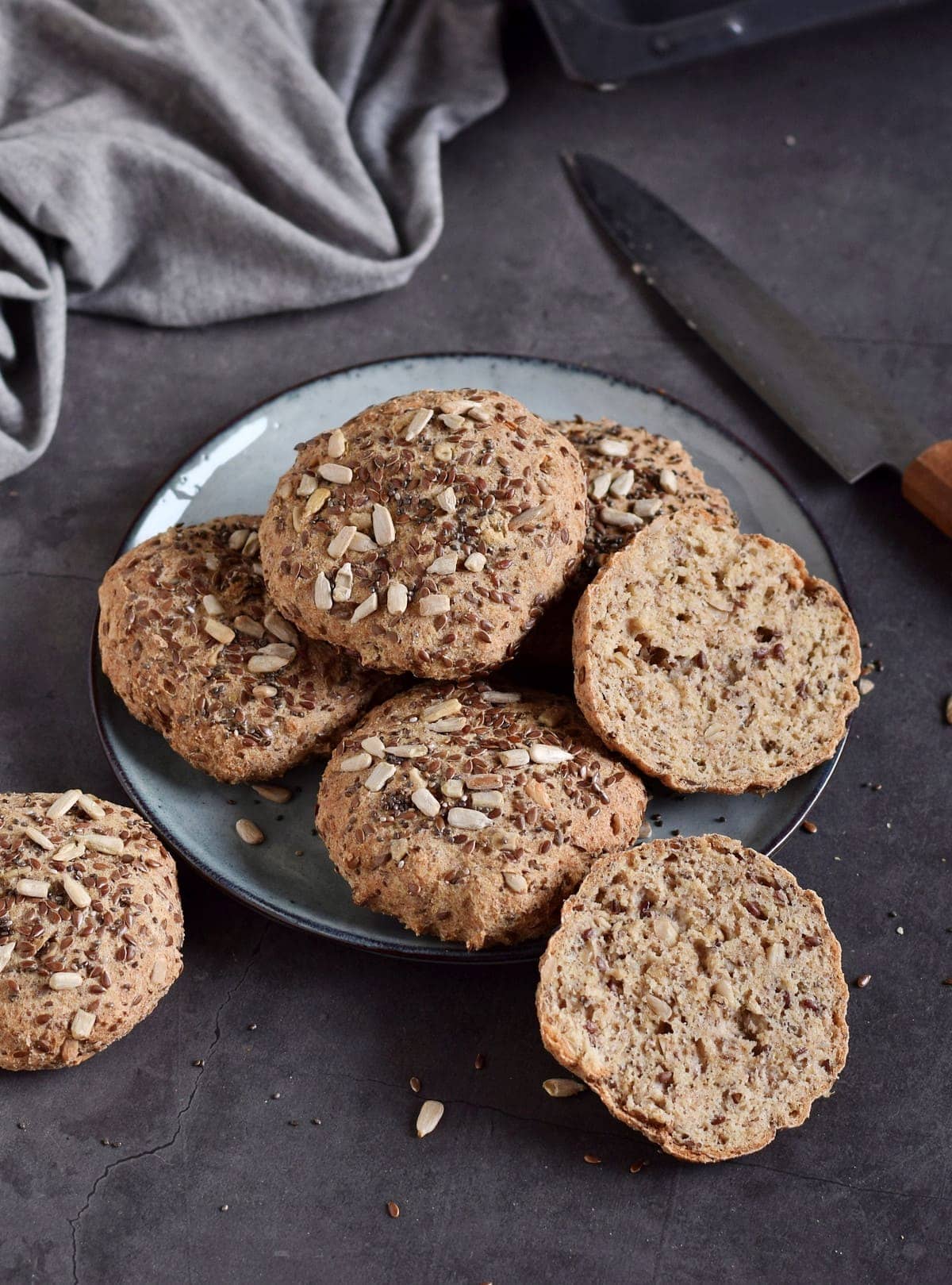
I’ve been in Germany for over two week now, visiting family and eating a lot of bread (we always do here, for breakfast and sometimes also for dinner!). I honestly think German bread is probably the best bread in the world! Am I biased? Perhaps, but try this German-style bread roll recipe (Brötchen in German) and tell me what you think!
I’ve previously shared recipes for gluten-free French bread (baguette) and flatbreads like pita and Indian naan. I’ve even once shared a gluten-free buns recipe for a fluffier type of roll. However, now it’s the turn of something sturdy and nutrient-rich while still gluten-free and vegan!
German whole-grain rolls practically aren’t even comparable to ones I’ve eaten in the US. The US bread is soft and sweet (and, honestly, probably not very healthy). In comparison, multigrain rolls are packed with whole grains and are tender without being too airy/fluffy, or sweet.
The Ingredients and Substitutions
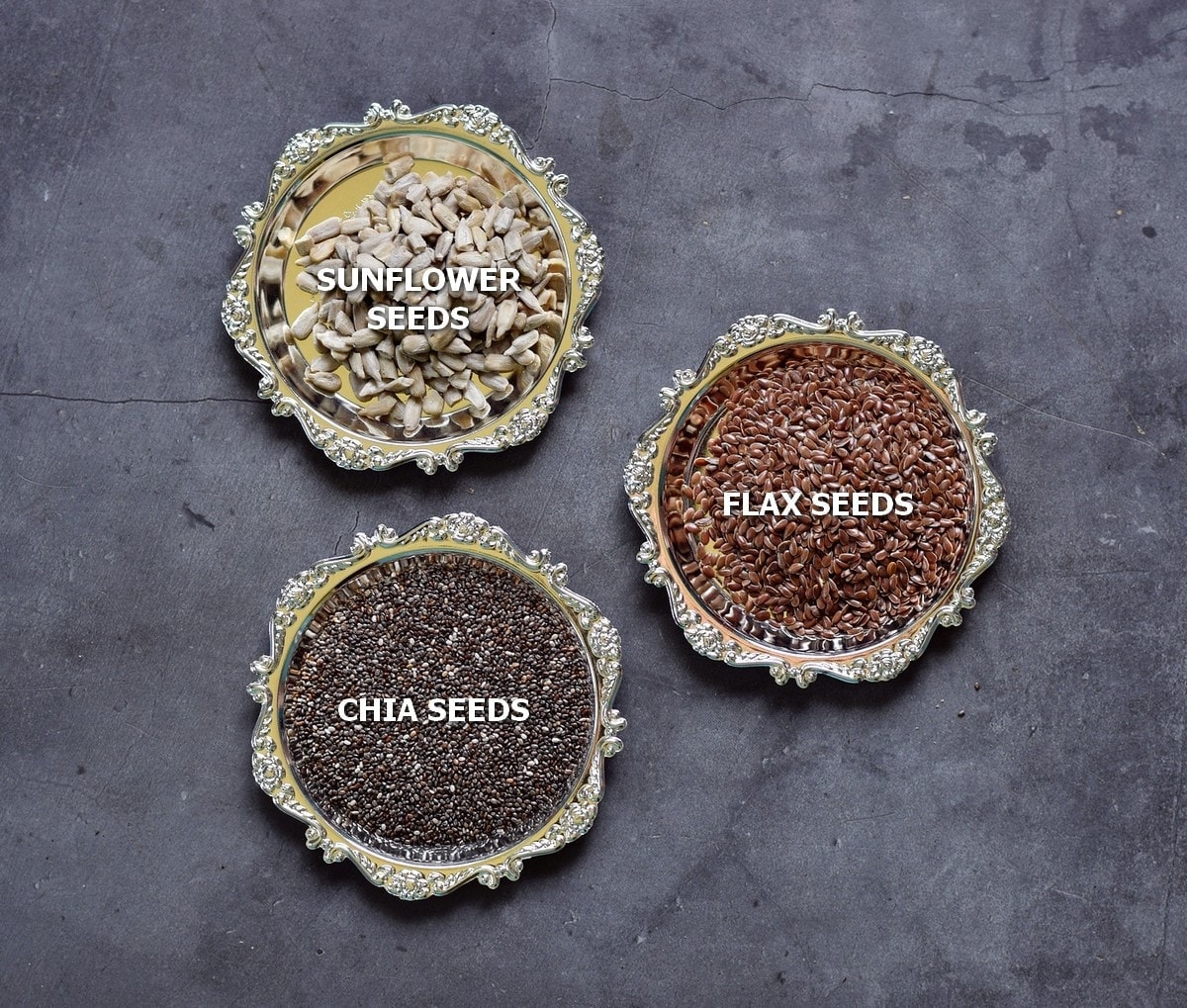
- The seeds: I used a combination of whole flax seeds, sunflower seeds, and chia seeds soaked in a little hot water for these Brotchen. However, you can use any whole seeds of choice. Pumpkin seeds, poppy seeds, and sesame seeds, for example, work very well too. You could alternatively use a multigrain hot cereal mix (they often come in 5,7, or 10-grain options).
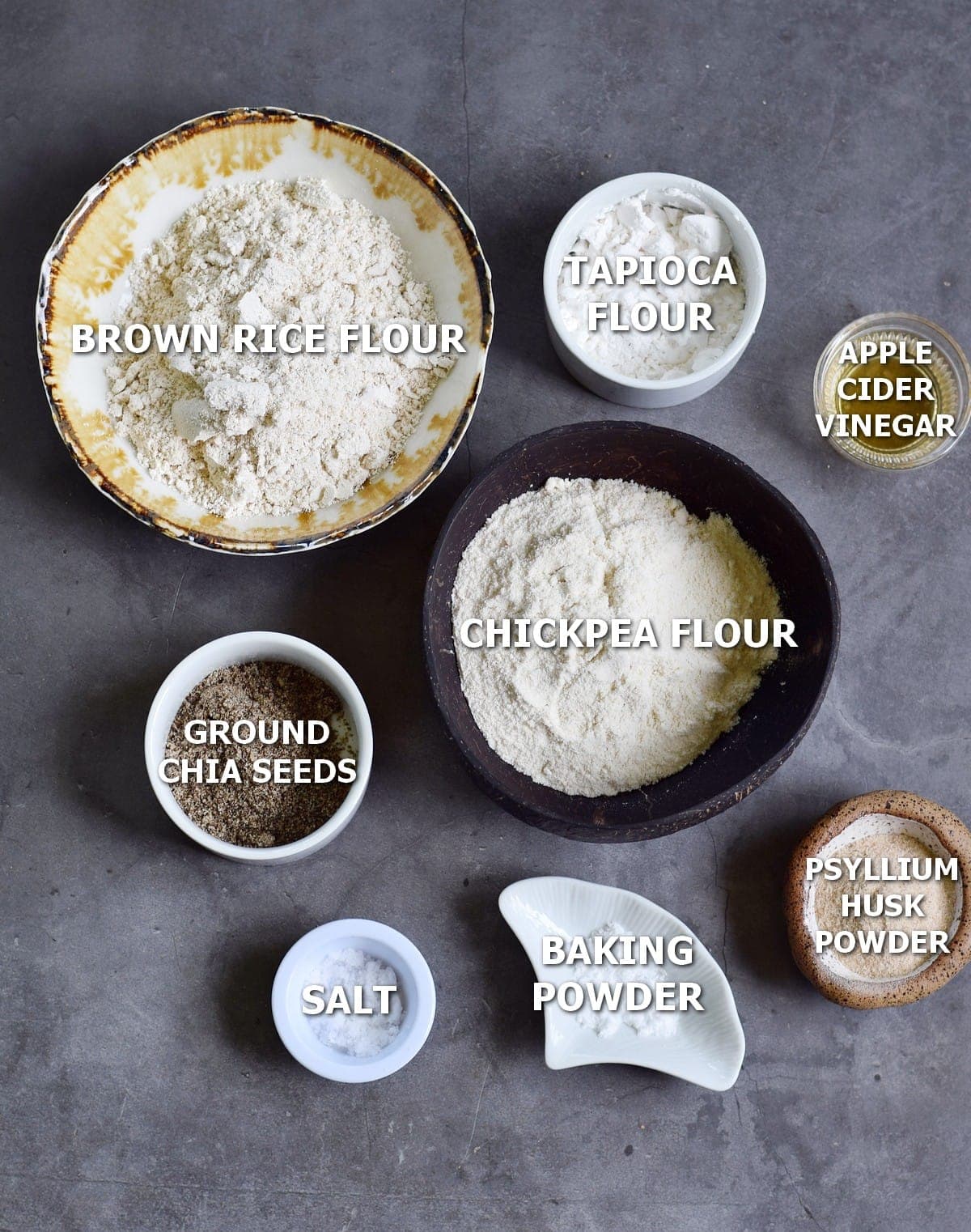
- The flours: I use a combination of brown rice flour, chickpea flour, and tapioca flour (or arrowroot flour) for the perfect texture and consistency. I’ve tried the recipe with oat flour (instead of chickpea) once, and it also worked, but I prefer chickpea.
- Psyllium husk powder: If you only have whole psyllium husk, you can grind it first in an electric coffee/spice grinder. This ingredient helps to mimic gluten where there is none and add ‘chew’ to the bread. It is vital to the bread roll recipe.
- Ground chia seeds: If you have whole chia seeds, you can grind them for a few seconds in a coffee/spice grinder or a blender/food processor.
- Baking powder: This leavening agent helps to provide lift to these no-yeast dinner rolls.
- Apple Cider Vinegar: I recommend using unfiltered and unpasteurized apple cider vinegar. ACV helps to strengthen gluten-free dough while also making a springier texture. Regular white vinegar will work if you don’t have ACV.
- Salt: For seasoning the gluten-free rolls.
- Water: Tap water is fine (if it’s drinkable where you live).
For the full ingredients list, measurements, complete recipe method, and nutritional information, please read the recipe card below.
How to Make Gluten-Free Rolls?
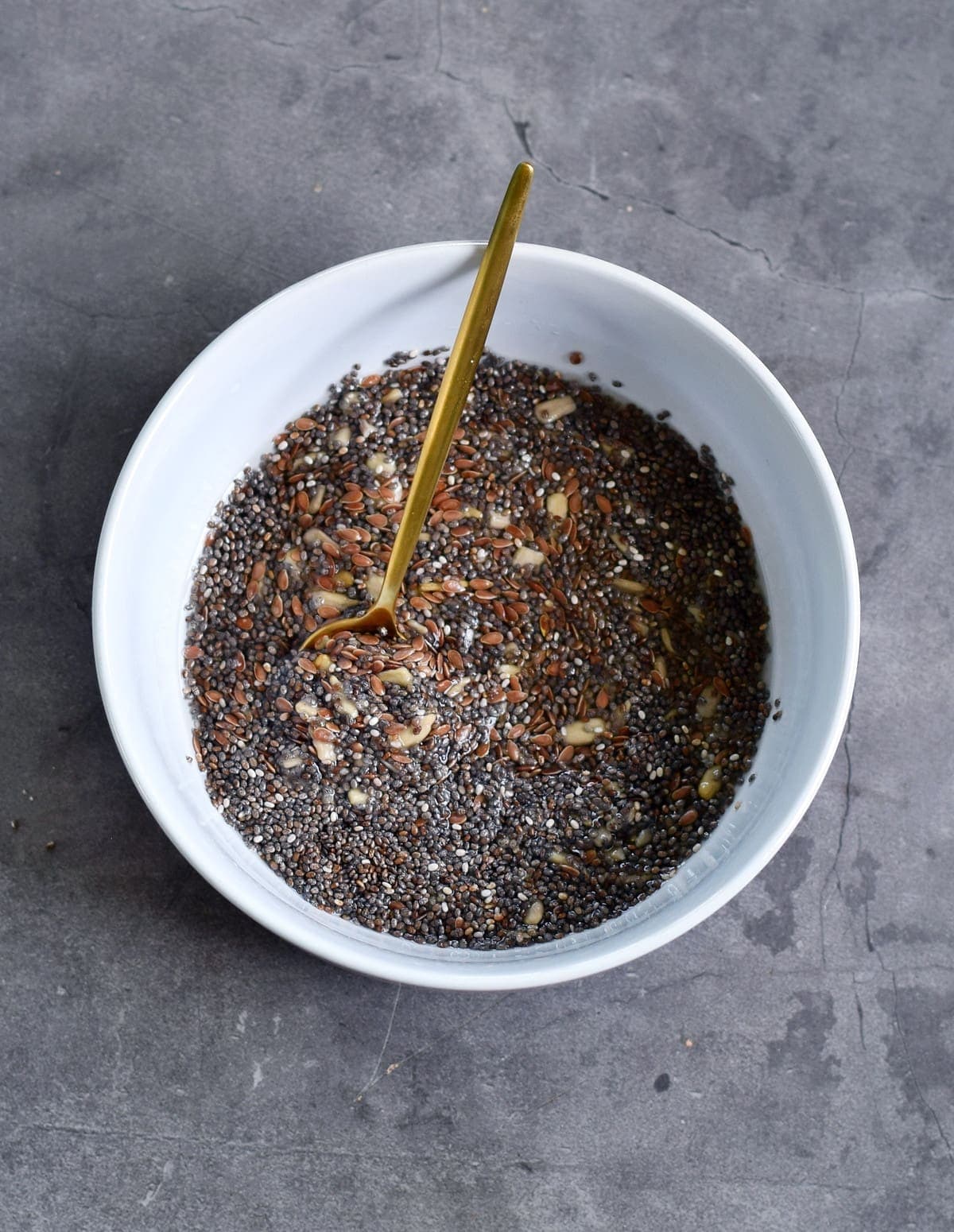
- First, add the whole seeds to a small/medium bowl and pour the hot water over them. Mix with a spoon and let them rest for about 10 minutes.
- Then, preheat the oven to 360F/180C and line a baking sheet with parchment paper or a silicone mat.
- Meanwhile, in a large mixing bowl, add the brown rice flour, chickpea flour, tapioca flour, psyllium husk powder, ground chia seeds, salt, and baking powder and mix.
- Then add the water, apple cider vinegar, and the wet seed mixture and stir with a spoon to create a shaggy dough.
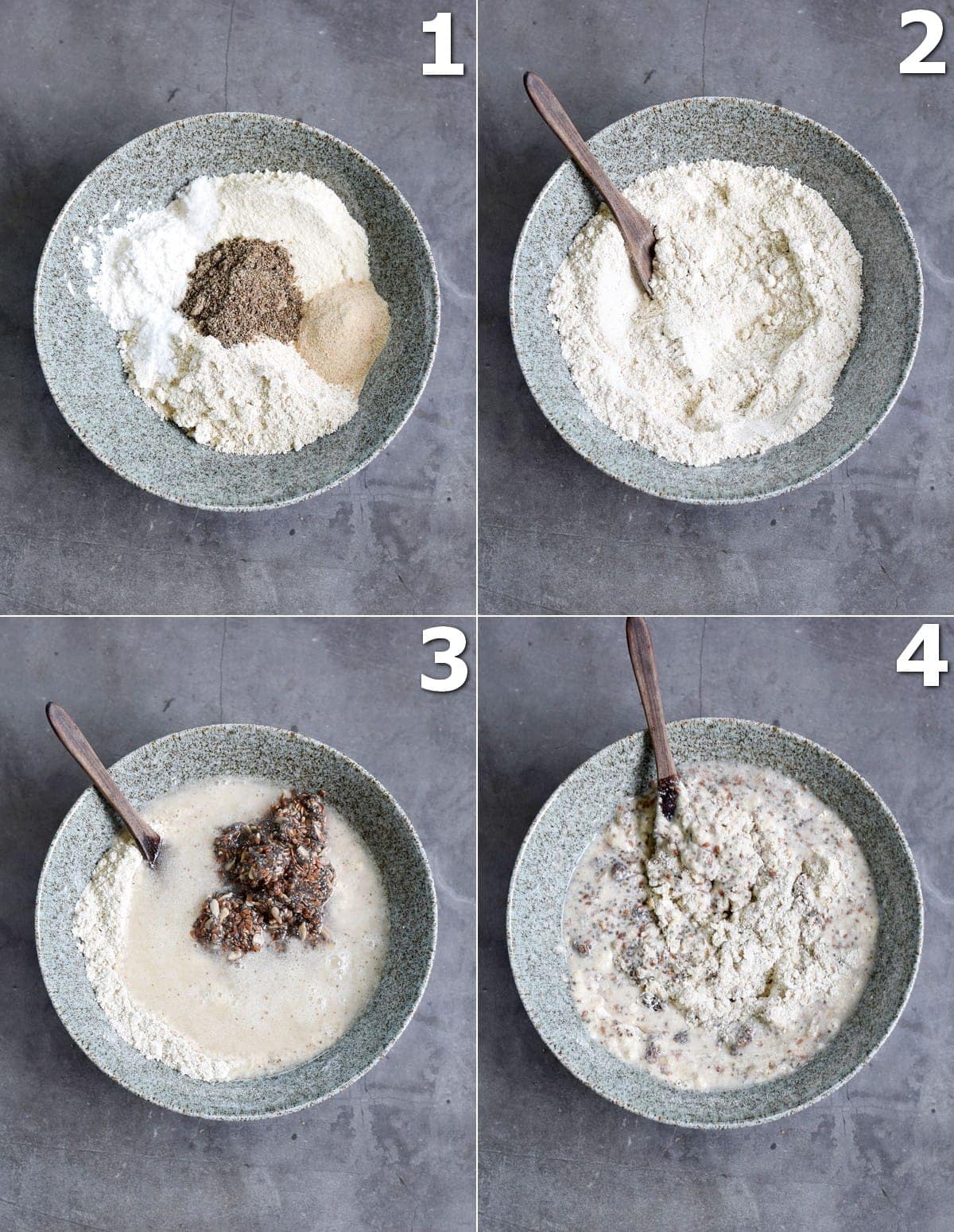
- Use your hands (or a mixer/processor with a dough blade) to knead the dough for a few minutes until smooth.
- When the dough is ready, divide it into six equal parts and shape each into a roll.
If you want complete accuracy, then you can weigh the dough and divide it by weight.
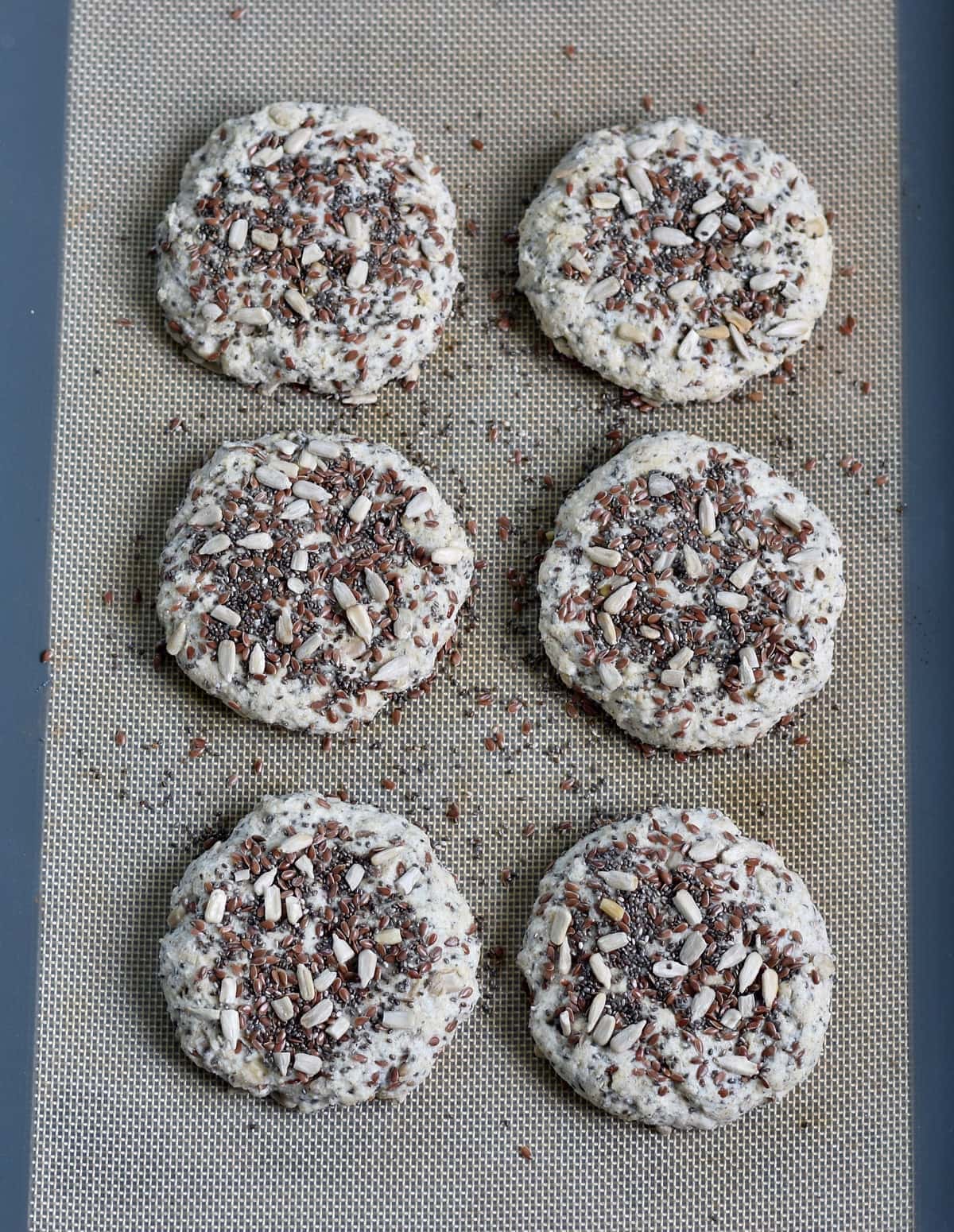
- Sprinkle the baking sheet with a thin layer of any seeds of your choice (unsoaked), then place the Brötchen over them, and finally sprinkle them with a few more seeds.
You can lightly brush the rolls with a bit of water to help the seeds adhere if needed.
- Bake the rolls in the oven for between 30-40 minutes until lightly browned and puffed up – then enjoy!
How to Serve and Store Brötchen?
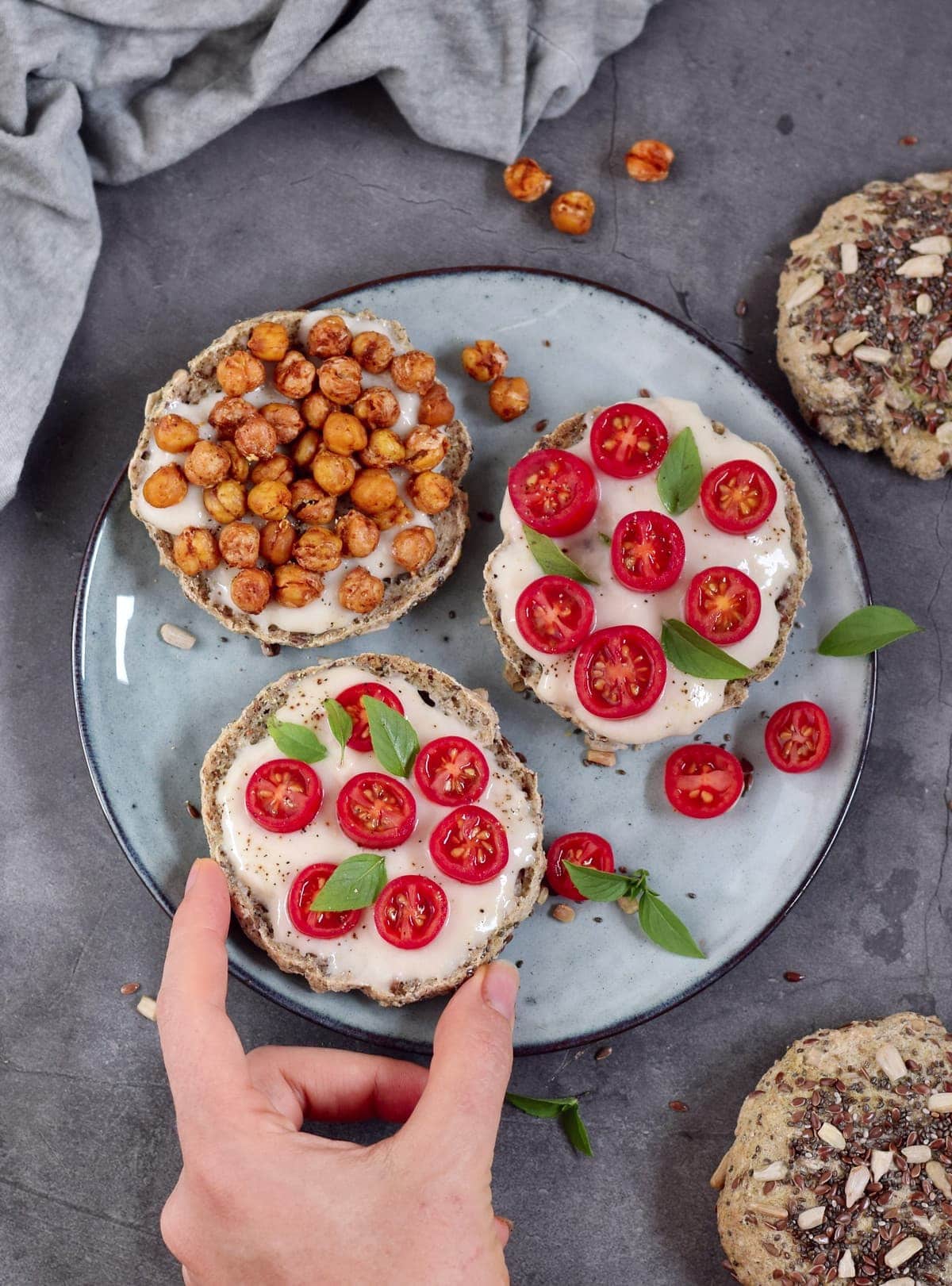
Serve: There’s nothing better than the smell of freshly baked bread wafting through the kitchen. Even better, tear into one of these while warm and enjoy with a bit of vegan butter for a quick and delicious treat. Also, save them for sandwiches, soups (like this creamy carrot ginger soup or hearty corn chowder), stews, burgers, and for a German breakfast with dairy-free butter, jams, cheese, etc.!
To Store: Store the bread rolls in a bread bin or container for several days at room temperature. If they start to go a little hard, you can bring life back to them by warming them in the microwave or oven for a few minutes, sprinkled with a little water.
Freeze: Allow the rolls to cool entirely, then freeze for up to 3 months, tightly wrapped in plastic wrap.
FAQs
Are multigrain rolls healthy?
Often multigrain bread is made from white flour with some added grains. Despite this, multigrain bread tends to have more fiber and a lower GI than white bread, resulting in longer-lasting energy.
Why soak seeds and grains before baking bread?
There are several reasons to soak seeds/grains. First, it helps to soften them and make them easier to eat. Soaking can also make them easier to digest. However, soaking also stops the ingredients from sucking up moisture from the bread dough.
Can I make the gluten-free rolls crustier?
You can add a few ice cubes (in an oven-safe dish) to the oven while baking the whole-grain rolls. This will steam up ad help form a crustier shell.
For a shiny, crackly crust, you could also create a cornstarch water slurry to brush over the rolls before baking.
More Recipe Notes
- Use a stand mixer/food processor: With a dough hook/blade to help mix and knead the gluten-free dinner rolls dough. As there’s no gluten in the recipe, you don’t have to worry about working it too much.
- If you prefer sweeter bread: I know I know; I said at the top how much I prefer bread without tons of sugar. However, if you do like a subtle sweetness, feel free to add a few spoonfuls of a liquid sweetener. Just note, this will make the dough slightly stickier, and you’ll need to reduce the water slightly so the dough isn’t too wet.
- Using oats to top: Instead of extra seeds, you could top the Brötchen with some oats instead.
- Use the leftovers for croutons: A slightly stale multigrain roll will work fine for making croutons. Dice them into even-ish pieces and then toss with seasoning and a little oil, then bake till crisp.
Other German Inspired Recipes
- German Potato Soup (Kartoffelsuppe)
- Creamy German Cucumber Salad (Gurkensalat)
- Potato Dumplings (Kartoffelklöße)
- Simple Sauerkraut from scratch
- German Potato Noodles (Schupfnudeln)
- Caramelized Onion Tart (Zwiebelkuchen)
If you try this recipe for German gluten-free rolls (Brotchen), I’d love a comment and ★★★★★ recipe rating below. Also, please don’t forget to tag me in re-creations on Instagram or Facebook with @elavegan and #elavegan – I love seeing them

Multigrain Bread Rolls (Brötchen)
Video
Ingredients
Seed mixture:
- 15 g (2 tbsp) whole flax seeds
- 15 g (2 tbsp) whole sunflower seeds
- 15 g (1 ½ tbsp) whole chia seeds
- 60 g (¼ cup) hot water
- More seeds to sprinkle
Flour mixture:
- 120 g (¾ heaped cup) brown rice flour
- 70 g (⅝ cup) chickpea flour (see notes)
- 25 g (3 tbsp) tapioca flour (see notes)
- 15 g (1 ½ tbsp) psyllium husk powder
- 15 g (3 tbsp) ground chia seeds
- ¾ tsp salt
- 1 ½ tsp baking powder
- 240 g (1 cup) water
- 15 g (1 tbsp) apple cider vinegar
Instructions
- You can watch the video in the post for visual instructions.Add the whole seeds to a small/medium bowl and pour hot water over them. Mix with a spoon and let it rest for about 10 minutes.
- Preheat the oven to 360 degrees Fahrenheit (180 degrees Celsius) and line a baking sheet with parchment paper or a silicone mat.
- Meanwhile, add the brown rice flour, chickpea flour, tapioca flour, psyllium husk powder, ground chia seeds, salt, and baking powder to a large mixing bowl.
- Add the water, apple cider vinegar, and the wet seed mixture and stir with a spoon. Then use your hands to knead the dough for a few minutes. You can also use a hand mixer.
- Divide the dough into 6 equal parts and shape each into a roll.
- Sprinkle the parchment paper (or silicone mat) with a thin layer of seeds of choice and place the 6 rolls on it. Sprinkle the tops with more seeds.
- Bake in the oven for 30-40 minutes and enjoy!
Notes
- Chickpea flour: I made the recipe with once with oat flour and it turned out good, but the result with chickpea flour was even better.
- Tapioca flour: You can use arrowroot flour instead.
- Seeds: Use any whole seeds of choice. Pumpkin seeds are amazing too!
Nutrition information is an estimate and has been calculated automatically
 „Simple and Delicious Vegan“ Cookbook by ElaVeganCLICK HERE to order!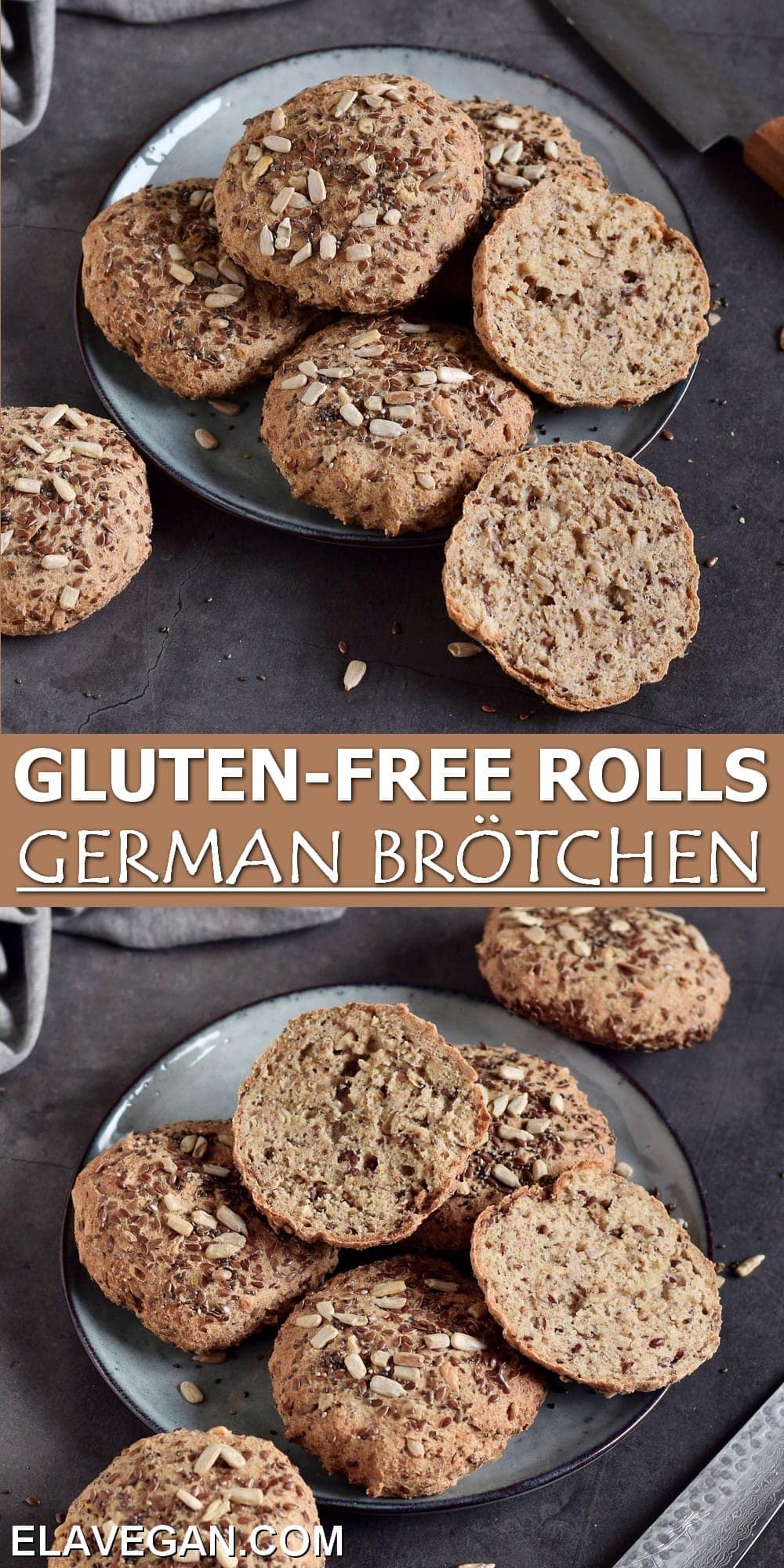
Can I grind the seed mixture before pouring water over it or use something in its place? I need a gluten free, yeast free, vegan recipe for my son who also won’t eat anything with seeds that are whole.
Yes! 😊 You can absolutely grind the seed mixture first. Just keep in mind that grinding the seeds first will give the rolls a slightly different texture, but it should work well and there won’t be any whole seeds in the bread. ❤️
We just returned from the Czech Republic and I was looking for a roll like what we had for breakfast there with meet and cheese. This recipe is perfec, easy and delicious 😋!
I’d love to try these! Your breads have been so good, I came here first for a “burger” bun recipe. I’m not doing much rice, given the arsenic in rice concern ( in the U.S.). Do you happen to know if there is a good substitute for the rice flour? Thank you.
Hey Mary! You could use buckwheat flour, quinoa flour, or sorghum flour.
Hi Ela.
Thanks for all these wonderful recepies😀 I do not tolerate chickpea and oat flour very well. Do you know if I can use sorghum flour instead of the chickpea flour? Or what about cassava flour?
Thanks.
Best, Ulla
Hi Ulla! 😊 Thank you so much, I’m really happy you’re enjoying the recipes! Yes, you can usually replace chickpea flour with sorghum flour (and oat flour with buckwheat flour) in many recipes.
Cassava flour can also be a good alternative, but it absorbs more liquid and behaves differently, so the texture may change slightly. I recommend starting with sorghum first (and/or buckwheat flour) for a closer 1:1 swap. Hope this helps. 🙂
Thanks:-)
Hello 😊 If I want to make this bread recipe but in a double portion to make it taller, because when I made the single portion it turned out a bit too low, I have two questions:
1. Will it work to double the recipe?
2. If yes, how much should I increase the baking time?
Also, after mixing all the ingredients, the dough isn’t really easy to handle—it sticks a lot to my hands. Does this mean I need to add more flour?
Hi Maryla 😊 This recipe is actually for bread rolls and not for a loaf, so if you want to make it taller like a bread loaf, the texture and baking time might turn out a bit different.
Yes, you can double the recipe, just keep in mind that it was developed for rolls, so the dough will behave a bit differently in a pan.
The baking time will need to be longer, probably around 15–20 minutes more, but best is to keep an eye on it and do the toothpick test to make sure it’s baked through.
About the dough sticking: that’s totally normal because of the psyllium husk and chia, they gel and make the dough sticky. You shouldn’t need to add more flour—just wet your hands slightly when shaping and it’ll be easier.
By the way, did you use psyllium husk powder (not whole husks)? And did you measure in grams (metric) or cups? That can make a big difference in the result.
I baked bread using this recipe because I read in the comments that it worked for others, so I wanted to give it a try myself. And it did work, only it turned out very low. I’ll try making it with a double portion and do the toothpick test. I measured everything with a scale and used psyllium husk, but I ground it into a powder. Thank you for your advice and I wish you all the best 😊
This bread turned out great. My gluten/dairy/soy free toddler is ecstatic to eat bread with the family now. I used oat flour instead of chickpea and made it into a loaf. Can I use ground flaxseed in place of ground chia for next time? Thank you for the great recipe!
So happy to hear that your toddler can enjoy bread with the family! 🥰 Oat flour sounds like a great swap. You can try using ground flaxseed instead of chia, but it may slightly affect the texture. Let me know how it goes if you give it a try! 😊
I loved it with the chickpea flour and flax and chia seeds as it wasn’t as good using oat flour instead and adding in hemp seeds..Thank you for the recipe. It is one of my favourite rolls. 🙂
I’m so glad you enjoyed it, Hiroshi. Thanks for your feedback—happy to hear it’s one of your favorites! 🥰
Can I add yeast to this recipe so the rolls would rise more and be bigger?
Short answer: not really in the way you’re probably hoping.
This dough is built as a quick-bread style dough, not a classic yeast dough. It has no real “food” for yeast, no gluten structure, and it sets very fast because of the psyllium, chia and baking powder combo. Even if you add yeast, it doesn’t have time or the right structure to trap that gas in a way that gives you fluffy, tall rolls. The yeast would mostly just sit there or make them collapse.
But you can make them a bit bigger and lighter with a few small tweaks that work much better for this type of dough:
• Increase baking powder to 2 teaspoons
• Add 1 extra tablespoon tapioca (or arrowroot) for more elasticity
• Shape them slightly taller rather than wide
• Bake right after shaping so they don’t lose air
That will give you noticeably higher, lighter rolls without changing the character of the recipe.
Very easy and delicious. I love that there’s no yeast involved. These take no time at all to make and turn out wonderful.
Hi Danielle, I am so glad you like the bread rolls. 🙂
Hello! I’m looking forward to trying this recipe, but wanted to know if you are referring to single-acting or double-acting baking powder here. Or, I suppose, did you use German baking powder? Thank you so much!
Hi James, I used German baking powder. 🙂
Perfect, thank you so much! I made the rolls today and they came out absolutely delicious,
That’s awesome! I am so glad they turned out delicious. 🙂
Good morning Ela,
I purchased gluten free ready-mix flours (rice, potatoe,,tapioca and chickpea)plus xanthan gum
I used this plus the psyllium husk and the seeds etc to make the Brotchen rolls..
They turned out great but I think too ‘gummy’
As a result of the commercial mix which had thexanthan gum.
Should I leave out the psyllium?
Anyway in future won’t buy commercial mixes.
Warm wishes,
Elizabeth.
Hi Elizabeth, I would use less psyllium next time or leave it out if the flour blend already contains xanthan gum.
If this is any indication … MORE German breads please!
Hello Ela,
Absolutely love these buns , actually made for my daughter who has the allergy.
I would like to use soaked dried almonds skin on and grind in my Vitamix instead of rice flour, is this possible?
Sending warm wishes to you,
Elizabeth.
Hi Elizabeth, I am so glad you love the buns. I haven’t tried almond flour yet, so not sure how they will turn out. 🙂
Can you bake this as a loaf instead of rolls?
Yes, that is fine. Just increase the baking time (about 50 minutes).
I cannot have cider vinegar.
Would this work with lemon juice?
Yes, lemon juice or lime juice is fine. 🙂
Excellent recipe. The rolls are hearty, delicious and quick to make.
That’s awesome! I am so glad you liked them, Brad. Thanks for your feedback. 🙂
Hi! I love these rolls they came out so good!!! As someone who is trying to stay away from vinegar have you tried making it with baking soda and baking powder?? Not sure if it would turn out the same but I was wondering, and if so what the measurements would be…
Hi Chloe, you could try lemon juice instead of vinegar. If you want to add baking soda, I would use between 1/4-1/3 tsp in addition to the baking powder (as stated in the recipe). Please report back if you give it a try. 🙂
These came out pretty good, nice soft rolls and I enjoyed the flavor. They came out a little denser than it looks like in the photos- out of curiosity, when you designed the recipe, did you use the weights or the imperial measurements? I used the weights in grams, but I noticed it didn’t line up very well to the Tbsp or cup measures, so wondered if that was why.
Hi Cecelia, I always create my recipes with metric measurements. 🙂
I am extremely impressed by this recipe. It’s really spectacular. I didn’t actually get to knead my dough because it was pretty sticky. I let it sit a bit longer after I mixed it and it became less sticky but still not enough that I thought I could knead it so I just scooped it up into a ball and sectioned it out into four (instead of 6). I baked about 28 minutes and they came out perfect. Recipes with chickpea flour in them usually scare me but these buns are very tasty and have a great texture.
You are very welcome, Amanda. Thanks for your feedback. 🙂
I made these rolls yesterday. The taste was really good but they were so hard. What would the reason be?
Thanks.
I am really not sure, because they always turn out very soft due to all the seeds and psyllium husk powder. Did you change the recipe slightly?
It’s the BEST gluten-free multigrain bread I’ve ever had/made. It’s my second time baking it as sandwich bread. Thank you for the recipe. It tastes as good or far better than the brötchen I had in Deutchland. This certainly will be my GO TO recipe for gluten-free bread.
Vielen Dank! Liebe Grüsse.
Sounds amazing! Glad you liked them, Phuong. 🙂
Ella
I very happy I finally got around to making these today. I was worried that the seeds would take over the flavor of the bread but they did not. I will make the rolls again, but I would like to try the ice/ stream method for a crusty outside. Thank you for your hard work and sharing.
Aww, so glad you like them! 🙂