

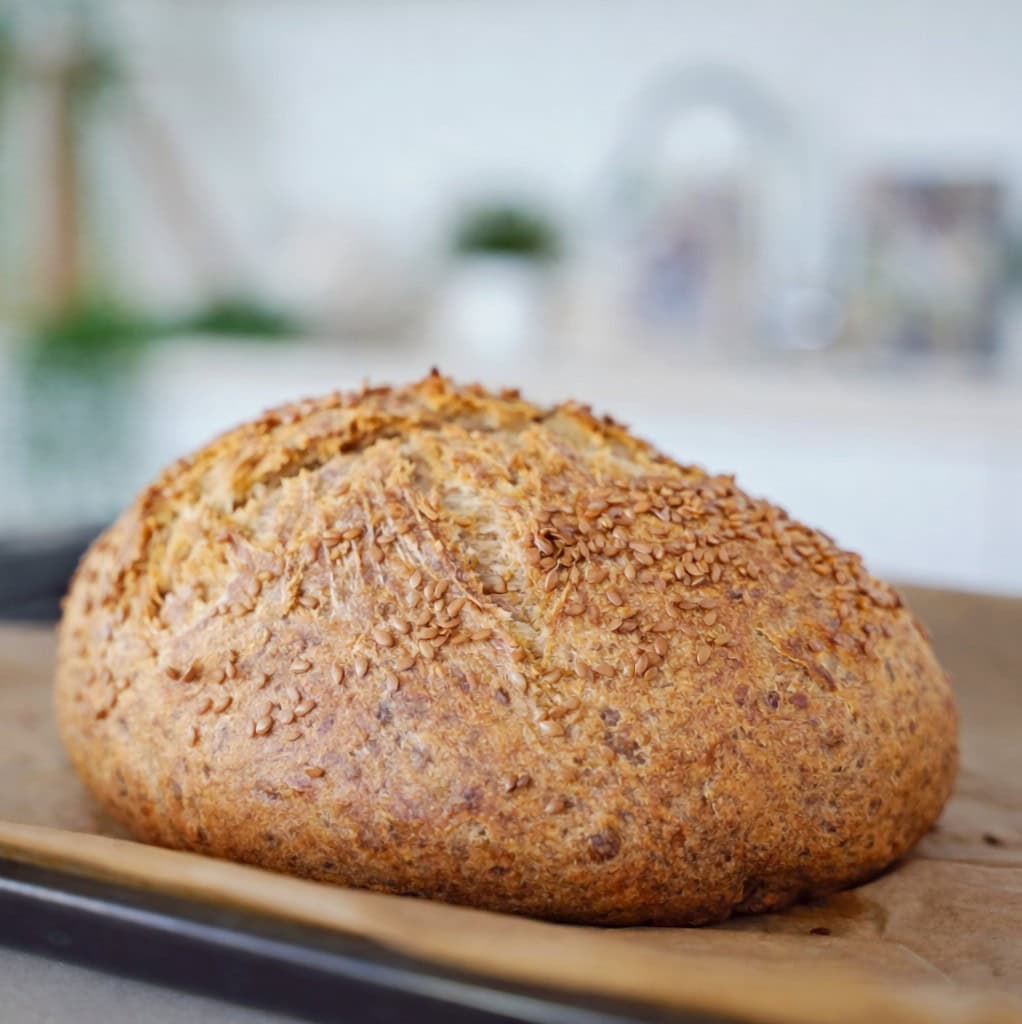
This quick and easy one-bowl chickpea flour bread is high-fiber, high-protein, gluten-free, yeast-free, and uses baking soda for a fluffy loaf, perfect for toasting and sandwiches!

Since sharing a recipe for chickpea bread using dried chickpeas, I’ve received TONS of YouTube comments asking for a chickpea flour version. Ask, and ye shall receive! This simple chickpea flour bread recipe requires no yeast, oil, sugar, or rising time. Instead, nutty chickpea flour + baking powder and baking soda create a high-fiber, high-protein bread that’s well risen, tender, and perfect for toast and sandwiches!
You might also enjoy crispy chickpea crackers, chickpea flour gluten-free tortillas, or other nutritious, gluten-free bread recipes like lentil protein bread or quinoa bread.
The Ingredients
- Chickpea flour: (aka garbanzo bean flour or besan. Gram flour also works) It’s available in most large grocery stores/Asian markets or homemade (method in FAQs). Make sure it’s fresh, though, or it may taste bitter/stale.
- Psyllium husk powder: This is essential for binding (don’t omit). If using whole husk, grind into a fine powder (measure after grinding).
- Ground flaxseed: To further bind.
- Leavening agents: Baking powder and baking soda provide rise without yeast.
- Acid: Apple cider vinegar or lemon juice work to activate the baking soda.
- Salt: Note, chickpeas need more seasoning than you think.
- Water
For the full ingredients list, measurements, complete recipe method, and nutritional information, read the recipe card below.
Recipe Variations
- Split pea flour: Similar to when making chickpea tofu, a blend of chickpea flour and split pea flour makes a more robust flavor.
- Flavor boosters: i.e., nutritional yeast, garlic powder, onion powder, smoked paprika, cumin, turmeric, cayenne pepper, black pepper, Italian seasoning, rosemary, thyme, or fresh parsley, cilantro, or scallions.
- Mix-ins: Olives, sun-dried tomatoes, roasted garlic, sauteed or caramelized onions, preserved lemon peel, dairy-free cheese (feta or shreds), etc. Pat dry and don’t add too much, or it won’t bind.
- Toppings: Brush or spritz with water and sprinkle with seeds (sesame seeds, poppy seeds, sunflower seeds, pumpkin seeds, etc.), everything bagel seasoning, etc.
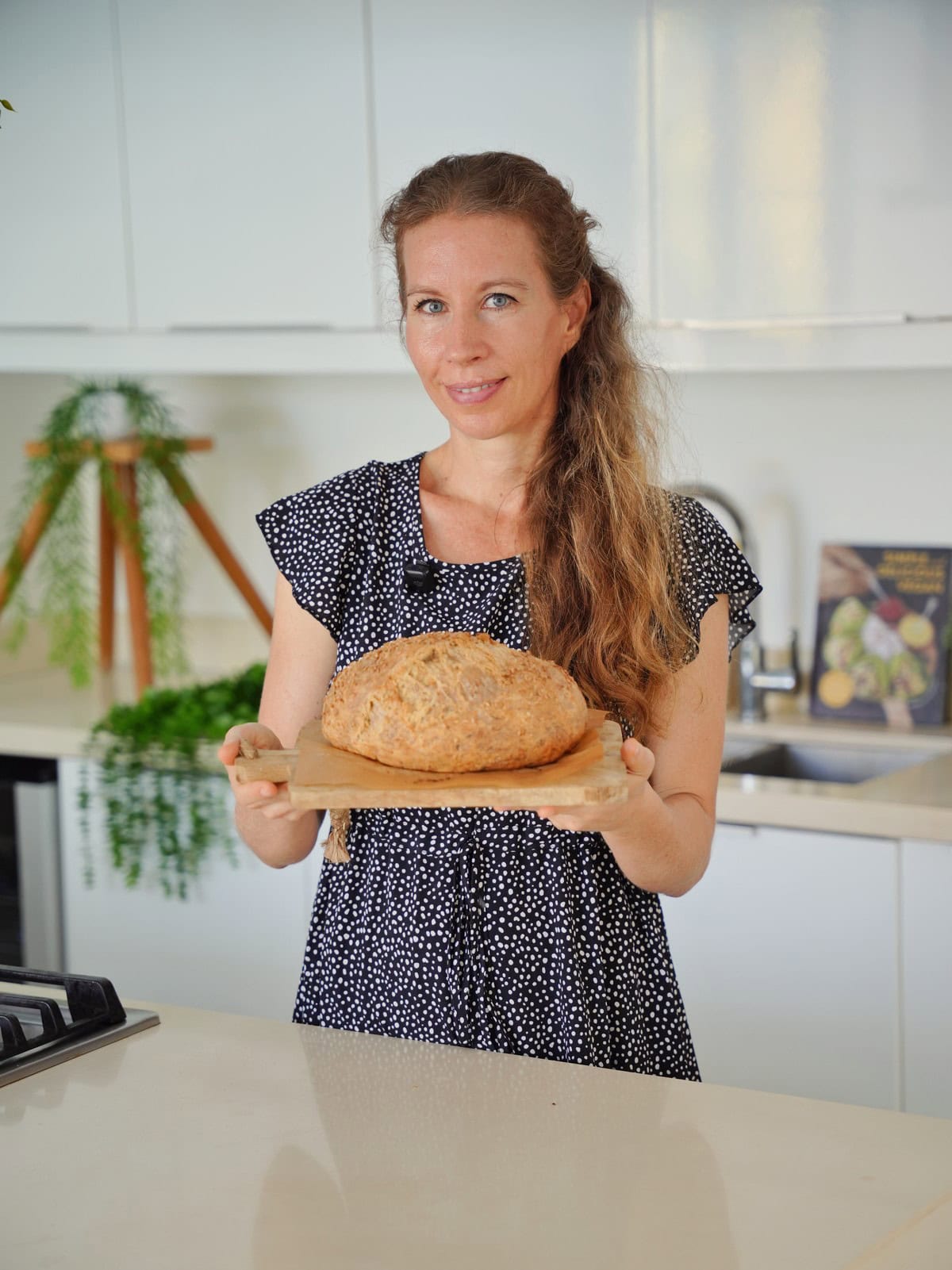
How to Make Chickpea Flour Bread
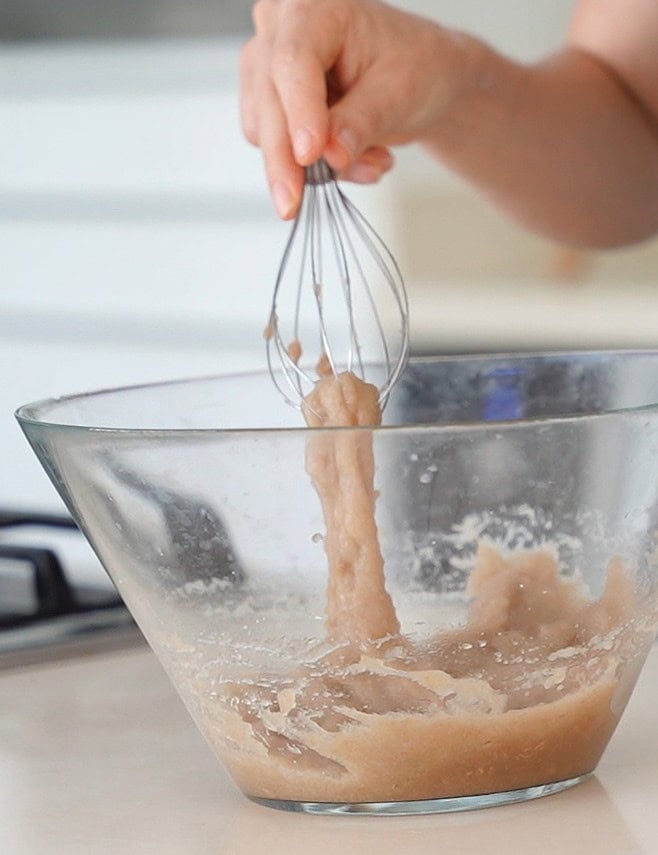
- Whisk the psyllium husk powder and water in a large bowl, vigorously, to avoid lumps. Set it aside to thicken/gel. Then, preheat the oven to 180°C (360°F).
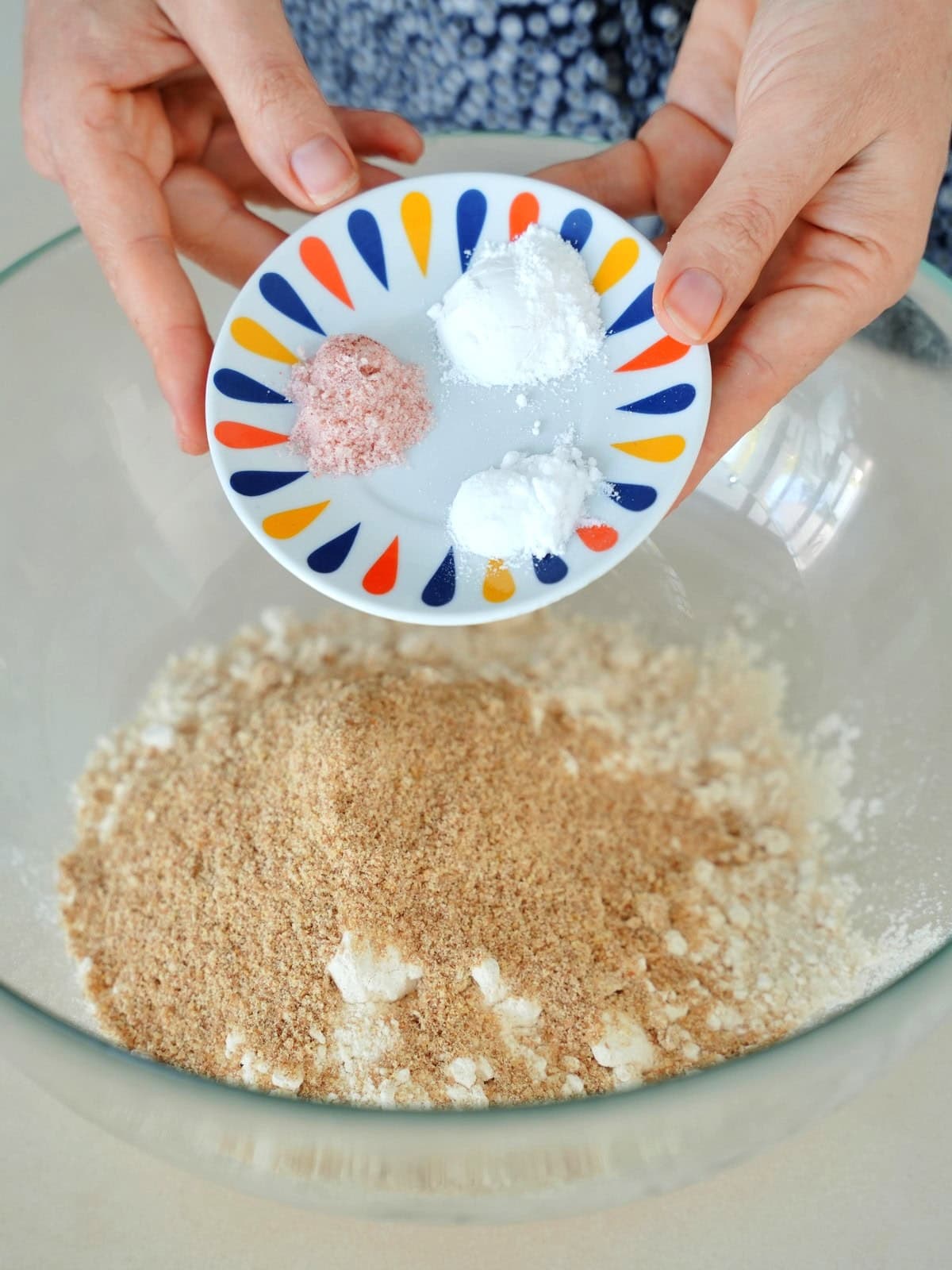
- In a separate mixing bowl, combine the chickpea flour, ground flaxseed, salt, baking powder, and baking soda. Pour the vinegar directly over the baking powder and baking soda.
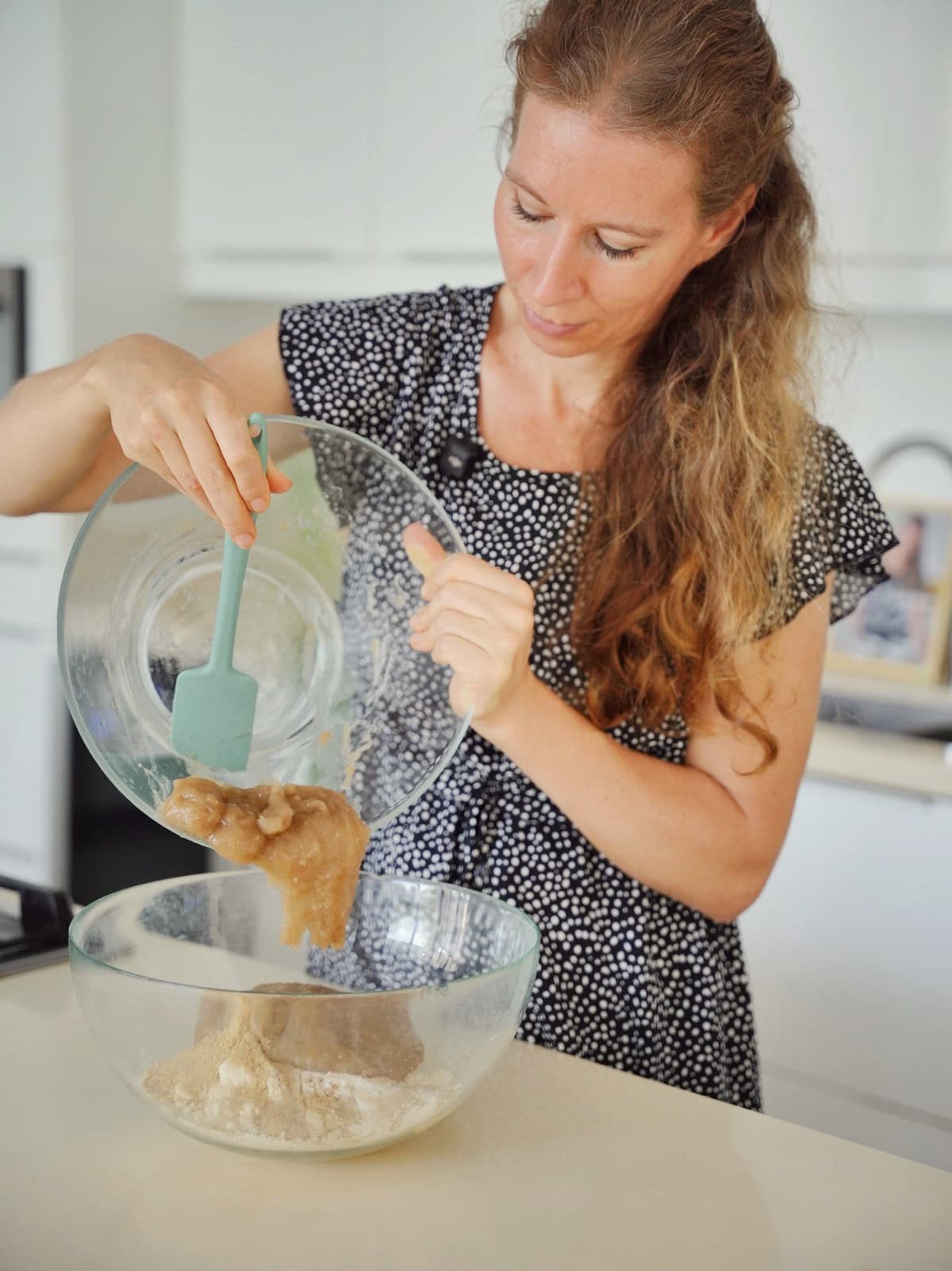
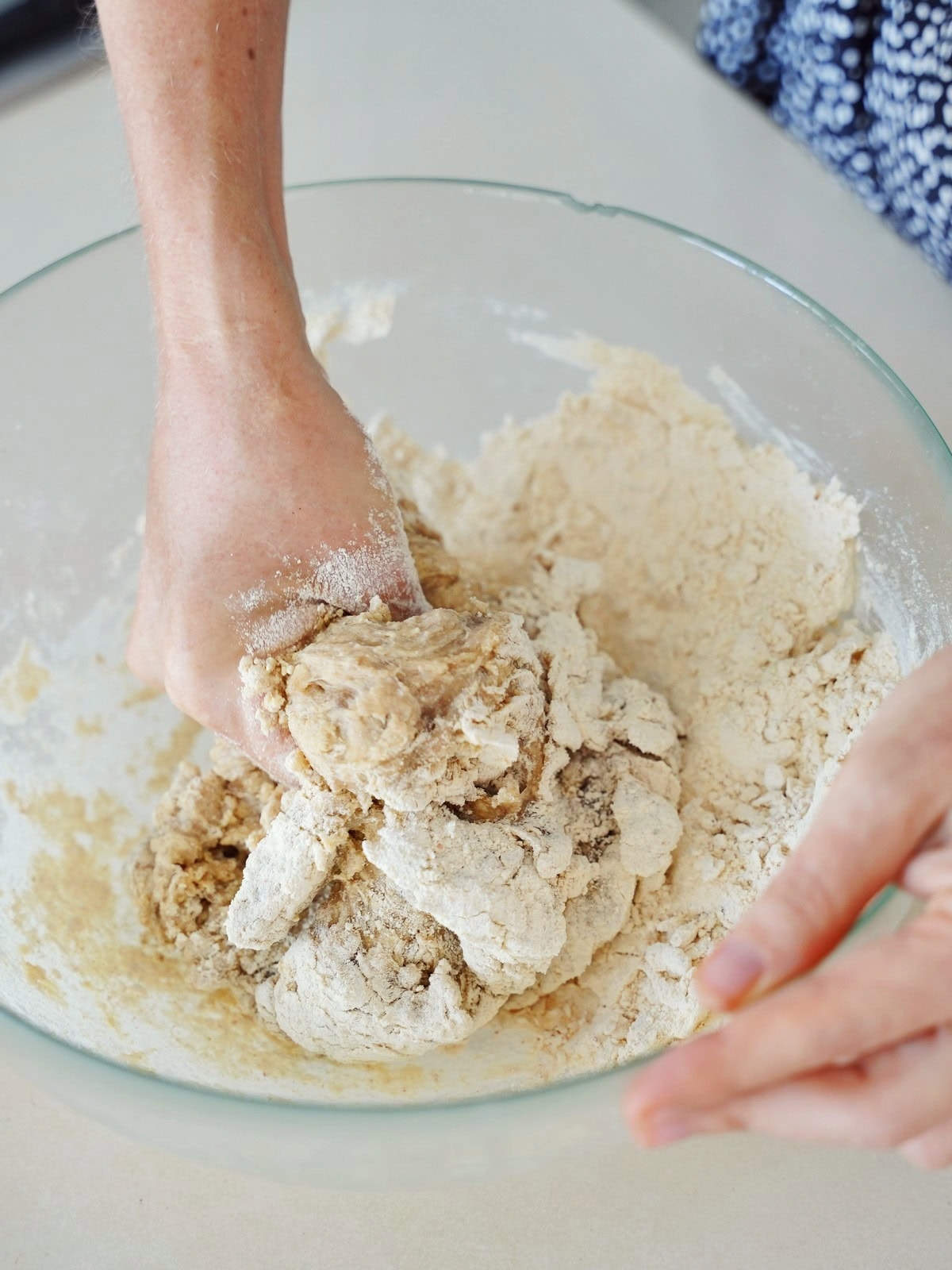
- Add the psyllium gel, then use clean hands to knead it into a dough.
It will be very sticky to begin with, but that’s normal. Wet hands will help.
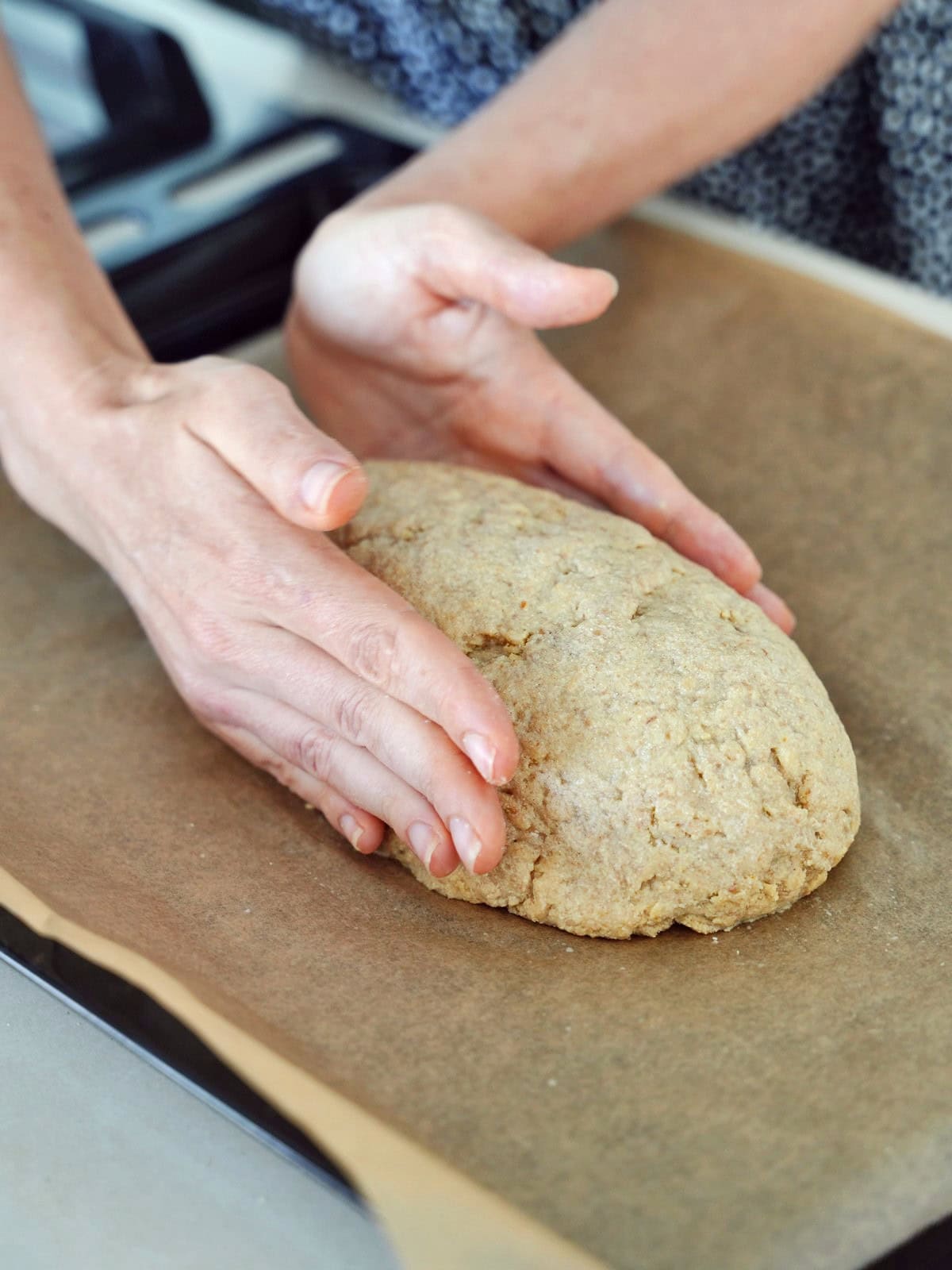
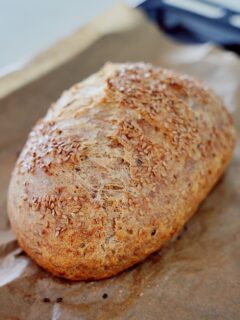
- Transfer to a parchment-lined baking sheet and shape into a flat loaf, smoothing the surface with wet hands to prevent cracks.
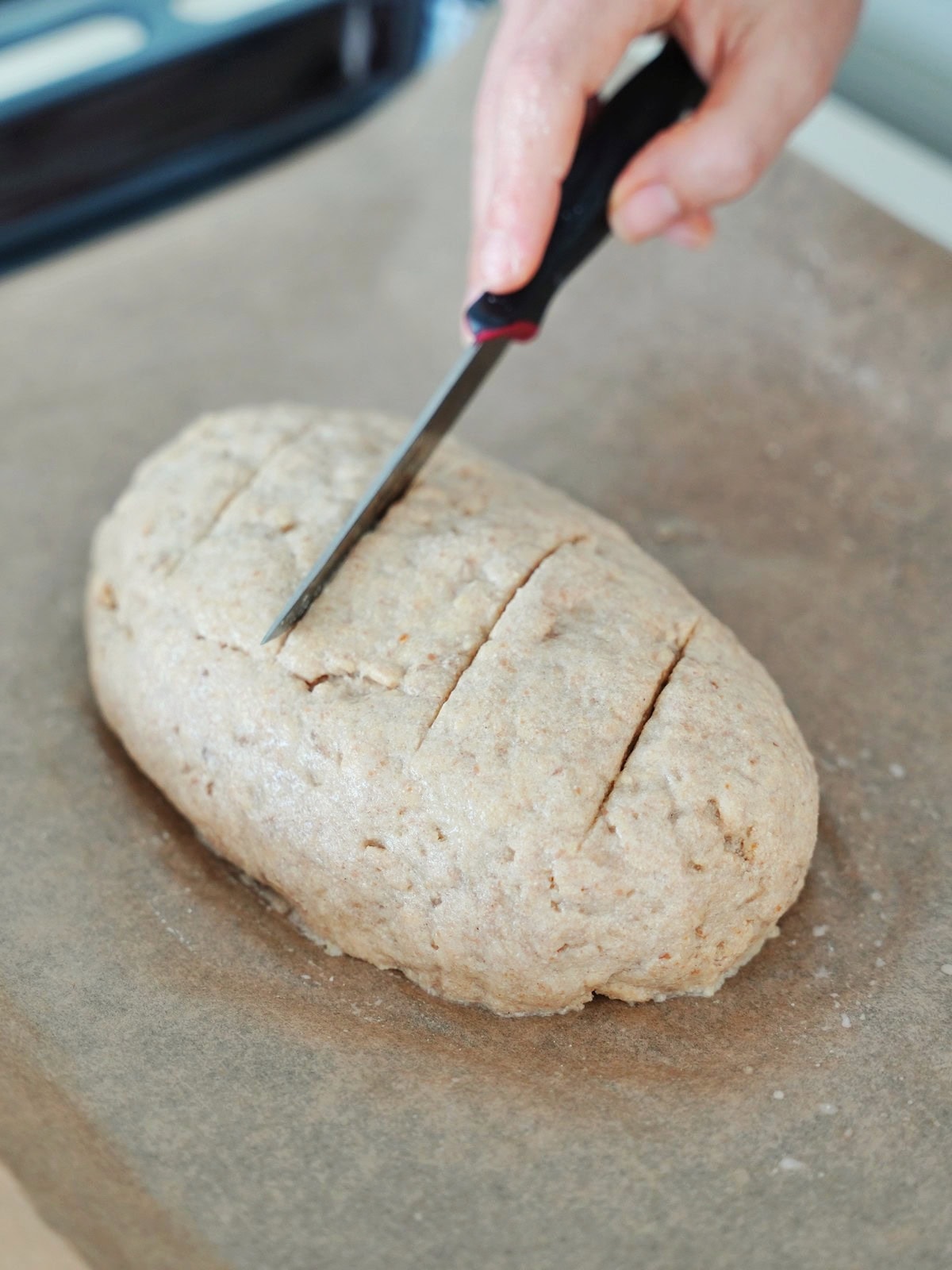
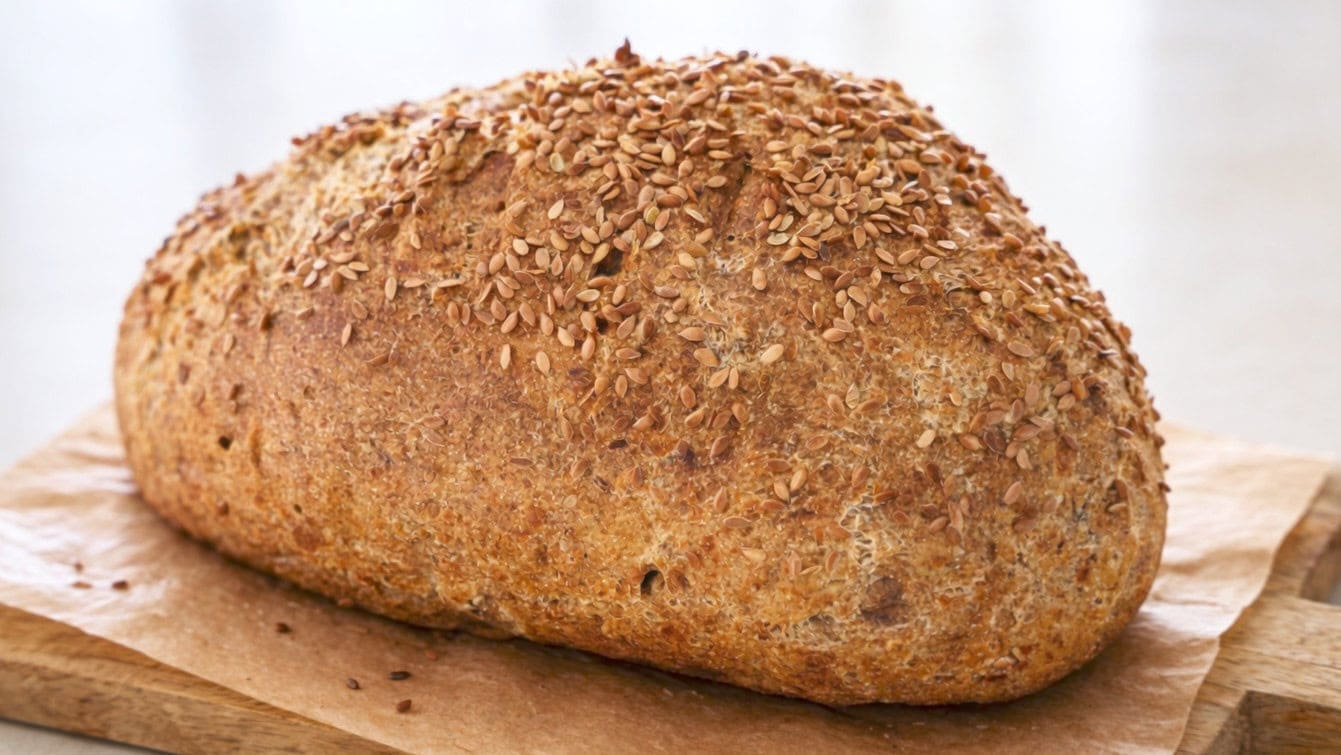
- Score the top with a knife, optionally sprinkling it with whole flaxseeds/other seeds.
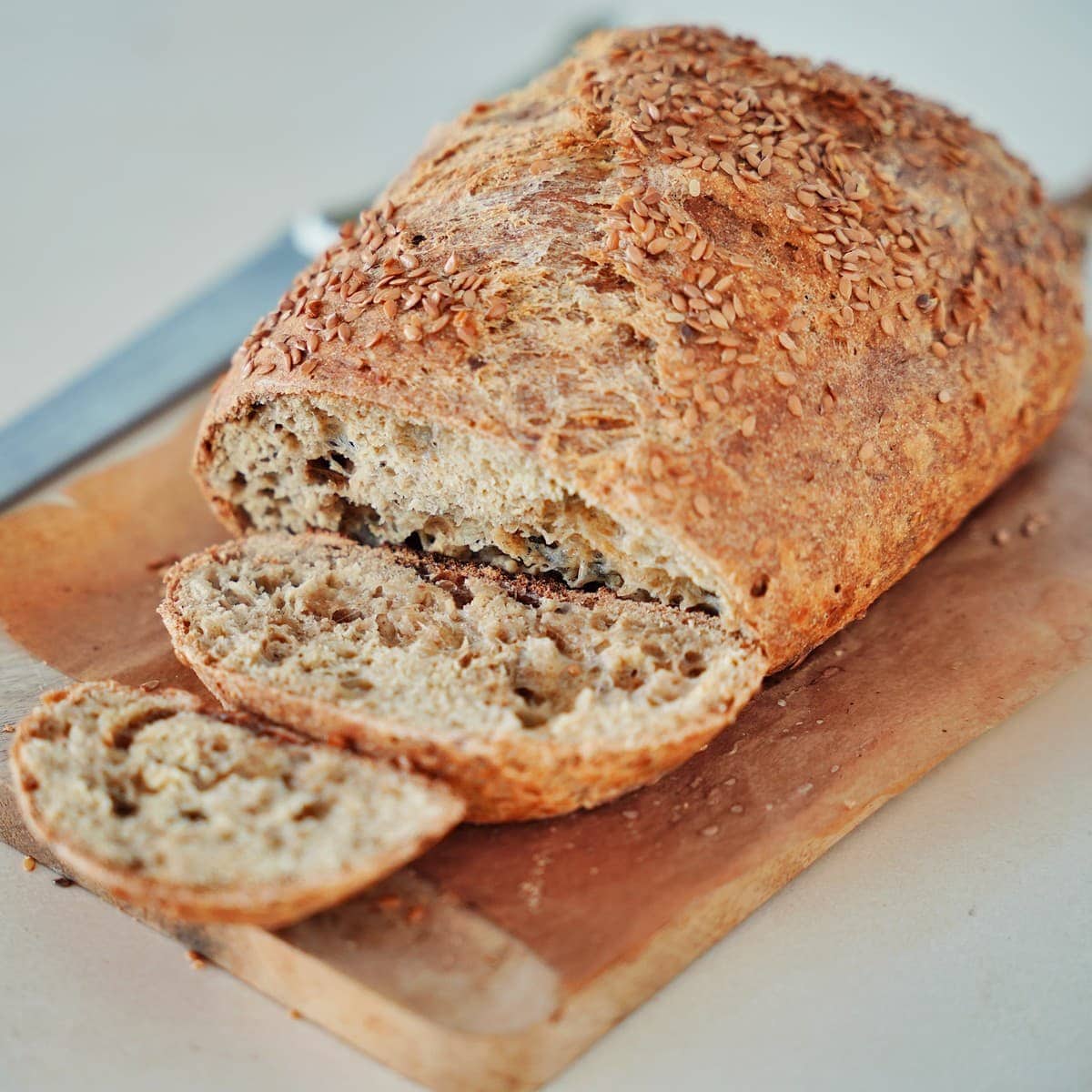
- Bake in the preheated oven for 50-55 minutes, then remove it from the oven and let it cool completely on a cooling rack before slicing. Enjoy!
Serving Suggestions
This tender garbanzo flour bread is delicious raw, toasted, or as a sandwich with:
- Vegan Butter
- Scrambled tofu or vegan egg salad
- Sauteed mushrooms
- To make avocado toast
- Vegan cream cheese or vegan ricotta cheese
- Hummus or garlic white bean dip with fresh or grilled vegetables
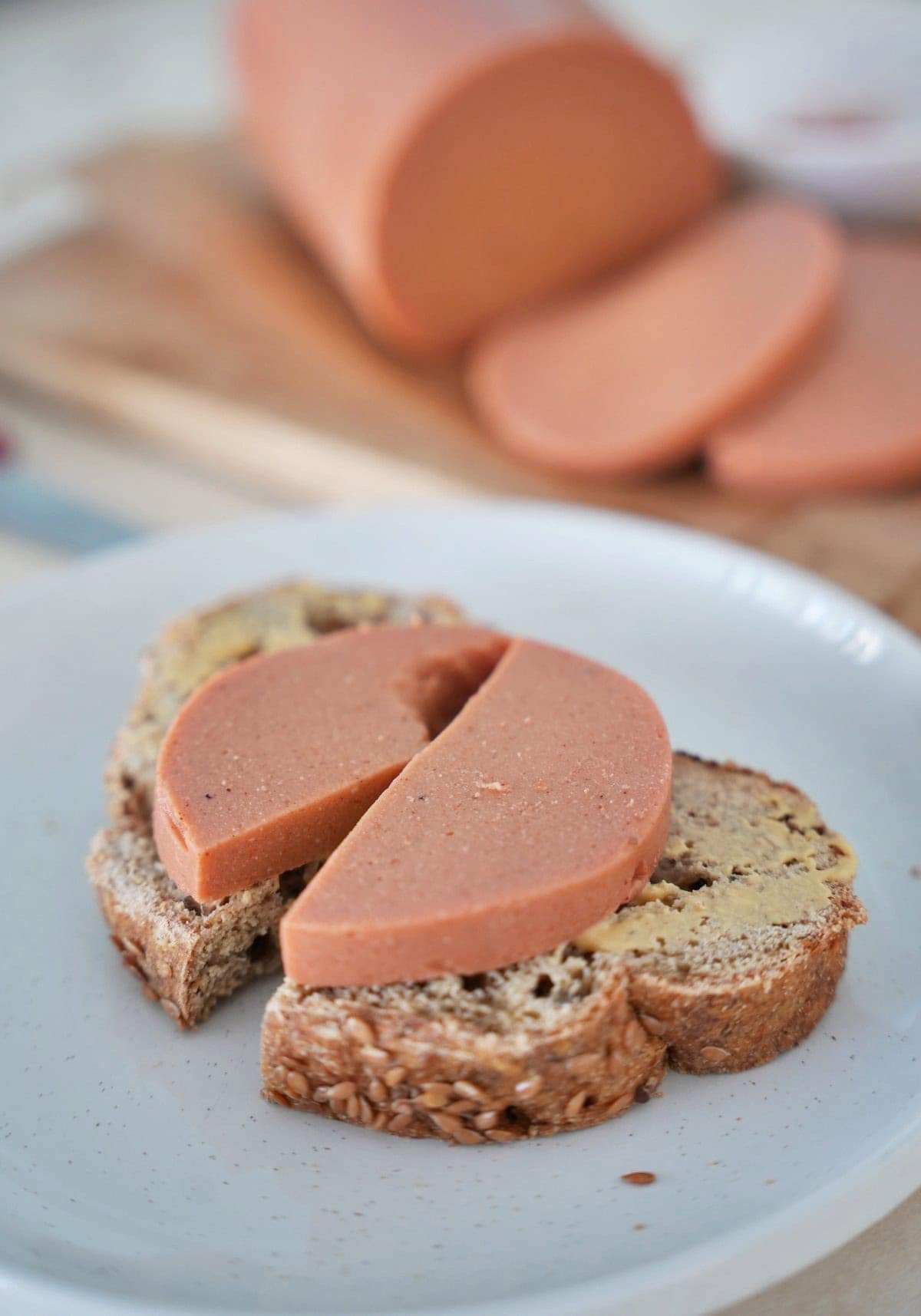
- Vegan bologna
- Chickpea ‘tuna’ salad
- Roasted cherry tomatoes with balsamic
Storage Instructions
Store: Let cool, then store in an airtight container at room temperature for 2-3 days or in the refrigerator for 3-5 days. Heat to restore texture.
Freezer: Store the loaf whole or sliced (parchment between slices to avoid sticking) in a Ziplock for up to 3 months.
Thaw: Defrost slices in a toaster OR thaw larger amounts at room temperature for several hours.
FAQs
How to make chickpea flour?
Grind dried chickpeas using a high-speed blender or food miller until floury, then strain it and re-process larger pieces.
Is chickpea flour bread healthy?
Chickpea flour, the primary ingredient in garbanzo bread, is unrefined, high in fiber and protein, and rich in several nutrients (including folate, iron, magnesium, and more) and antioxidants.
Why is the bread gummy inside?
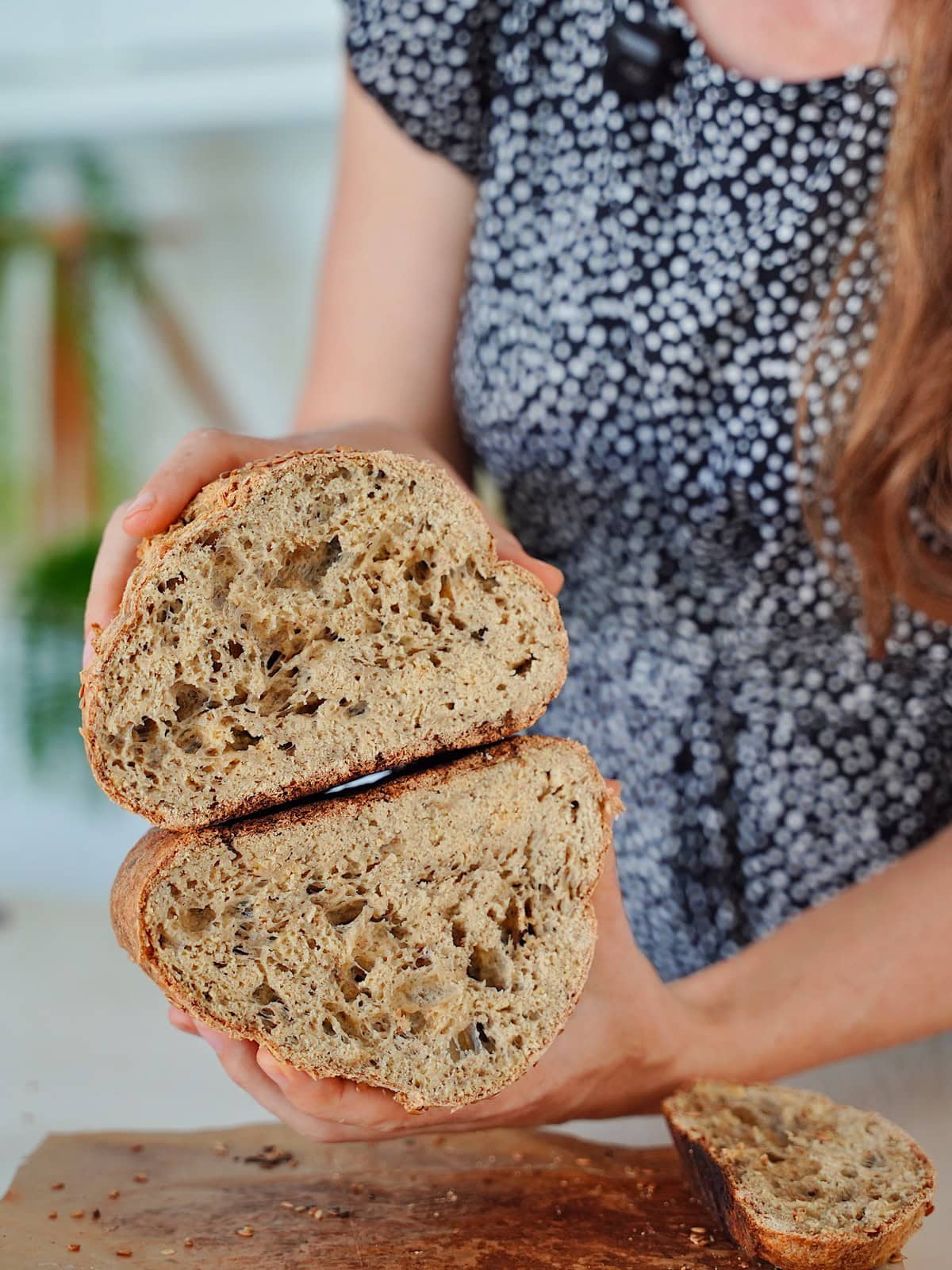
You may have under-baked it, cut it too soon, or used too many wet mix-ins.
How else can I use chickpea flour?
Chickpea flour is a versatile favorite for vegan, gluten-free cooking. I’ve used it for gluten-free gnocchi, German spaetzle, gluten-free tortillas, and as an egg replacement in breakfast tomatoes, a vegan frittata, and savory vegetable muffins.
It can also be used for pakoras/onion bhaji, socca, pancakes, batter, and more.
Recipe Notes
- Measure the ingredients: I develop and test my recipes using metric measurements for the most reliable results. Using cups often leads to inconsistent results.
- Use psyllium husk powder: NOT whole psyllium husk, or the dough won’t bind properly and may cause gumminess.
- To adjust the shape: You could make a single loaf, a baguette, or mini loaves. Adjust baking time as needed.
- Cool before slicing: This allows the garbanzo bread to fully set, ready to slice.
More Gluten-Free Bread Recipes
- Keto flaxseed bread
- Oatmeal seed bread
- Gluten-free seeded bread
- Red lentil bread rolls
- Gluten-free Pita Bread
- Gluten-free Naan Bread
If you try this chickpea flour bread recipe, I’d love a comment and ★★★★★ recipe rating below. Also, please don’t forget to tag me in recreations on Instagram or Facebook with @elavegan and #elavegan—I love seeing them.
Chickpea Flour Bread
Video
Ingredients
- 40 g (4 Tbsp) psyllium husk powder
- 420 ml (1¾ cups) water
- 300 g (3 cups) chickpea flour
- 30 g (¼ cup) ground flaxseed
- ¾ tsp salt
- 1 ¼ tsp baking powder
- ¾ tsp baking soda
- 20 ml (1½ Tbsp) apple cider vinegar (or lemon juice)
Instructions
- You can watch the video for visual instructions.First, pour the water into a large bowl. Add the psyllium husk powder and immediately whisk vigorously so no lumps form. Let it sit for a few minutes until it thickens into a gel. Then preheat the oven to 180°C (360°F).Alternatively, you can add the psyllium husk powder to the bowl first, then pour in the water and whisk right away.
- In a separate bowl, combine the chickpea flour, ground flaxseed, salt, baking powder, and baking soda. Pour the apple cider vinegar directly over the baking powder and baking soda.
- Add the psyllium gel to the dry ingredients. Then knead everything together with clean hands until a dough forms.It will be very sticky at first, but that’s normal. Lightly wetting your hands with water helps.
- Line a baking sheet with parchment paper. Place the dough on top and shape it into a flat loaf.Keep wetting your hands slightly and smooth the surface of the loaf.
- Score the top with a knife. If you like, sprinkle whole flaxseeds or seeds of choice on top.
- Bake for 50 to 55 minutes. Remove from the oven and let the bread cool completely before slicing.
Notes
- Please use a kitchen scale and measure everything in grams. I develop and test my recipes using metric measurements, and using cups often leads to inconsistent results. This is especially important for psyllium. Many people use 4 tablespoons of whole psyllium husk instead of psyllium husk powder, which makes a huge difference (it would be only about half the weight). The dough won’t bind properly and the bread can turn out gummy.
- If you only have whole psyllium husks, you can grind them into powder. Measure the tablespoons after grinding, not before. Still, using a scale is always the most precise method.
Nutrition information is an estimate and has been calculated automatically
 „Simple and Delicious Vegan“ Cookbook by ElaVeganCLICK HERE to order!
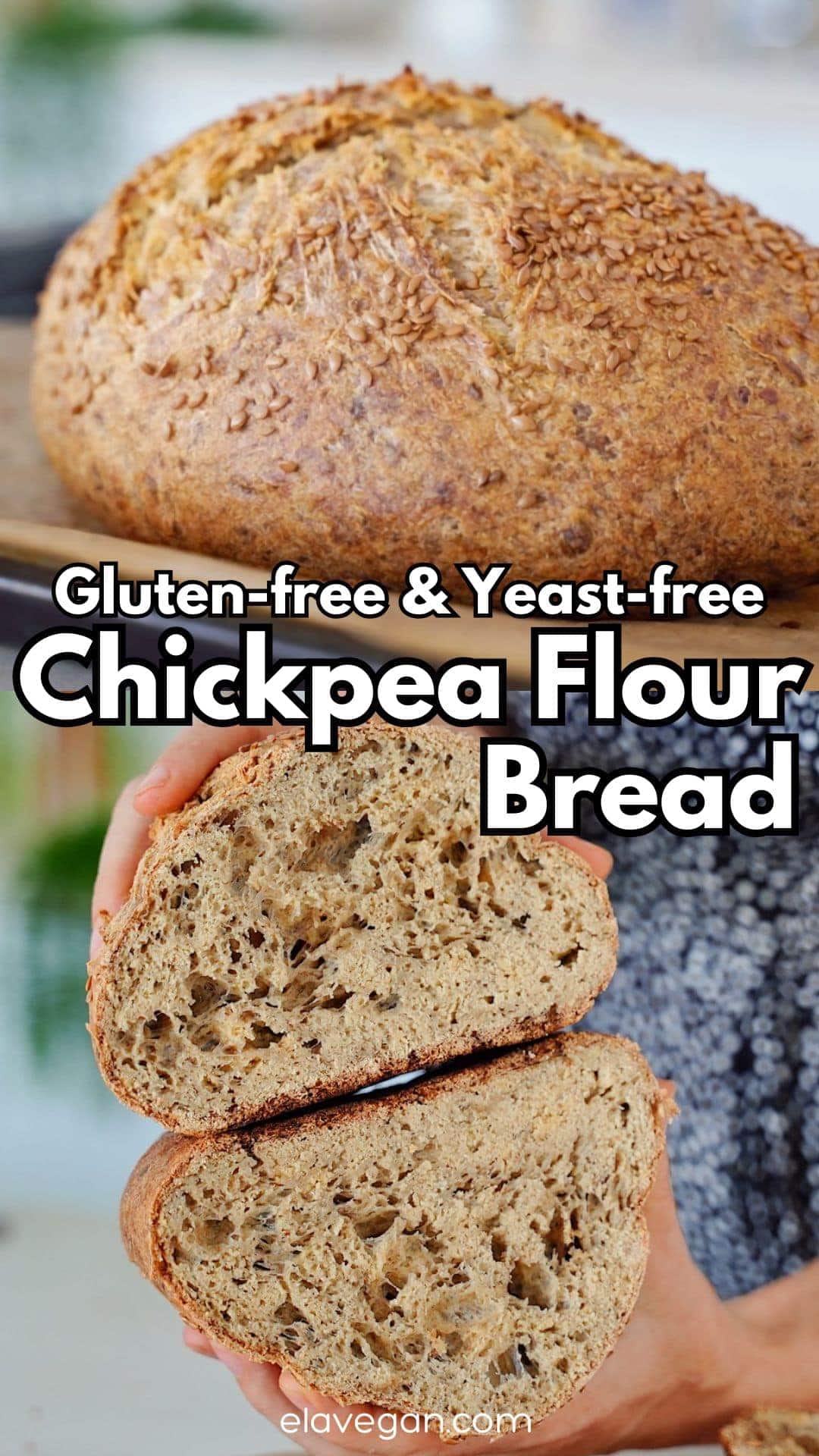
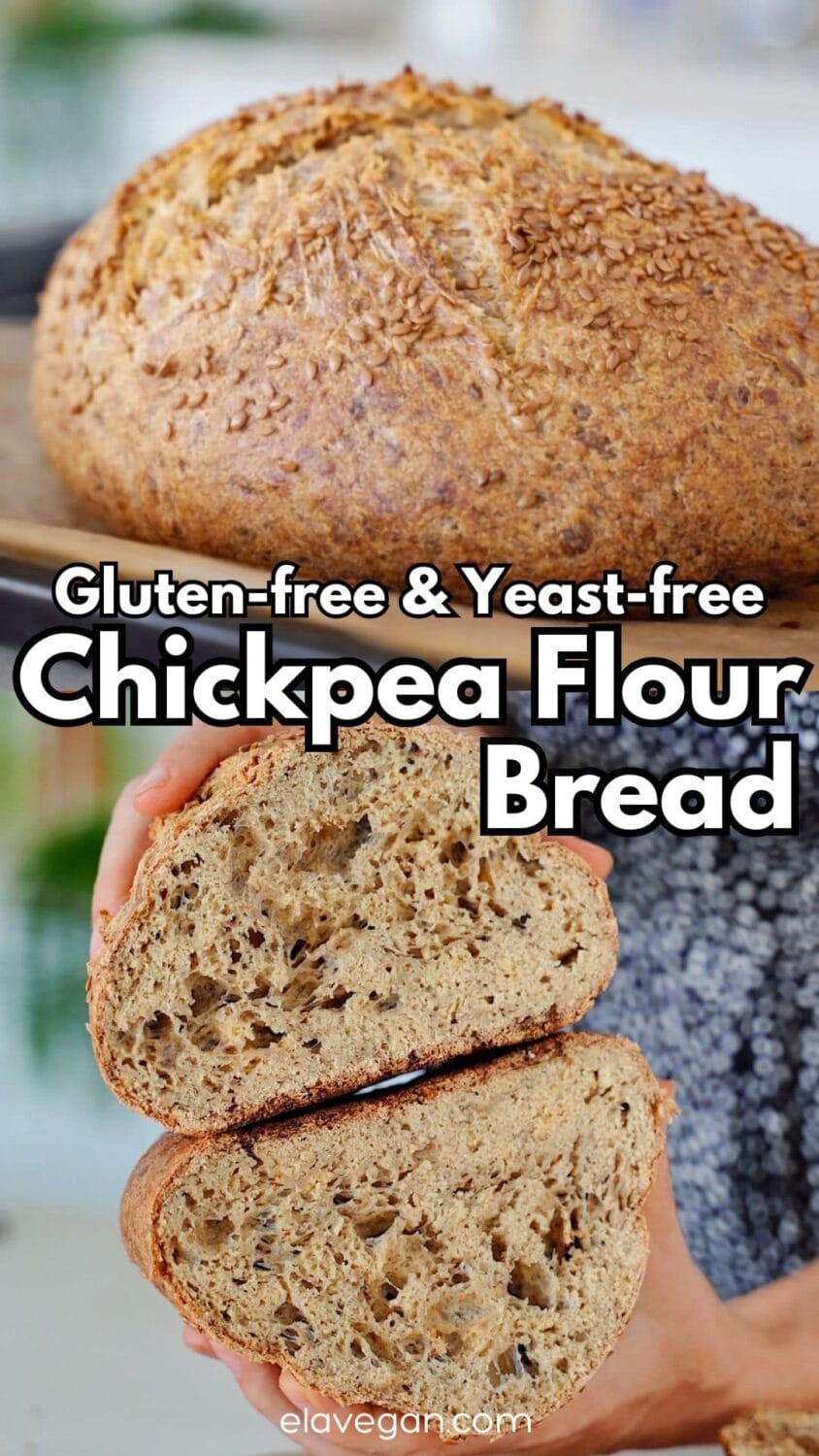
If you are using Pinterest, feel free to pin the following photo:
Hi! Thank you so much for the bread recipe, it turned out amazing and was a huge success! I loved it.
I just have a small question, can I add a little more yeast next time to make it a bit lighter and fluffie
r?
Thanks again! ❤️
Hi! ❤️ I’m so happy to hear that you loved the bread!
This recipe doesn’t contain yeast, but uses baking powder and baking soda to help it rise. Adding more yeast wouldn’t make it lighter or fluffier, as the recipe hasn’t been developed for yeast. 😊
For the best results, I recommend following the recipe as written. The psyllium provides structure, while the baking powder and baking soda help give the bread a lighter texture. ❤️
I was wondering the measurements for the add ins. I wouldn’t want to add to much or too little of any one as it may over power/not be tasted in the bread. Would you be able to advise how much you would use.
I would recommend using up to about ½ cup of mix-ins in total (around 80 g). The exact cup measurement will vary depending on the ingredient, but as a general guideline, ½ cup is a good maximum.
For example:
Olives: about ½ cup, chopped
Sun-dried tomatoes: about ½ cup, chopped and well patted dry
Roasted garlic: about ¼ cup
Sautéed/caramelized onions: about ½ cup, cooled and well drained
Dairy-free cheese: about ½ cup
If combining different ingredients, I would keep the total amount around ½ cup so the bread still binds properly.
I did not expect a non-wheat bread to be this good. The recipe was easy to follow. and the video helped to make it a success. I have baked a few different non-wheat breads before, but this one is the absolute best. Kudos to Ela for taking the time to experiment, make and share this wonderful recipe.
Thank you so much for this wonderful feedback! ❤️ I’m also glad the video helped make the recipe a success. I put a lot of time into experimenting and testing my recipes, so comments like yours truly mean a lot to me. Thank you for taking the time to try it and share your experience! ❤️
I made this afternoon. Bobs Redmill chickpea flour and food lion brand organic flax meal. They had the brown flaxseed meal not golden. I will get some Golden Flaxseed meal. My baking powder was May 2o26. I did not get the rise that you did. Will get fresh baking powder. Tastes good.
Thanks for your feedback, Sheri! 😊 Yes, I prefer golden flaxseeds for this recipe. I also recommend grinding the flaxseeds yourself, as some store-bought flax meal can be partially defatted and therefore may not work as well. Whole flaxseeds contain their natural oils (around 50% fat), which are important for the recipe. ❤️
The bread is one of the best GF breads I have ever made! Thank you!!!
BIG question: What is the best way to preserve this bread and how long does it last? Fridge? Cut and freeze?
I am so glad you love it! Please check the “storage section” in the post, where I describe everything. 🙂
Thanks for your great feedback. 🙂
If replacing flax with chia or other seeds as per one of your comments, is it a straight 1:1 swap?
Also, could you please suggest the best way to store the bread, how long it lasts for and whether it can be frozen? Thanks! 🙂 can’t wait to try it!
Hi! You can replace it with chia seeds, yes it’s a 1:1 swap. Please find all storing information mentioned in the blog post. 🙂
Can you make this in an air fryer? Also, what internal temperature should the bread be when it is cooked properly?
Yes! I’d try a slightly lower temperature, around 160°C (320°F), and check it earlier than the oven baking time. Make sure the center is fully baked before removing it.
For internal temperature, I’d aim for around 95–98°C (203–208°F) in the center. 😊
I love this bread and have only made it shaped and baked on a pan. I’ m wondering if this will work in a loaf pan as well? I want to make this and your Oatmeal Seed Bread in one baking session.
Yes, that will work too.
Great, thanks!
Vielen Dank für dieses Brot!
Ich werde das Rezept an meine Freundin weiterleiten, die in der Nähe von Esslingen wohnt und ebenfalls glutenfrei isst. Wir sind oft auf der Suche nach nahrhaften Brotrezepten, und dieses hier ist ein echter Hit.
Anything that came out different from yours is all on me. I doubled the recipe per your measurements but next time will do 1.5. The raw dough filled a standard loaf pan to the edge, then rose almost 2.5 inches (24 cm) over the edge. I wasn’t sure how much longer to bake it, and the normal cake-tester trick was useless since you say the bread needs to cool to fully absorb moisture. So I gave it an extra 20 minutes (didn’t think to use my thermometer).
Cooled it completely and it has such a wonderful, almost nutty aroma and flavor.
Unlike other GF breads (like those I make with buckwheat, seeds, and nuts) it’s tender and will stand up to a real sandwich filling when toasted and be delicious. The slices are huge and very filling, so for me, one at a time is enough!
It came out to 17 thin but sturdy slices, went into the freezer separated with parchment paper, and made for the perfect base for today’s “omelets” (tofu-based).
Cleanup? well, maybe we’ll used glass bowls like you next time. In the video, it looks like the didn’t stick as much to the dough as our metal ones did.
We didn’t want all that psyllium gel going down the drain so we used damp paper towels 🙁 first before washing.
It’s not a low-cost bread but it really delivers on every level so, worth every cent.
Thank you so much for the detailed feedback! ❤️ I’m thrilled you love the bread and that it has become something you can really enjoy.
Liebe Grüße, Ela
I made this, sliced into it pretty nicely, texture was great. I think the flavour was not it for me, i feel like the psyllium powder dominated the flavor and colour. Let me know how i can adjust.
Hi! I’m glad the texture turned out well! 😊 Psyllium does have a mild earthy flavor and can affect the color, especially when using a larger amount like in this bread. You can try reducing it slightly, but I wouldn’t reduce it too much because it’s the main binder and helps give the bread its structure.
For more flavor, you could also try adding nutritional yeast, garlic or onion powder, smoked paprika, rosemary, or a few seeds. Another option is replacing part of the chickpea flour with split pea or lentil flour, which gives the bread a more robust flavor. ❤️
Looks fantastic, all my ingredients are laid out, then I wondered.
Are your oven temperatures for conventional or fan/convection oven?
I’ll wait for your reply before I risk ruining the bread before I even start!
Thank you!
Hi! I use a gas oven with a fan, and I bake the bread at 180°C (360°F) as stated in the recipe. I’ve tested it at this temperature in my oven and it works well. If you’re using a conventional oven without a fan, 180°C should work as well. 😊
Thank you!
can I leave out flax? or use gelatin instead?
Hi Eme, you can use ground pumpkin seeds, chia seeds or sunflower seeds.
Since my spouse’s heart attack in December 2025, I’ve had to cut out all oil, sugar and sodium from his diet. Your Chickpea Flour bread is perfect for his dietary requirements and he loves it as do I because of my gluten sensitivity. I’ve watched your video twice and followed your instructions. My loaves don’t rise as much as yours do. All organic ingredients are used. I measure the baking soda, baking powder and salt in a hollowed area within the chickpea flour and flax meal to accommodate the apple cider vinegar interaction followed immediately by the gelatinius psyllium husk powder mixture and proceed to knead the ingredients, shaping as you describe and baking. I have an electric oven. Should I had more baking soda? I would appreciate your feedback.
Hi Donna! I’m so happy the bread works well for you! ❤️ I wouldn’t add more baking soda. Instead, I’d first double-check two things that are especially important for this recipe: please weigh all ingredients in grams rather than measuring by volume, and make sure you’re using psyllium husk powder, not whole psyllium husks. The powder absorbs liquid very differently, and using whole husks can significantly affect the texture and rise.
Also make sure your baking powder and baking soda are fresh. 😊
I have always measured in grams as instructed and use psyllium husk powder. My baking soda and powder have an expiration date of March 2028.
Thanks for clarifying! In that case, I wouldn’t add any more baking soda or baking powder. 😊
One thing that could make a difference is the oven setting. When you say you have an electric oven, are you using the fan-assisted/convection setting, or conventional top-and-bottom heat?
I use a gas oven with a fan, so I’m wondering if the difference in how the heat circulates could be affecting the rise. ❤️
My oven is over 30 years old. I need a new one. No Convection or fan(s). I believe that may be the issue. However, it still tastes great.
Youvsay to shape a flat loaf but it doesn’t look flat in the pucture..Also, I was thinking of shaping the dough into flutes. Your thoughts? thanks in advance.
Finally a gluten free bread that is easy to make and actually comes out looking like a loaf of bread! Delicious!
Thank you so much! ❤️ So happy you enjoyed it!
I tried it and while it turned out fantastic (thank you Ela vegan) I found the chickpea flavor strong. Any way to mask it?
I’m so glad you enjoyed the bread! ❤️ Chickpea flour does have a naturally strong flavor, especially in a simple bread like this. You could try adding a little more seasoning, such as garlic powder, onion powder, or herbs, to help balance it. Toasting the bread also helps mellow the chickpea flavor quite a bit. Or replace some of the chickpea flour with a different flour like sorghum, quinoa, millet, or buckwheat. 😊
I will defin6 make this. it looks easy enough. I made the bologna and I love it. my family does too. thank you so much. I love your recipes.
So glad you all loved the vegan bologna! Thanks for your kind comment, Carlette. 🙂
I plan to use dried chickpea then ground it. Should i soah the chickpeas first in water to avoid bloating or could i proceed to grounding it witholt soaking?
I wouldn’t soak the chickpeas for this recipe. 😊 Since you’re using them to make chickpea flour, grind the dried chickpeas directly into a very fine flour and use the same weight (300 g) as listed in the recipe. Soaking would add moisture and change the texture and hydration of the dough.
Or you could make my flourless chickpea bread from raw soaked chickpeas.
I’m giving it a 5 for how easy it was to make and how beautiful this loaf looks right out of the oven. I know it will meet my expectations in taste as well. Only comment for feedback is I started out using my scale but 40 grams of whole psyllium husk was more like a 1/2 cup, not 4 tablespoons. Good thing I have used it before so I knew that large amount didn’t look right and I guess the moral of the story is my husk was lighter than yours, so maybe you can make sure everyone understands there might be a variance in the weights of their products. I love your recipes! Thank you for the endless hours of testing 🙂
Thank you for the lovely feedback! ❤️ The recipe calls for psyllium husk powder, not whole psyllium husks. Whole husks are much lighter by volume, so 40 g can indeed take up considerably more than 4 tablespoons (about 8 actually).
This is exactly why I always recommend following the weight in grams, especially when substituting an ingredient with a different form. The volume can vary enormously between whole psyllium husks and psyllium husk powder, and also between different brands. So even if the 40 g doesn’t look like the same volume as stated in tablespoons, 40 g is still the correct amount for the recipe.
Hello Ela
I have made this one and loved it.
I was thinking of trying out replacing 1/3 of the chickpea flor with oat flour. Would that be a mistake?
Thank you!
Hello, it could make the bread a little denser, but it should still work fine.