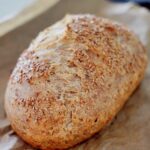
Chickpea Flour Bread
This easy one-bowl chickpea flour bread is high-fiber, high-protein, gluten-free, and uses baking soda for a fluffy loaf, perfect for toasting and sandwiches!
Servings 12 slices
Ingredients
- 40 g (4 Tbsp) psyllium husk powder
- 420 ml (1¾ cups) water
- 300 g (3 cups) chickpea flour
- 30 g (¼ cup) ground flaxseed
- ¾ tsp salt
- 1 ¼ tsp baking powder
- ¾ tsp baking soda
- 20 ml (1½ Tbsp) apple cider vinegar (or lemon juice)
Instructions
- You can watch the video for visual instructions.First, pour the water into a large bowl. Add the psyllium husk powder and immediately whisk vigorously so no lumps form. Let it sit for a few minutes until it thickens into a gel. Then preheat the oven to 180°C (360°F).Alternatively, you can add the psyllium husk powder to the bowl first, then pour in the water and whisk right away.
- In a separate bowl, combine the chickpea flour, ground flaxseed, salt, baking powder, and baking soda. Pour the apple cider vinegar directly over the baking powder and baking soda.
- Add the psyllium gel to the dry ingredients. Then knead everything together with clean hands until a dough forms.It will be very sticky at first, but that’s normal. Lightly wetting your hands with water helps.
- Line a baking sheet with parchment paper. Place the dough on top and shape it into a flat loaf.Keep wetting your hands slightly and smooth the surface of the loaf.
- Score the top with a knife. If you like, sprinkle whole flaxseeds or seeds of choice on top.
- Bake for 50 to 55 minutes. Remove from the oven and let the bread cool completely before slicing.
Notes
- Please use a kitchen scale and measure everything in grams. I develop and test my recipes using metric measurements, and using cups often leads to inconsistent results. This is especially important for psyllium. Many people use 4 tablespoons of whole psyllium husk instead of psyllium husk powder, which makes a huge difference (it would be only about half the weight). The dough won’t bind properly and the bread can turn out gummy.
- If you only have whole psyllium husks, you can grind them into powder. Measure the tablespoons after grinding, not before. Still, using a scale is always the most precise method.
Nutrition Facts
Chickpea Flour Bread
Serving Size
1 slice
Amount per Serving
Calories
122
% Daily Value*
Fat
3
g
5
%
Saturated Fat
0.3
g
2
%
Sodium
233
mg
10
%
Potassium
275
mg
8
%
Carbohydrates
18
g
6
%
Fiber
6
g
24
%
Sugar
3
g
3
%
Protein
6
g
12
%
Calcium
37
mg
4
%
Iron
1
mg
6
%
* Percent Daily Values are based on a 2000 calorie diet.