

This quick gluten-free pizza crust is easy to make, sturdy, crisp-edged, and tender-chewy inside. The dough is perfect for pizza, flatbread, and calzones!

I’m no stranger to serving up delicious gluten-free pizza crusts, like sweet potato pizza crust, Keto zucchini pizza crust, and low-calorie potato pizza crust. However, if you’re craving traditional pizza, this gluten-free pizza dough recipe delivers!

Made with a carefully tested flour and starch blend (no gums!) that mimics the job of wheat flour and gluten, this homemade gluten-free pizza dough provides consistent results every time. It’s vegan, freezer-friendly, and easy to customize in flavor, size, and thickness—perfect for pizza night.
You might also enjoy my gluten-free, vegan deep-dish pizza or vegan calzone.

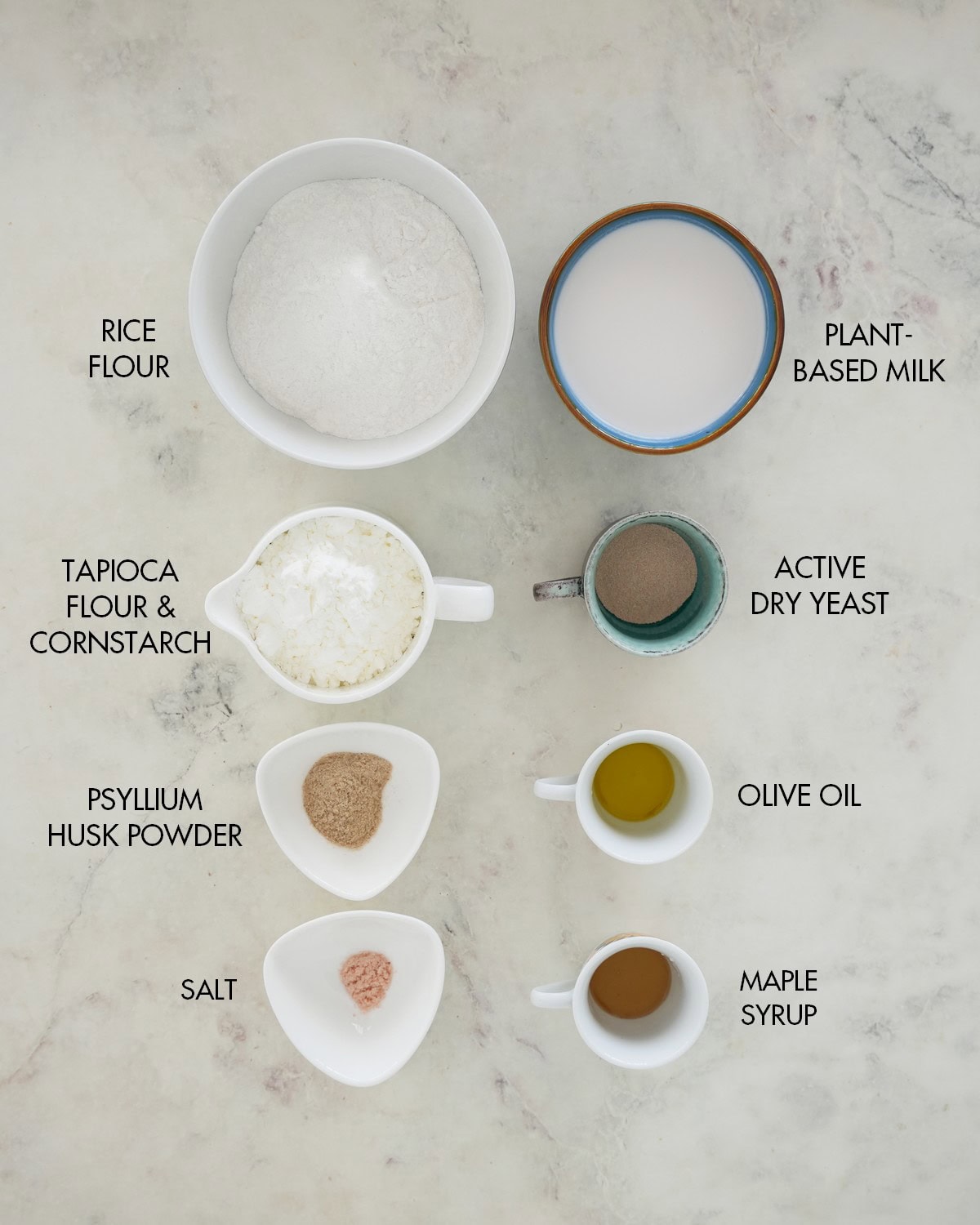
Gluten-Free Pizza Dough Ingredients
For the full ingredients list, measurements, complete recipe method, and nutritional information, read the recipe card below.
- White rice flour: Use finely ground flour for a light, crisp, neutral base without grittiness.
- Tapioca flour: Adds stretch, chew, and browning to this quick gluten-free pizza dough. Potato starch or arrowroot starch may work but gives less chew.
- Cornstarch: Adds lightness and crispness. Potato starch (not potato flour) also works, producing a softer crust.
- Psyllium husk powder: Mimics gluten, binding the dough and adding elasticity and chew. Use 2 tsp powder or 4 tsp whole husks.
- Salt: To season the dough.
- Warm milk: I used plant milk, like soy (which adds more body), almond, cashew, or oat milk, to make a gluten-free vegan pizza crust. Make sure it’s lukewarm (35-40C/95-104F).
- Active dry yeast: This provides rise and classic fermented pizza flavor. Instant yeast also works and doesn’t even require proofing, though you’ll only need 1 ¼ tsp.
- Olive oil: Adds moisture, tenderness, and flavor. Extra-virgin olive oil adds maximum flavor, though regular olive oil or avocado oil will work.
- Sugar: I use maple syrup/agave, though granulated sugar also works, to feed the yeast.
Pizza Toppings
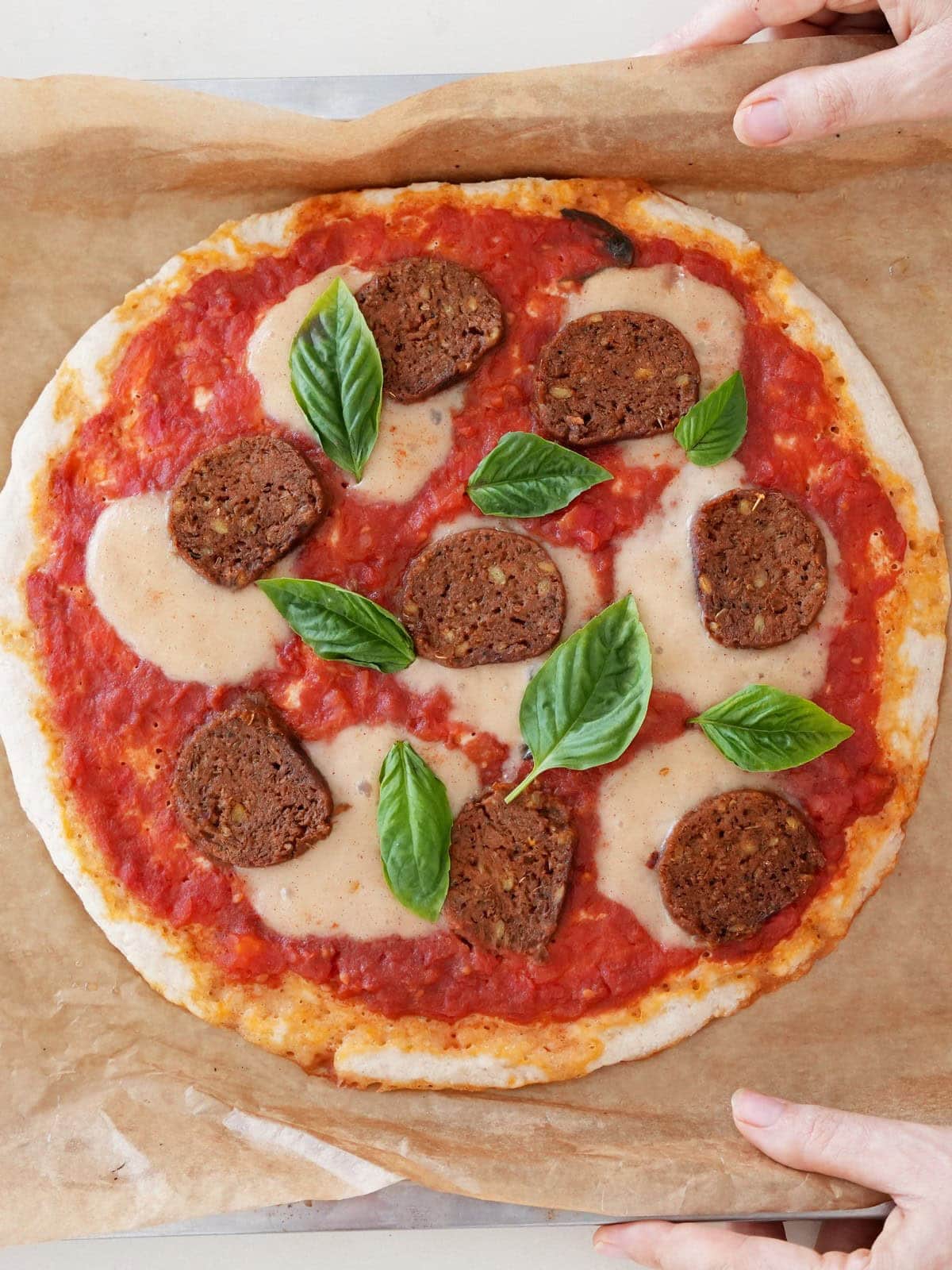
Most pizzas contain three topping elements
- Pizza sauce: Tomato-based, cream sauce, avocado pesto, keto BBQ sauce, etc.
- Cheese: Like vegan mozzarella cheese, quick vegan cheese sauce, or a blend of melty cheeses.
- Toppings: Protein (vegan pepperoni, shredded ‘chicken’, tofu, etc.), vegetables (mushrooms, peppers, onion, olives, spinach, tomatoes, etc.), jalapeños, fresh basil.
How to Make Gluten-Free Pizza Crust
For the consistently best gluten-free pizza crust recipe, weigh the ingredients with a kitchen scale.
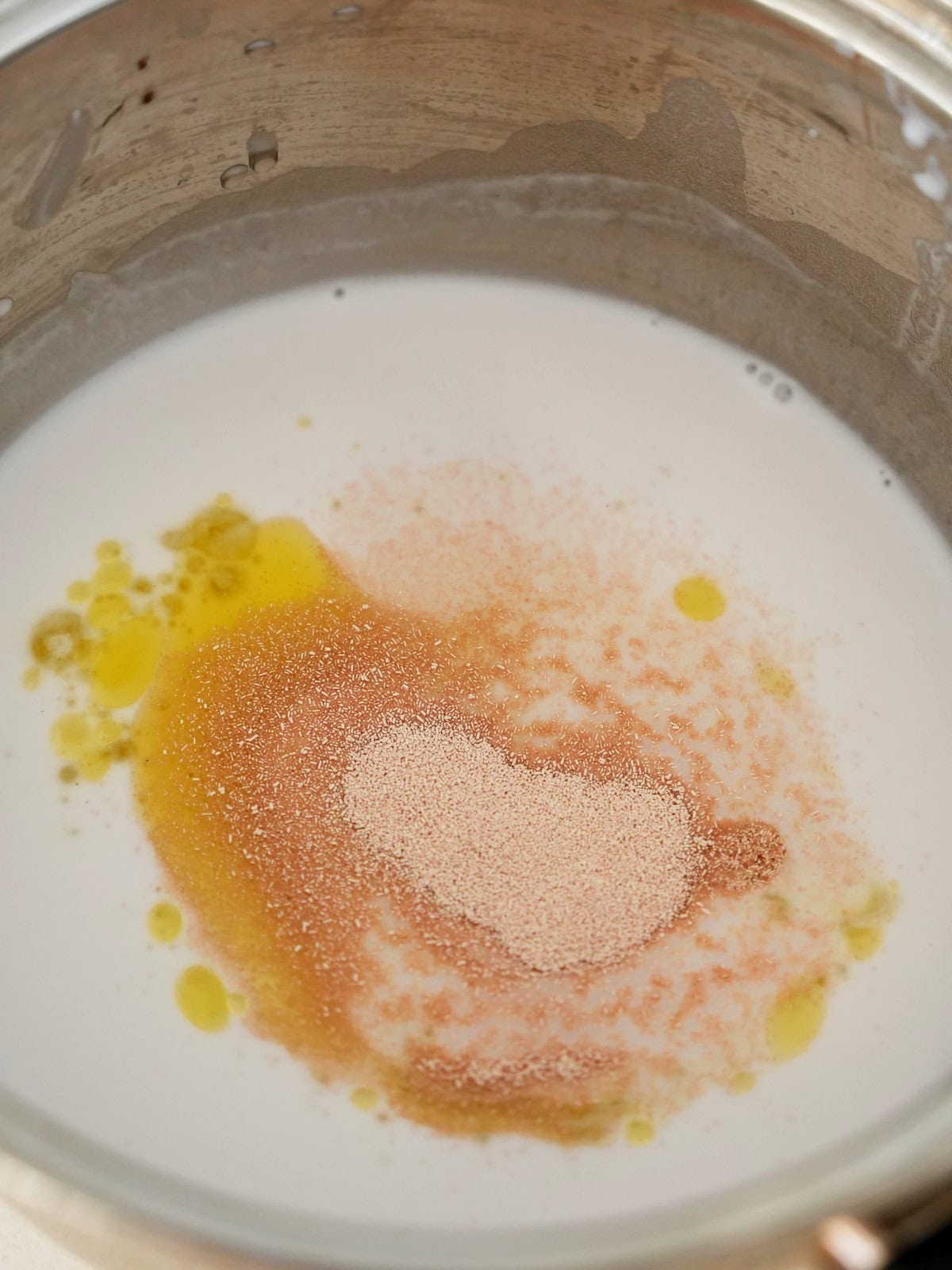
- Warm the milk to 95–104°F/35–40°C. Mix with active dry yeast, oil, and maple syrup; proof 5–10 minutes until foamy.
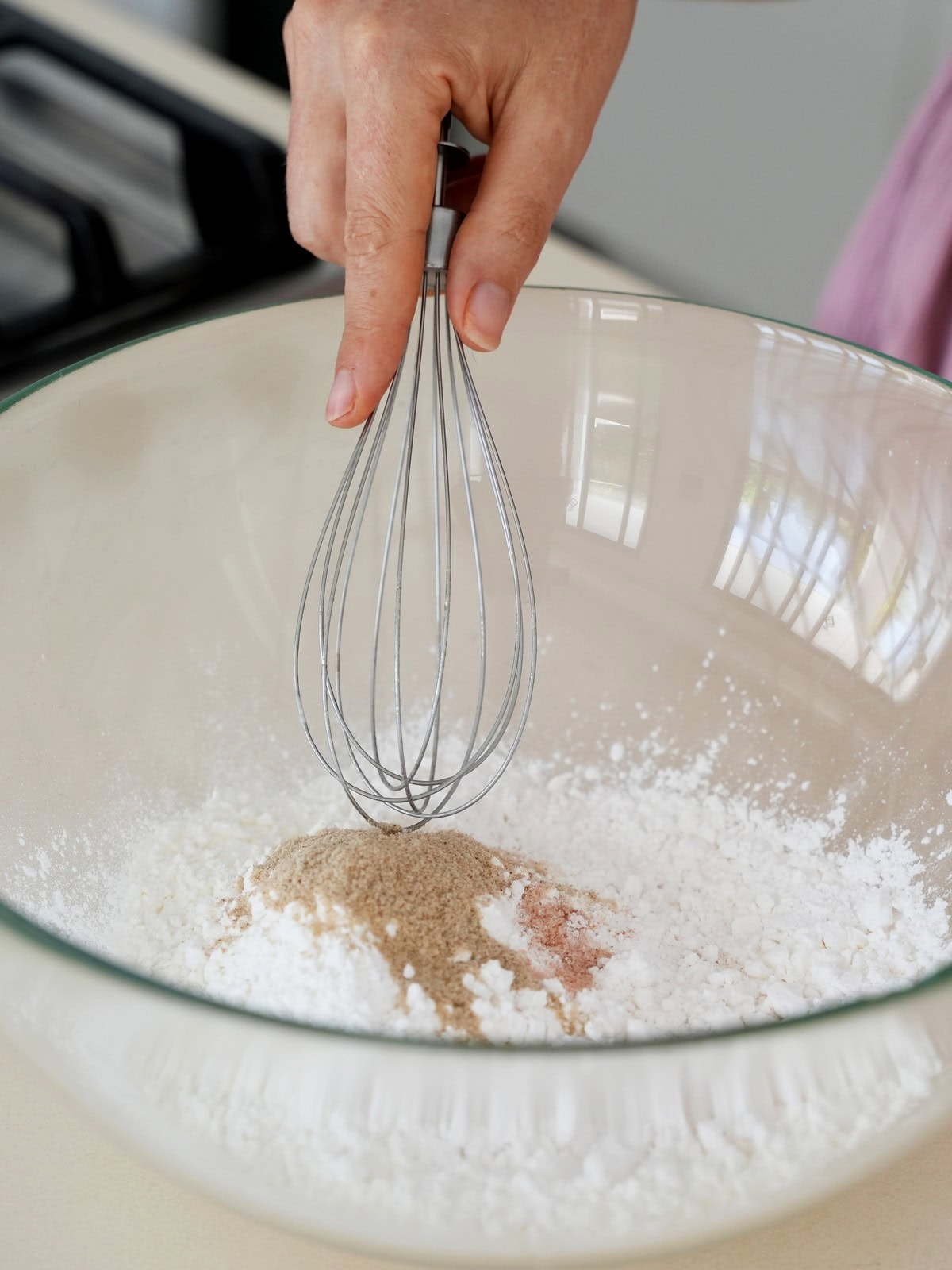
- Whisk the rice flour, tapioca, cornstarch, psyllium husk powder, and salt in a large bowl.
- Stir in the yeast mixture with a wooden spoon. It will look too wet initially but thickens within a minute or two.
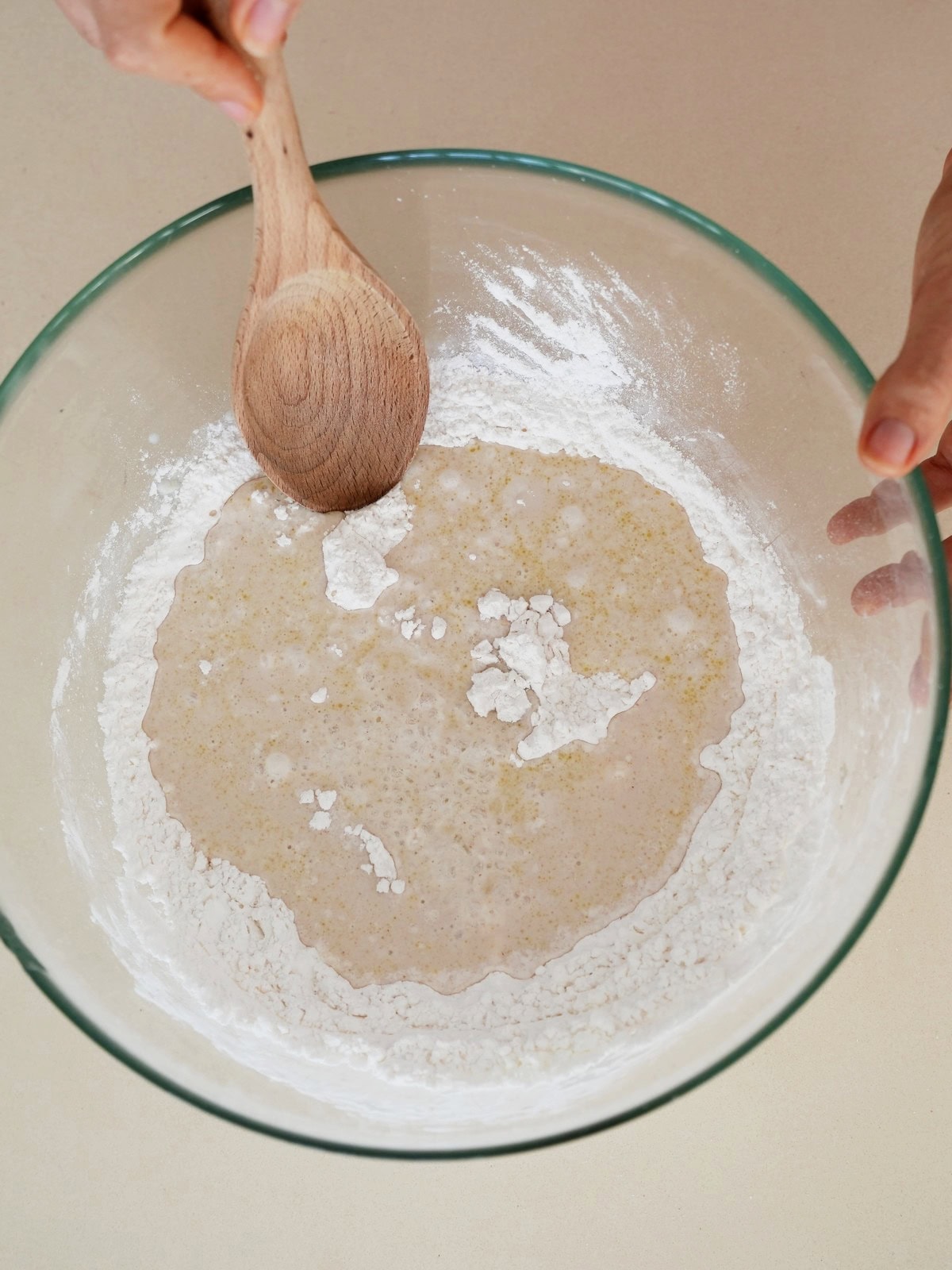
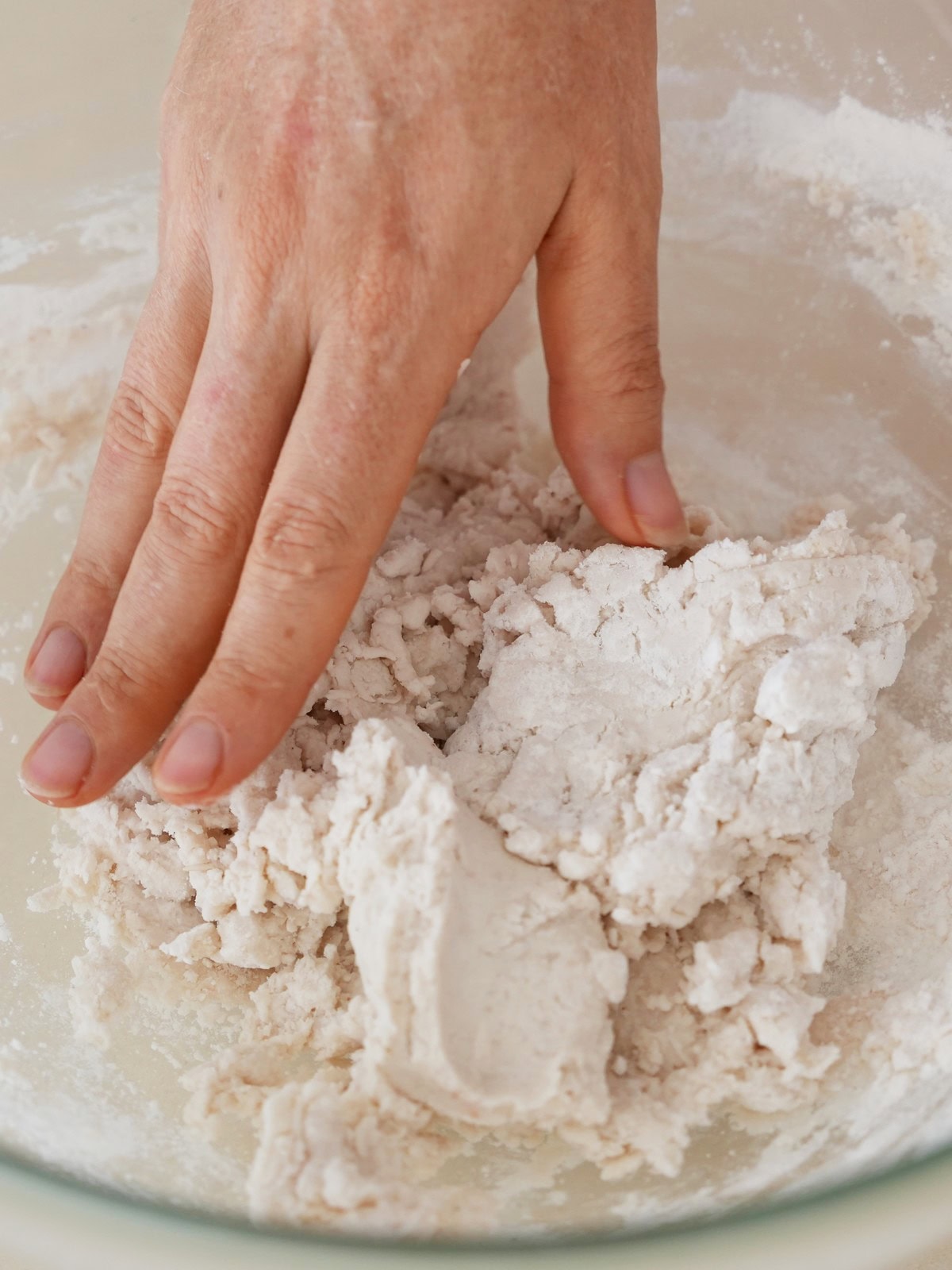
- Mix/knead the dough by hand for several minutes to fully combine, then form into a dough ball. It should be soft, moist, and slightly sticky.
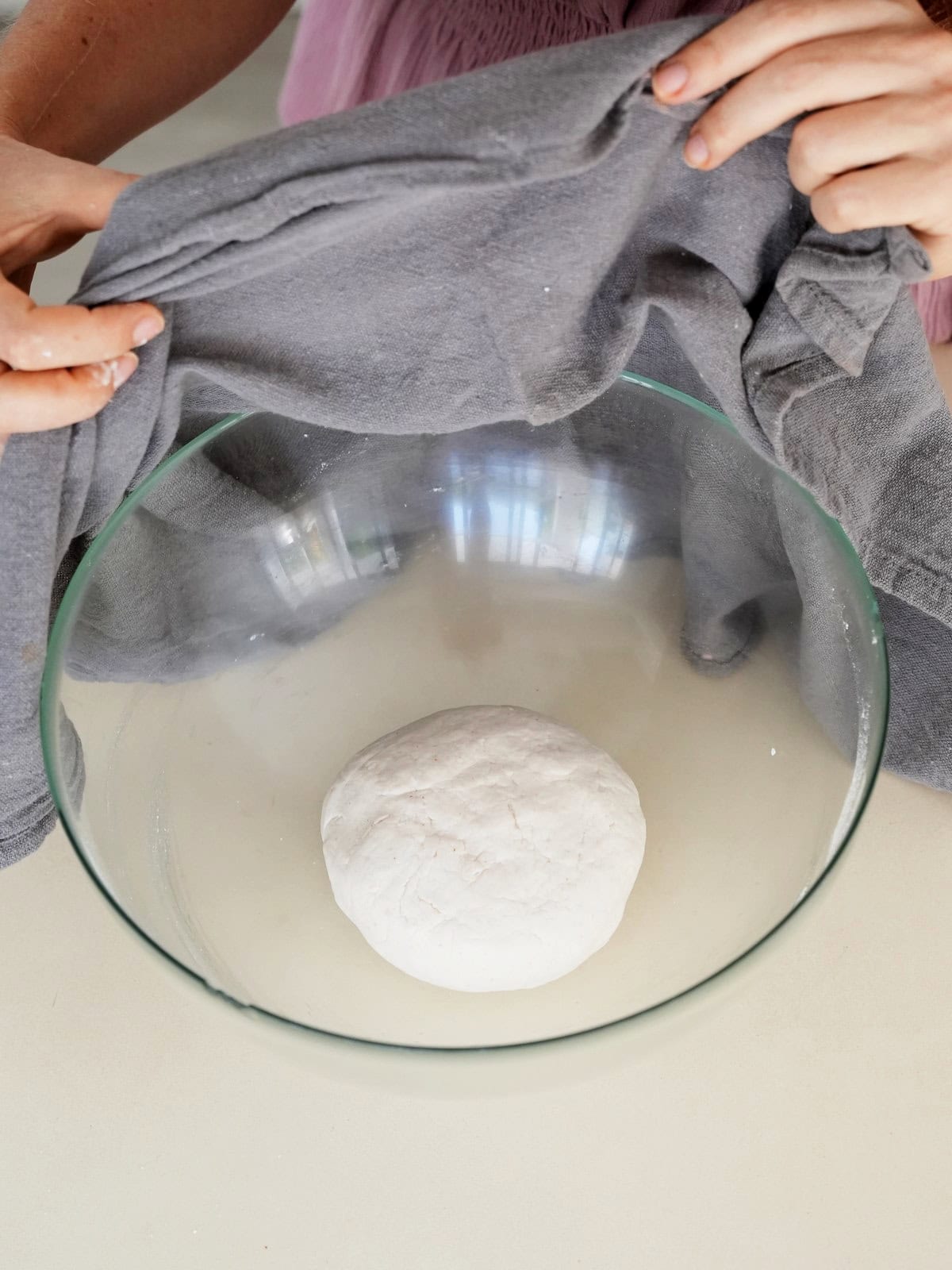
- Add to a bowl, cover with a clean kitchen towel, and leave to rise for 30-60 minutes in a warm, draft-free location. It won’t double but should be visibly puffy.
- Preheat the oven to 390°F/200°C and transfer the dough to a parchment paper-lined baking tray.
- Use your fingers to press the dough to your preferred shape, aiming for ⅛–¼ inch/3–6mm, leaving a thicker rim. Let it rest for 10 minutes.
Top and Bake
- Mix the tomato sauce, tomato paste, salt, pepper, dried oregano, and onion and garlic powder (or use your preferred pizza sauce).
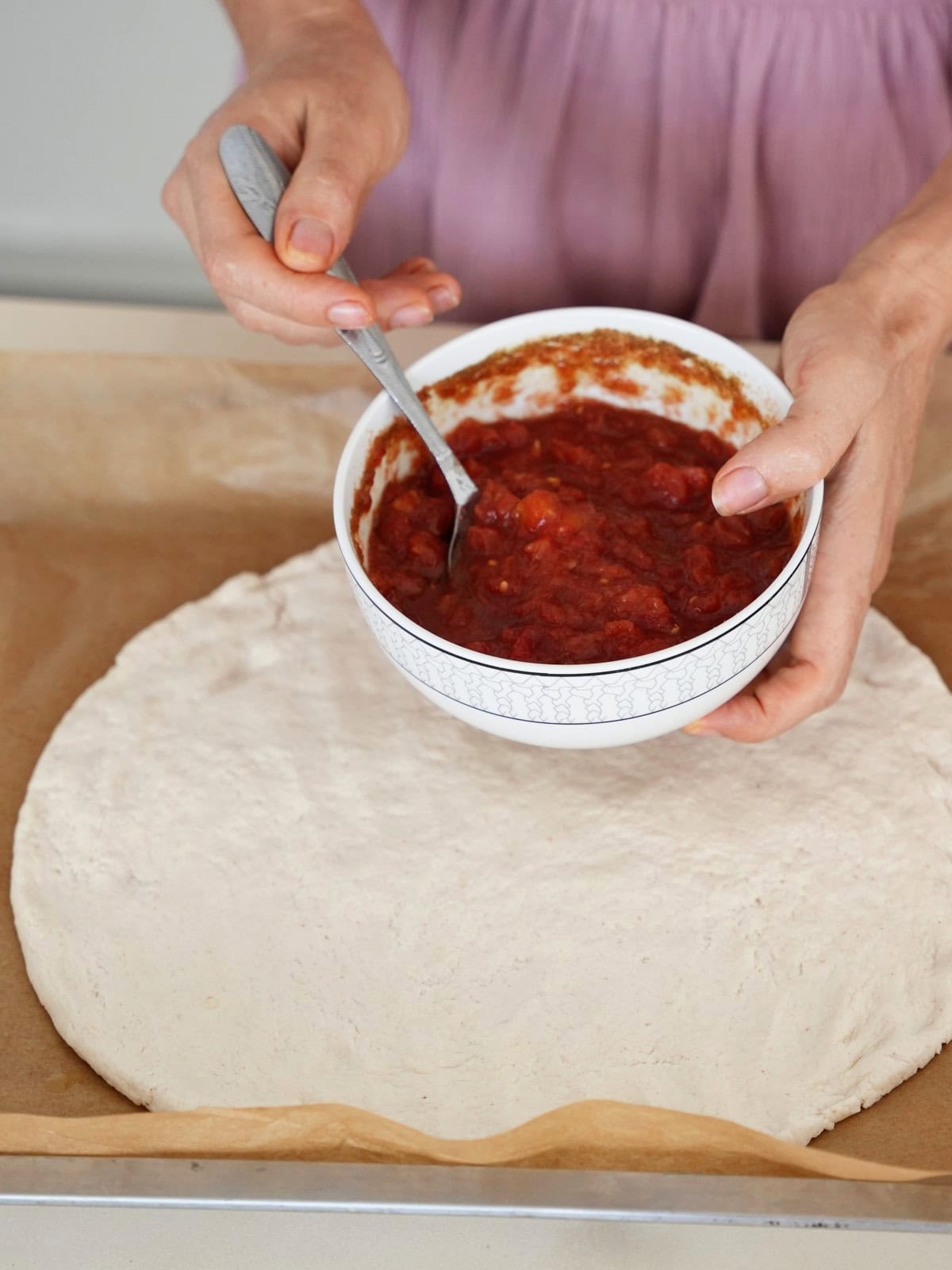
- Spread it over the pizza, leaving a 1-inch border. Optionally drizzle olive oil on top.
- Bake the gluten-free pizza crust for 10-15 minutes. Add cheese (e.g. vegan mozzarella) and any toppings. Bake another 10-15 minutes until crispy and golden-brown.
The thickness of the dough, your oven, and the amount of toppings can impact baking time.
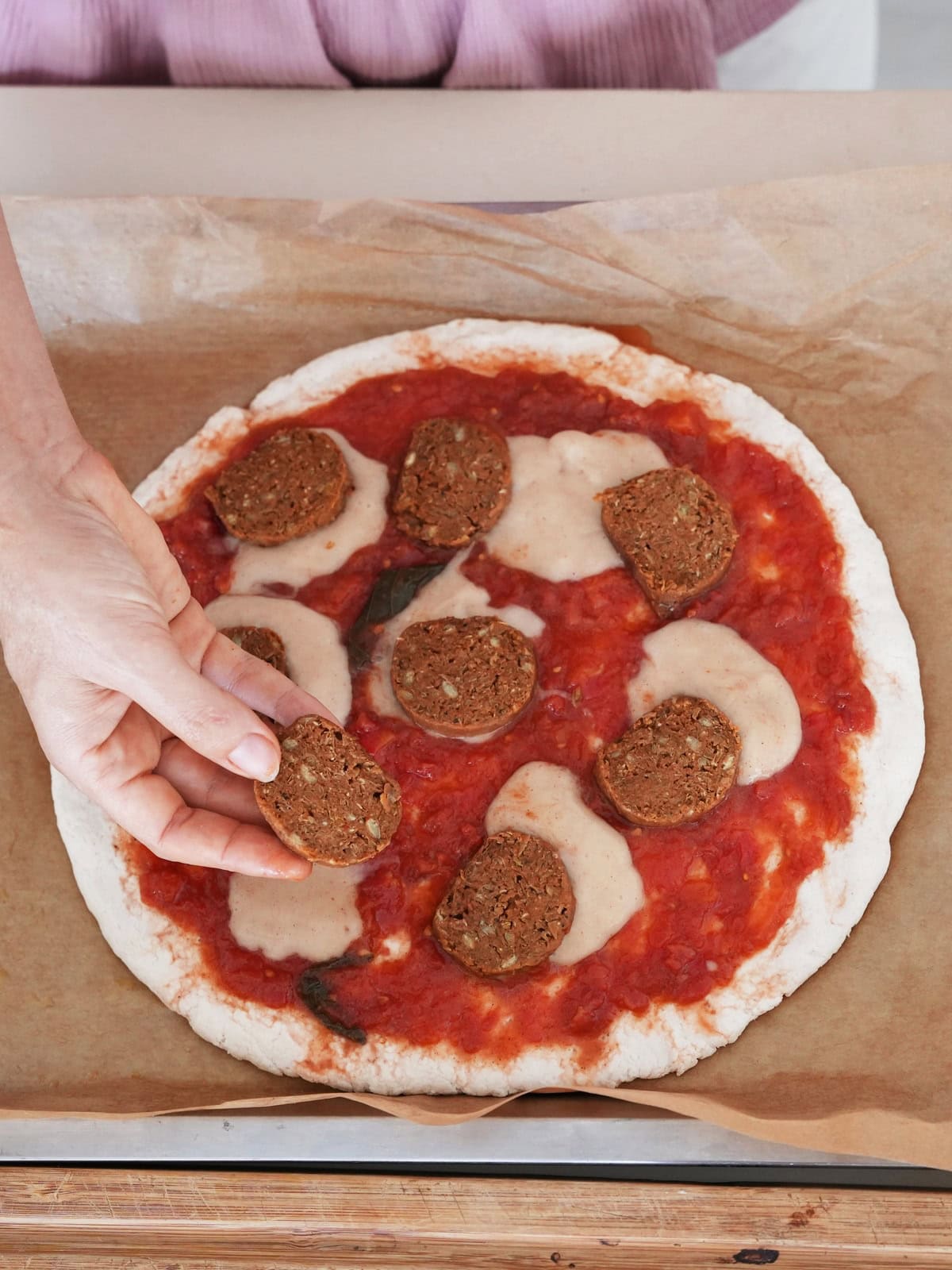
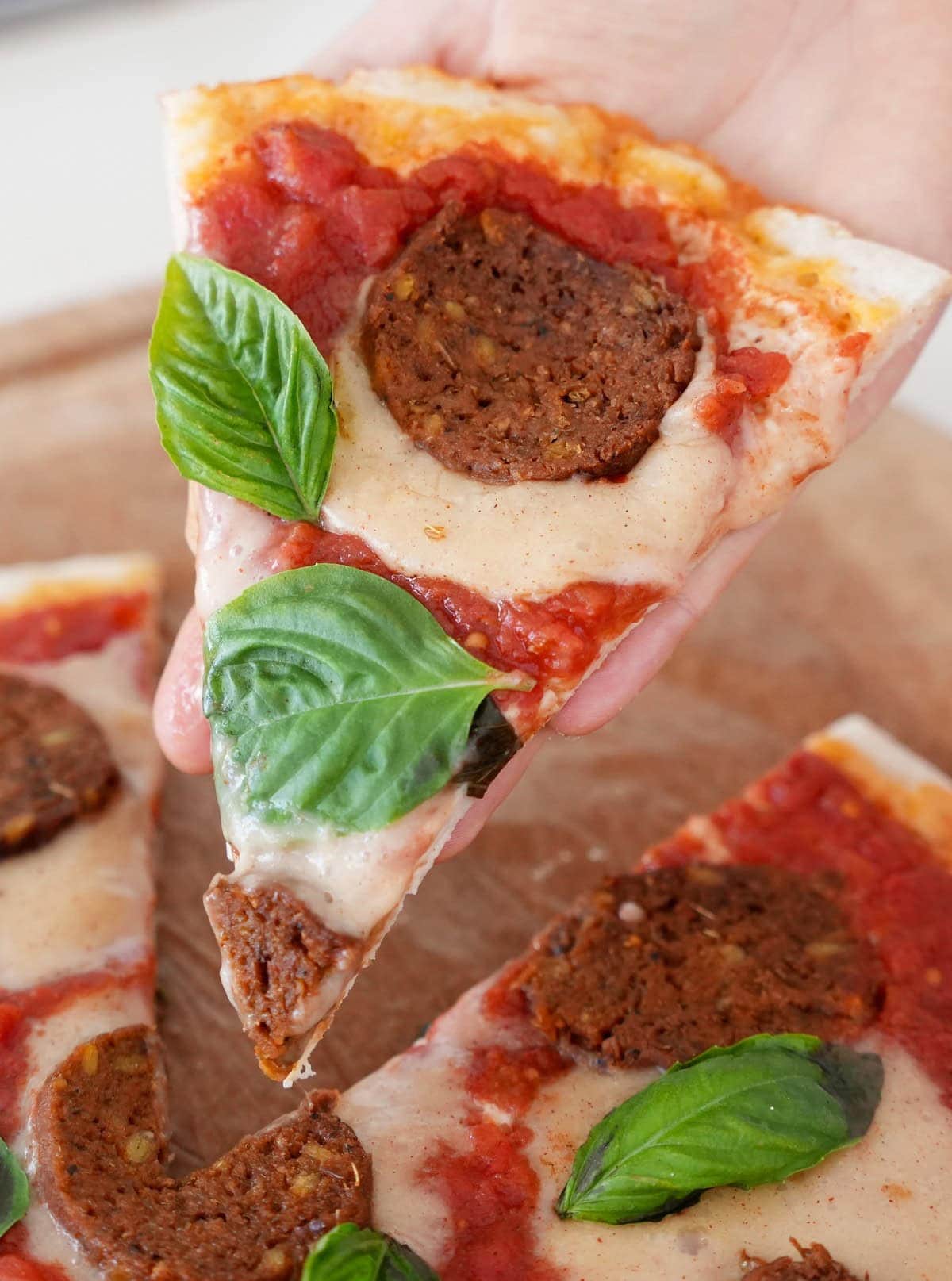
- Slice, optionally garnish with fresh basil, and enjoy!

Storage Information
Make ahead: To add more flavor, cold proof the dough in the fridge for 12-24 hours, then bring to room temperature before shaping.
Store pizza: Refrigerate leftovers in an airtight container for 3-4 days.
Reheat: Reheat the gluten-free pizza in an oven or air fryer for several minutes for the best texture.

FAQs
Can I use all-purpose gluten-free flour?
Possibly, but I wouldn’t replace the rice flour + starches 1:1 without testing, as many blends already contain starches and gums, so using it alongside psyllium could make the dough gummy.
The best gluten-free pizza crust recipes should contain a balanced blend of flour, starch, and binder. Too much of any will throw off the texture.
Can you flavor pizza dough?
Of course! Add garlic powder, onion powder, oregano, thyme, basil, rosemary, Italian seasoning, red pepper flakes, chili/cayenne, and even vegan parmesan/nutritional yeast.
For dessert pizza, increase the sweetener slightly and add vanilla and/or cinnamon.
Why is my gluten-free pizza dough sticky?
This is actually fairly normal. If it’s overly sticky, let it rest for 10-15 minutes for the psyllium to hydrate. If still sticky, try using wet/oiled hands rather than adding lots of flour.
How To Use Gluten-Free Pizza Dough?
Use it for pizza, mini pizzas, small Calzone-style pizza pockets, breadsticks, garlic bread, or pizza rolls.

Top Recipe Notes
- Weigh the ingredients: The flour and starch ratios are important.
- Use the right ingredients: Choose fine rice flour and psyllium powder. Grind whole psyllium first if needed.
- Don’t add too much flour: Gluten-free dough is naturally softer and stickier than wheat dough.
- Check the yeast: If it doesn’t foam, replace it and start again.
- Don’t toss the pizza: Instead, press it into shape (wet/oiled hands help), as the gluten-free dough doesn’t stretch like wheat dough.
- Adjust thickness: Aim for ⅛–¼ inch/3–6mm for a thin to regular crust.
More Gluten-Free Vegan Pizza Recipes
- Pizza ring with spinach
- Avocado chickpea pizza
- Mexican pizza with refried beans
- Vegan cheesy breadsticks
- Vegan pizza rolls
- Vegan calzone
If you try this easy gluten-free pizza crust recipe, I’d love a comment and ★★★★★ recipe rating below. Also, please don’t forget to tag me in recreations on Instagram or Facebook with @elavegan #elavegan – I love seeing them.
Gluten-Free Pizza Crust Recipe
Video
Ingredients
Dry ingredients:
- 1 cup (160 g) white rice flour
- ½ cup (60 g) tapioca flour
- ⅓ cup (40 g) cornstarch or potato starch
- 2 tsp psyllium husk powder or the double amount of whole husks
- ⅓ tsp sea salt
Yeast mixture:
- ¾ cup + 2 tbsp (200 ml) warm plant-based milk
- 1 ½ tsp active dry yeast
- 1 tsp olive oil
- ½ tbsp (10 g) maple syrup or agave syrup
Toppings for Pizza Margherita:
- ⅓ cup tomato sauce
- 1 tbsp tomato paste
- 1 tsp olive oil (optional)
- ½ tsp dried oregano
- Salt and pepper to taste
- Onion powder and garlic powder to taste (optional)
- Fresh basil leaves to taste
- Easy vegan cheese sauce or vegan mozzarella (see recipe notes)
Instructions
- You can watch the video in the post for visual instructions.Heat the plant-based milk in a saucepan for a few seconds until it's lukewarm (not hot!) about 35-40 degrees C (95-104 degrees F). Add all other ingredients for the yeast mixture and set aside for about 5-10 minutes to proof the yeast. If it starts to get frothy, then the yeast is still active and usable.

- Combine all dry ingredients in a bowl and stir with a whisk.
- Add the yeast mixture and stir with a wooden spoon. The dough might seem too wet in the first few seconds but that will change within a minute.
- Knead the dough with your hands for a few minutes and then form a dough ball. Cover the bowl with a clean damp kitchen towel and set aside (preferably in a warm place) for about 30-60 minutes. Here is how the dough looked before:

- Here is how the dough looked after rising:

- Preheat oven to 200 degrees C (390 degrees F).Place the dough onto a lined/greased baking tray and use your fingers to spread the dough into your preferred shape. Let it rest again for about 10 minutes, and prepare the toppings meanwhile.

- Mix the tomato sauce with the tomato paste, salt + pepper, dried oregano, and onion + garlic powder (optional). Put the sauce onto the dough and use the back of a spoon to spread it evenly (leave out 1 inch from the edges). Drizzle olive oil on top (optional).

- Bake in the oven for about 10-15 minutes. Add dollops of my easy vegan cheese sauce on the pizza and put it back into the oven for another 10-15 minutes (or until crispy).
- Cut the pizza into 6-8 pieces, add fresh basil and enjoy!
Notes
- For the cheese, I used my easy vegan cheese sauce recipe without the nutritional yeast flakes, because my brand turns the sauce yellowish. And I added 1 1/2 tsp of psyllium husk powder which adds great texture (similar to mozzarella).
- This pizza crust recipe has been on my blog since April 14th 2018. It was updated on November 5th, 2026, with a new video and photos and minor text revisions. The recipe itself remains unchanged.
- Nutrition facts are for one piece of pizza (without the toppings) when you cut the pizza into 6 large pieces.
Nutrition information is an estimate and has been calculated automatically
 „Simple and Delicious Vegan“ Cookbook by ElaVeganCLICK HERE to order!
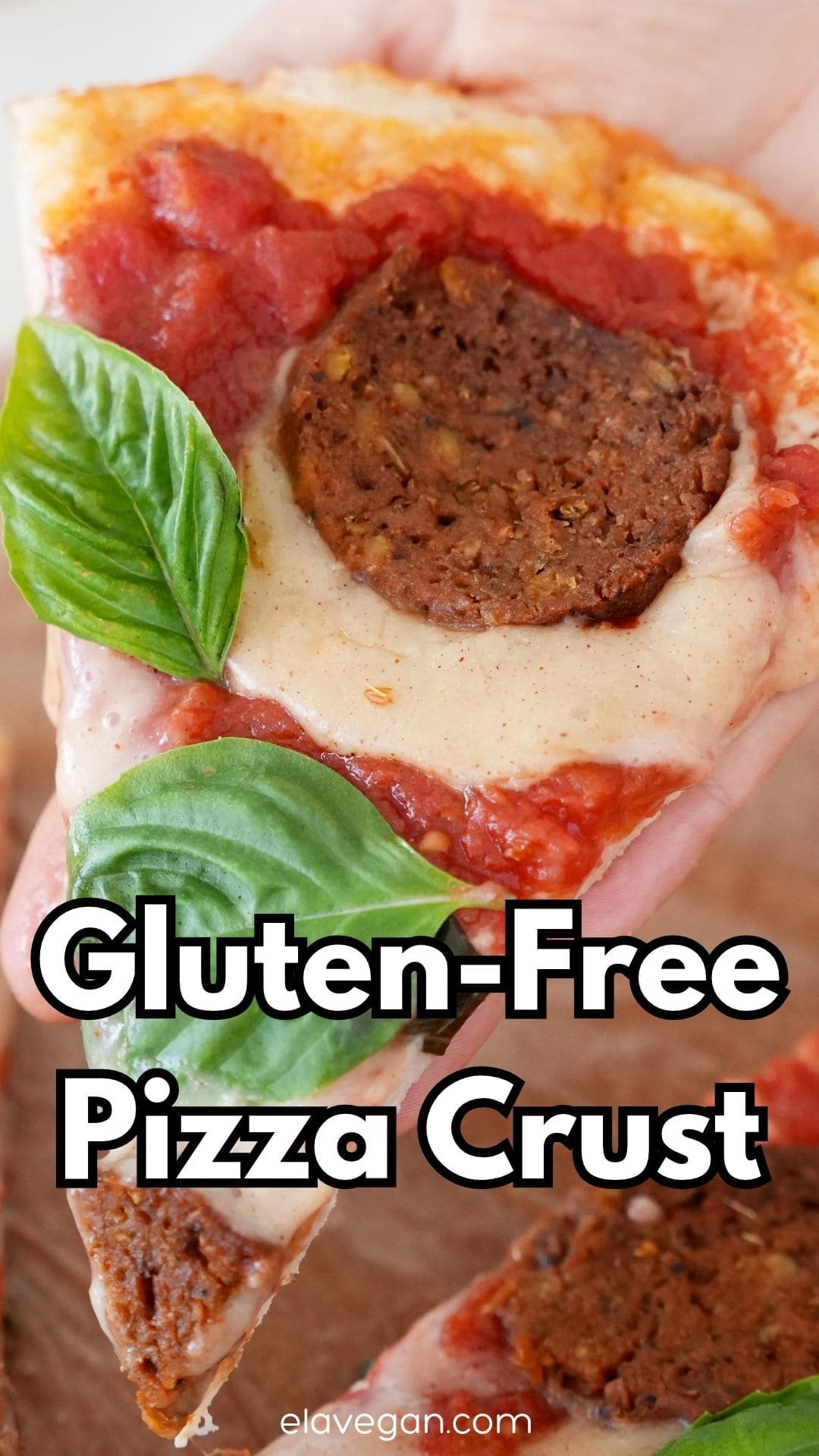
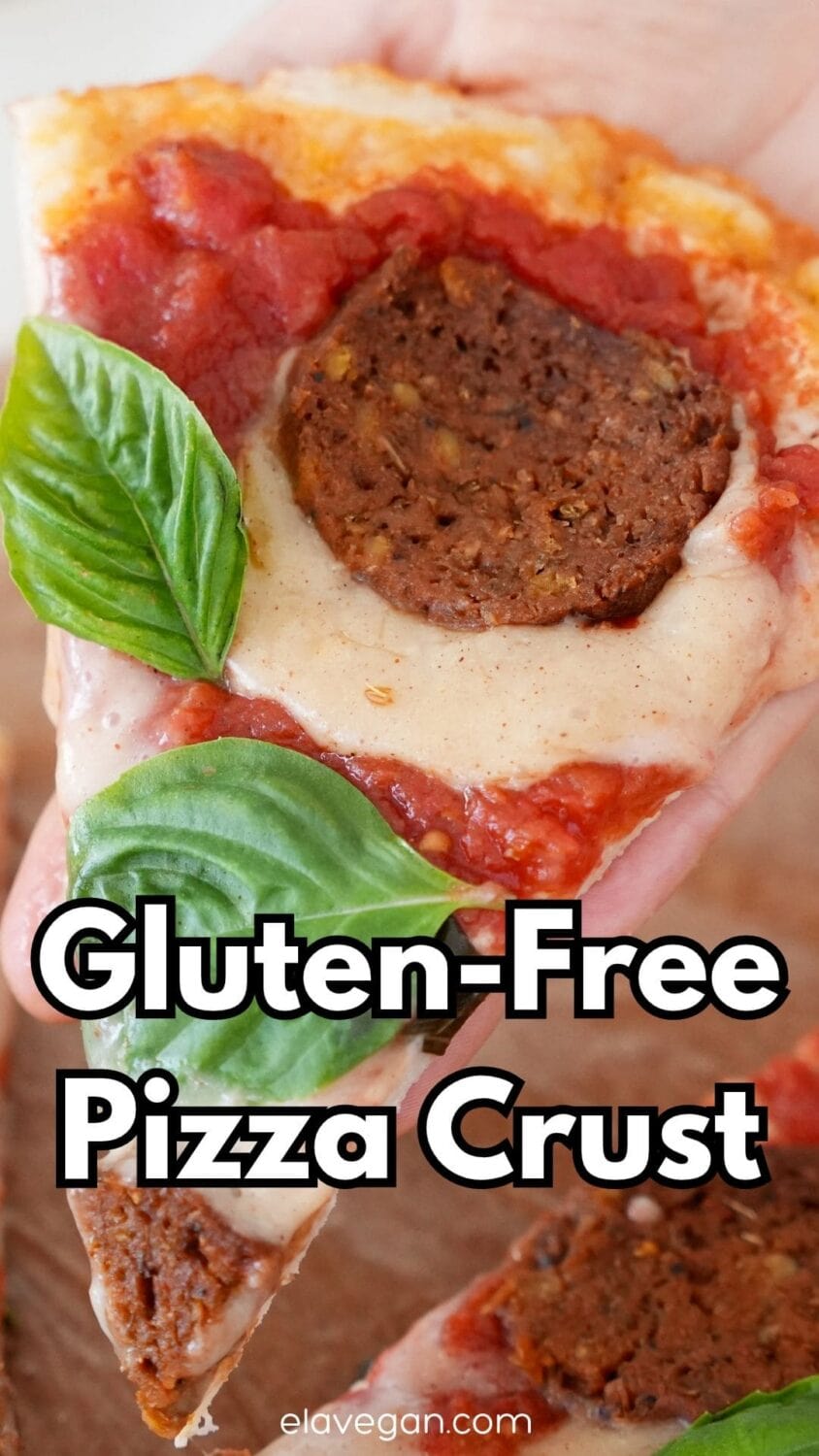
If you are using Pinterest, feel free to pin the following photo:
Hello! Can I replace the cornstarch and rice flour with tapioca flour and coconut flour respectively?
I only have access to: tapioca, coconut, oat and almond flours
No, coconut flour definitely won’t work, Lianne. You can make your own rice flour by blending rice in a high-speed blender.
Hi! Can this pizza be cooked in a pizza oven?
Hi Leah, I think that should be fine. 🙂
I made this for dinner tonight and loved the flavor, The only problem I had was the middle was still very doughy. Would cooking it for longer on a lower temperature help with that?
Hi Assilem, I think that should help. 🙂
Is there a way to make this yeast free and still have the rise like your Gluten-Free Vegan Bread recipe? That recipe is amazing and rises.
Hi Christine, you could try adding baking powder or baking soda instead of yeast, but it probably won’t turn out as good. 🙂
Turned out like crap would not make it again, dry and crumbly and didn’t rise at all even though the yeast
Hi Barb, sounds like something went wrong. The psyllium husk powder makes the dough soft and elastic. Maybe you just had to add a little more water.
I made this last week and it was fantastic! My son has been vegan for over three years and has many food allergies. He took a few bites and said, “This must be from Elavegan, because it’s the best pizza I’ve had since I became vegan!” Thanks for giving this mom a WIN!”
Aww, this is such a nice compliment! Happy you both love it! 🙂
I made your pizza crust recipe and i followed it to a tee
.it came out dry and hard and never browned. I used almond milk and psyllium husk. Do you think if i am add a little more milk or more psyllium husk it would work better? I am not sure what went wrong.
Hi Rita, sorry to hear it didn’t turn out well. You can definitely try adding more milk. I had the best result with coconut milk. 🙂
Can I use brown rice flour?
Hi, white rice flour is lighter, and therefore, it works better in this recipe. One reader didn’t have much luck with brown rice flour.
If I could give this recipe more than 10/10 I would. I’ve made this for my family and for guests many many times and it never disappoints. I’ve tried all different variations of pizza toppings but the crust itself is amazing. Makes me forget I’m eating gluten free. You are a saint, Ela!
Yay, that’s wonderful, Jess! I am so glad you love it. Thanks for your feedback. 🙂
I‘ve made this recipe so many times here in Japan and it turns out perfect everytime. I am so grateful for this recipe!!!
I‘ve used soy milk and oatmilk and both work perfectly!!!
Thank you so, so much!!!
Hi Janette, I am so glad you love it! Thanks for your great feedback. 🙂
HI.
Thanks for sharing this recipe. I measure all the ingredients and follow the instructions carefully, I used almont milk and the dough become crumble. I wasn’t able to spread it . I live in Florida, does humidity affect the dough texture?
Hi Ana, could you try a different plant-based milk next time, like canned coconut milk? The humidity shouldn’t be a problem as I live in the tropics too where it’s very humid.
Thanks for your quick answer. I’ll try it and let you know what happen
You are welcome, Ana. 🙂
It must be coconut canned otherwise it will not work to activate the yeast.
Hi, I want to try the pizza recipe. But I don’t have corn starch or potato flour. What can I use instead ?
Hi Dipti, you could use arrowroot flour. 🙂
I made this last weekend and it turned out great! Thank you! I was wondering if the dough could be made a few hours in advance and placed in the fridge till we’re ready?
Hi Cynthia, I think that should be fine. 🙂
This recipe exceeded all expectations, my daughter gave it a 10/10. We used Arrowroot instead of corn flour and it worked perfectly. Crispy crust, we made the base thin too and I haven’t had cheese in a long time, it was very authentic. Thank you.. Finally a pizza that I want to eat because there are no mystery ingredients!
That’s awesome, Vanessa! I am so glad you both liked it. 🙂
I’m excited to try this recipe out! I was looking at your apple cinnamon roll recipe too and thinking of trying this as a cinnamon roll vessel instead. Have you tried it? Thoughts on if it would work? Thanks!!!
Hi Susan, what do you mean by “cinnamon roll vessel”? The pizza dough is savory, so it won’t work to make a dessert with it. 🙂
I was thinking to wrap the cinnamon and sugar and some coconut oil and bake. I used to use a regular pizza dough recipe years ago for it and it was a great not too sweet version of cinnamon rolls. I wasn’t sure if the dough from the pizza could hold in the shape. I’m going to try and see ????☺️????
Great, please report back how your experiment goes. 🙂
I followed the recipe by weight and made calzone, they turned out beautiful!
Thank you!
I used 1/2 cornstarch and 1/2 potato
i was pleasantly amazed at how such little psyllium powder acts like gluten and helped make the dough more stretchable and much easier to roll out ! Wonderful…..Next i plan to add a bit of sweetener to make apple hand pies for the grandchildren.
That sounds amazing, Diana! I am so glad you loved your calzone. Thanks for your lovely feedback. 🙂
Will brown rice flour work just as well?
Hi Devo, white rice flour is lighter, and therefore, it works better in this recipe. One reader didn’t have much luck with brown rice flour.
i followed the pizza dough recipe but used brown rice flour instead of white rice flour because i didn’t have any white rice flour and then i doubled the recipe and unfortunately, it didn’t rise even though the yeast did ferment with the other wet ingredients. i let it sit for about 2 hours in a very warm place too. Anyway i rolled the dough on the pizza tray but it was dense and heavy and didn’t actually bake into a fluffy crust. did the doubling the recipe ruin it? or the brown rice flour?
sue
Hi Sue, I think it was the brown rice flour because it’s not as light as white rice flour.
You said that you put it in a very warm place to rise. That could kill your yeast.
this looks wonderful
and
it looks like it makes about a 9″ crust?
Yes, that’s about correct, Diana. 🙂
Hi! If I don’t have cornstarch can I use extra white rice flour instead?
Hi Alyssa! I would rather recommend arrowroot flour, potato starch, or more tapioca flour. 🙂
Hello 🙂
Do I need to use the yeast mixture?
And do you know the calories/nutrition content for the base without the toppings?
Thank you very much. Your pizza looks great!
Lara
Hi Lara, the nutrition facts are without the toppings as mentioned in the recipe notes. 🙂
You can leave out the yeast, but the pizza won’t turn out as soft/fluffy then. I hope this helps.
Best,
Ela