

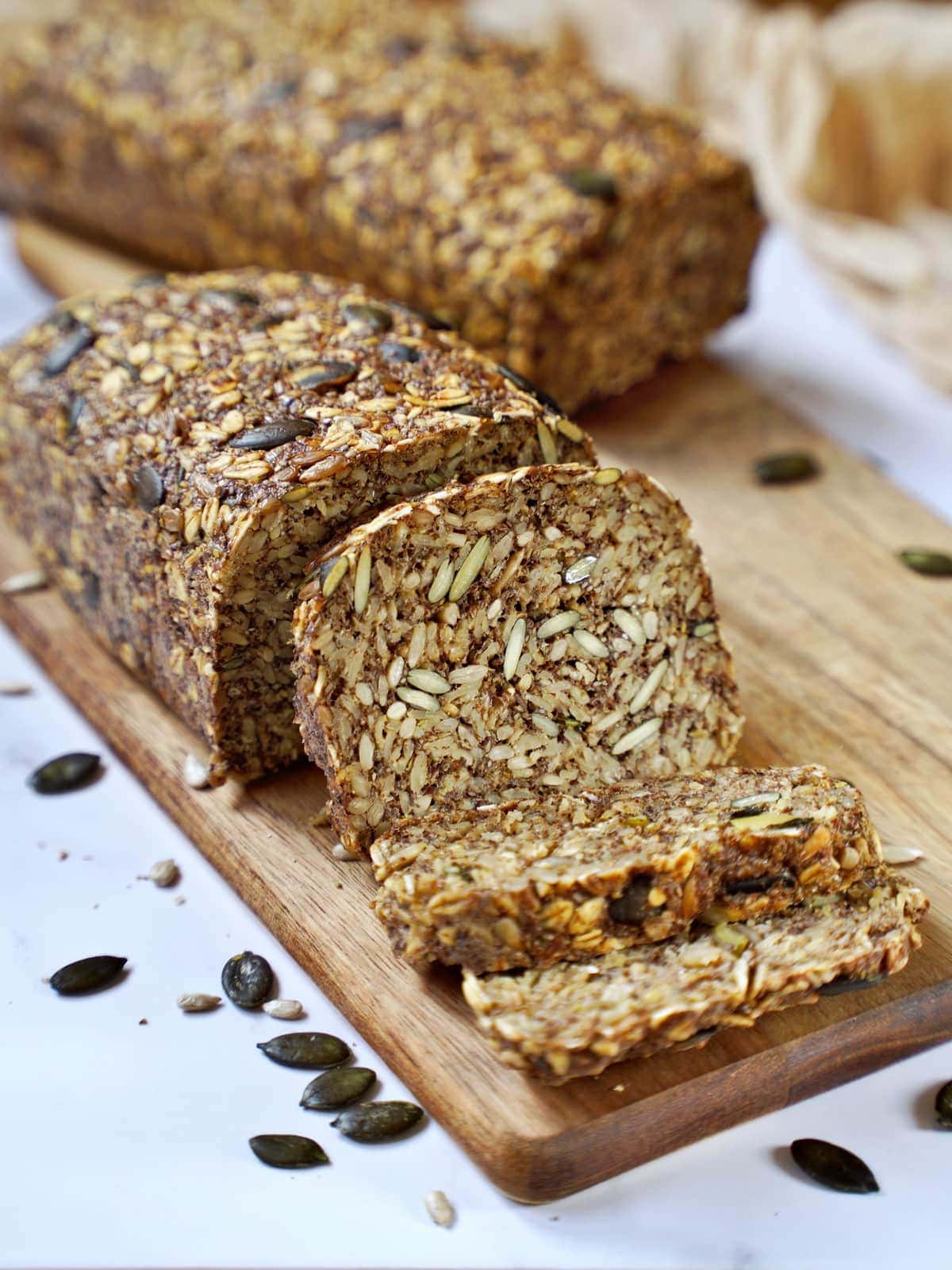
This no-knead oat and seed bread contains no flour or yeast for a dense, oil-free, vegan, gluten-free bread loaded with fiber, protein, healthy fats, and micronutrients!
No-Knead, Flourless Oat and Seed Bread
While it’s loaf-like in shape, gluten-free seed bread recipe certainly isn’t your everyday sandwich loaf. Instead, it’s a yeast-free, egg-free, dairy-free, and flourless loaf reminiscent of seed-packed Nordic bread, like Rye bread from Denmark, and flourless ‘adventure bread’ (which a little Googling suggests originated in The Mill bakery in San Francisco, thanks to Josey Baker).
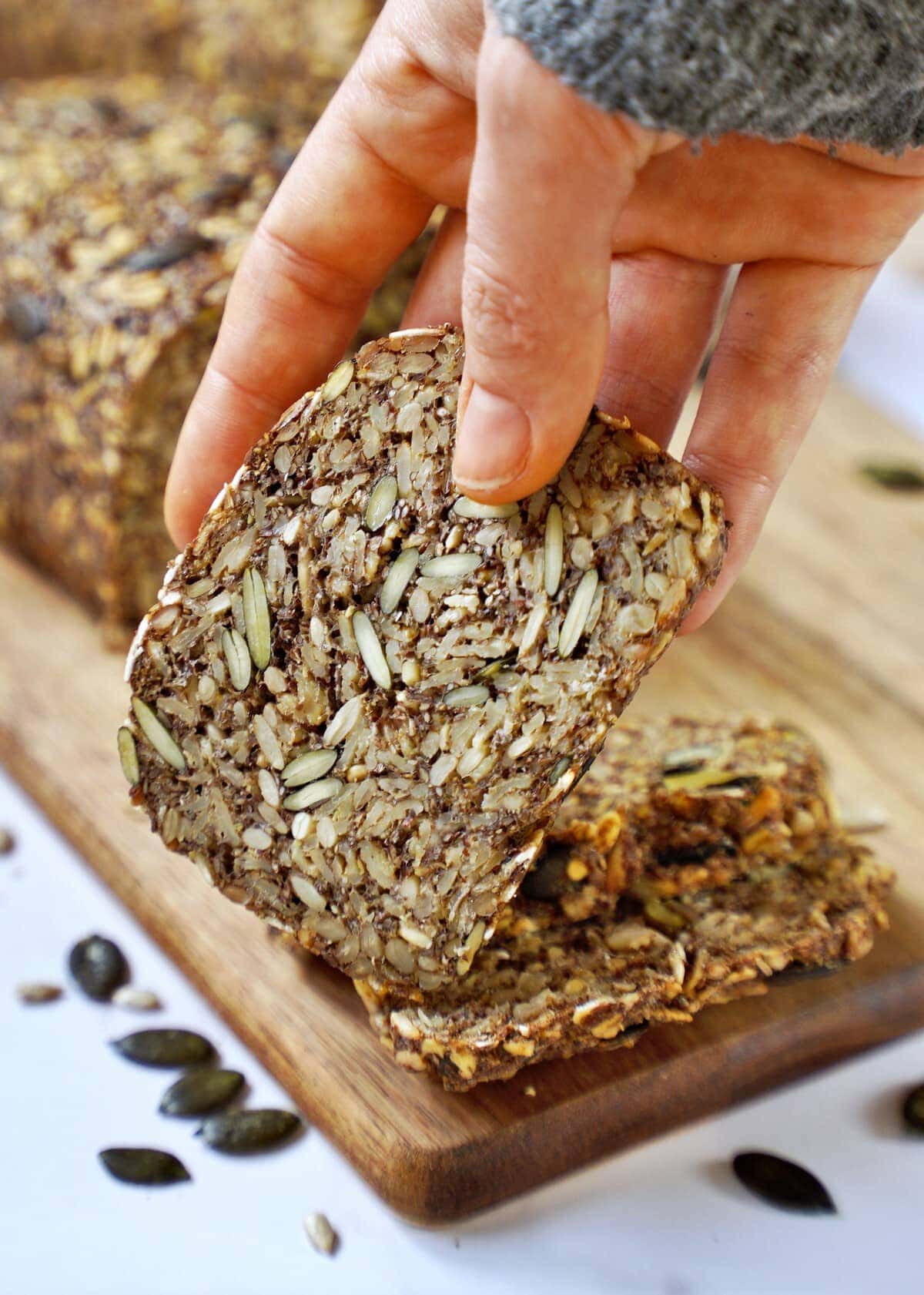
So, what exactly is this oat seed bread recipe? Well, taking things a step further than my risen flourless flax bread, this recipe is made almost entirely of oats and mixed seeds with no leavening agent. The result is a loaf jam-packed with good-for-you ingredients and hearty enough for at home or on the go – whether camping, hiking, etc.
It’s moist, dense, chewy, filling, healthy, and packed with fiber, heart-healthy fats, and micro-nutrients (like iron, calcium, zinc, magnesium, and more) in every bite to leave you feeling super satisfied. Plus, unlike similar recipes, this one is entirely sugar-free and oil-free, too.
Best of all, it’s SO easy to make with just a handful of pantry ingredients in one bowl with minimal clean-up and no special equipment or techniques. Mix, rest, bake, cool, and enjoy – Voila! A healthy, no-flour bread for breakfast, lunch, or snacking.
The Ingredients
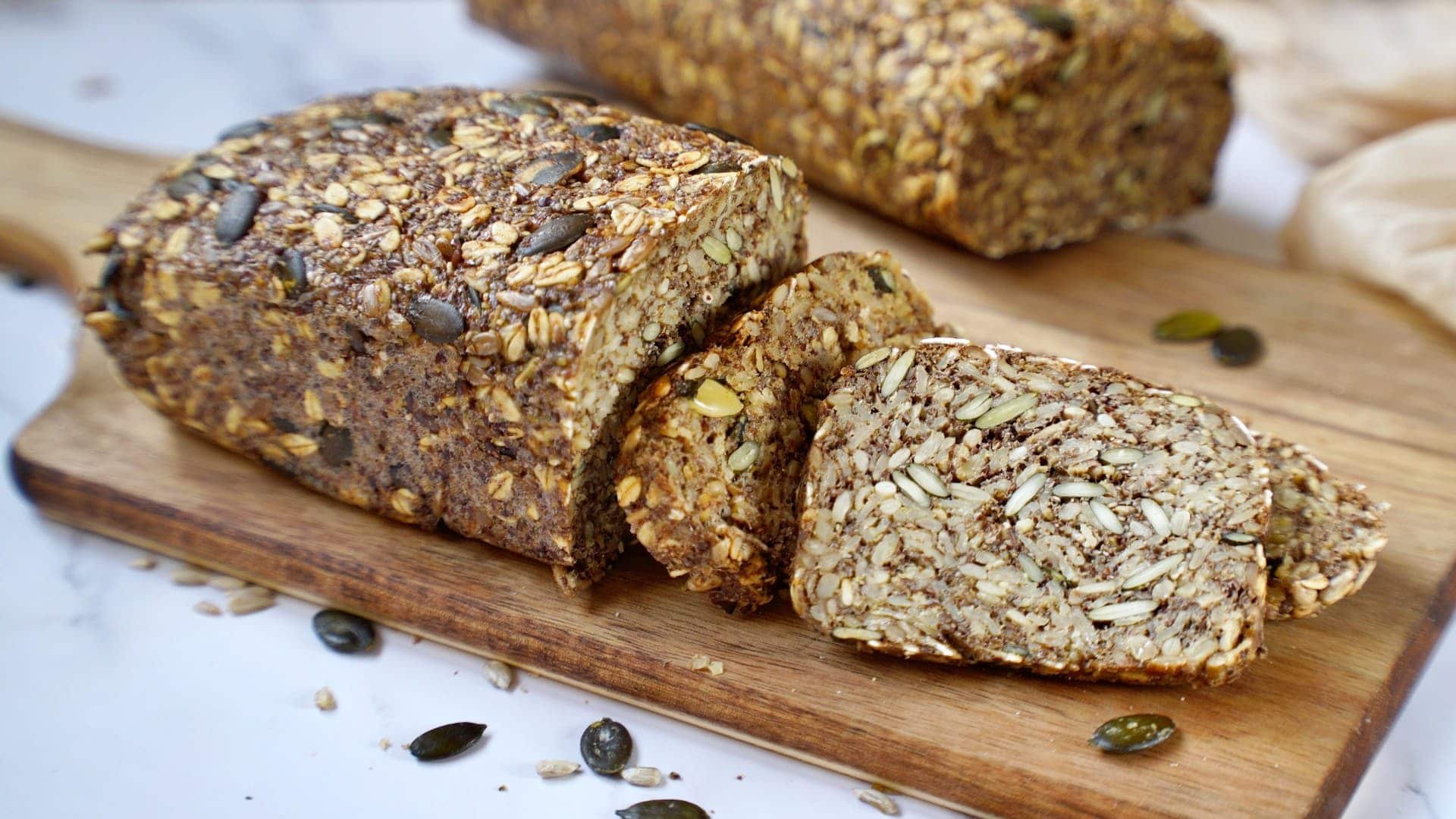
- Rolled oats: This seedy oatmeal bread recipe is naturally gluten-free, but use certified gluten-free oats if necessary.
- Seeds: I use several seeds for a brilliant combination of texture, flavor, and nutrients with binding ability. I use raw seeds, but dry toasting the pumpkin/sunflower seeds can add a toastier, deeper flavor.
- Ground flax seeds (regular or golden – important for binding the loaf)
- Chia seeds (also help with binding)
- Pumpkin seeds
- Sunflower seeds
Other seeds, like sesame seeds, hemp seeds, and pine nuts (which are actually seeds) also work.
- Psyllium husk: This ingredient helps wheat-free and gluten-free bread mimic gluten dough better and is a great binder- do NOT skip or replace it, as there is no substitute.
- Salt: A small amount of salt will enhance the overall flavor of the seed bread.
- Hot water: Make sure it’s hot to ‘activate’ the ground psyllium and flaxseed to thicken and bind. If it isn’t, the dough will need to rest for longer.
- Vinegar: I use apple cider vinegar, though other kinds of vinegar work and will lighten up the dough slightly.
For the full ingredients list, measurements, complete recipe method, and nutritional information, read the recipe card below.
What Else Could I Add to a Seed Loaf?
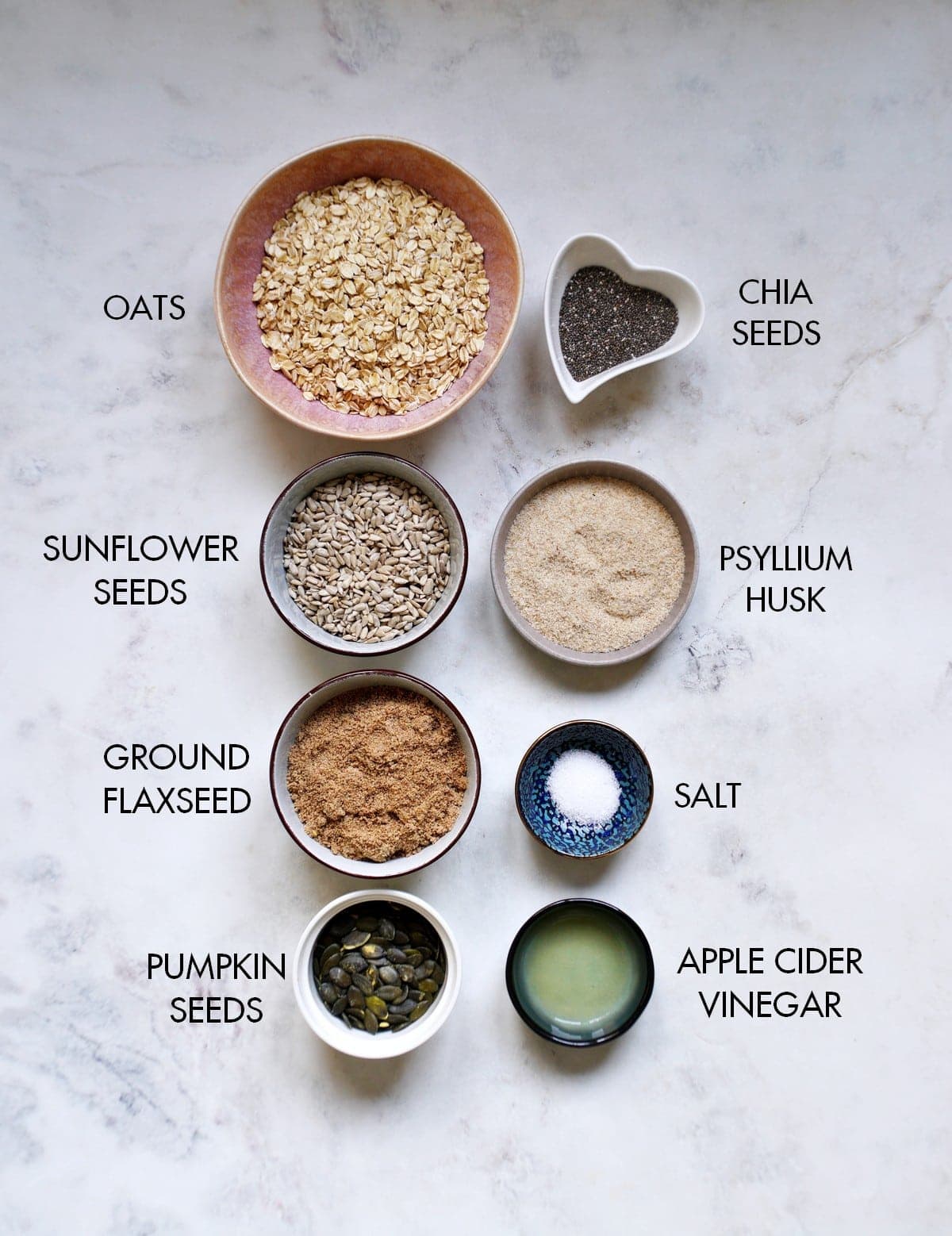
- Nuts: Replace some pumpkin or sunflower seeds with nuts, like hazelnuts, almonds, cashews, walnuts, etc.
- Maple syrup: Or coconut sugar – just 2-3 teaspoons can help balance the flavors (or about 2 tbsp for a sweeter loaf). Sugar-free options like erythritol/stevia (granulated or drops) also work.
- Dried fruit: For more of a sweet loaf, try replacing some seeds with a handful of raisins, cranberries, finely chopped dates, apricots, figs, etc.
- Seasonings: For more of a savory oat bread recipe, you could add dried onion, garlic powder, smoked paprika, and/or chili flakes. For a sweeter loaf, add a pinch of cinnamon and nutmeg or pumpkin pie spice. Dried herbs would also work.
- Other add–ins: Sliced olives or sun-dried tomatoes may also work well.
How to Make Oatmeal Seed Bread
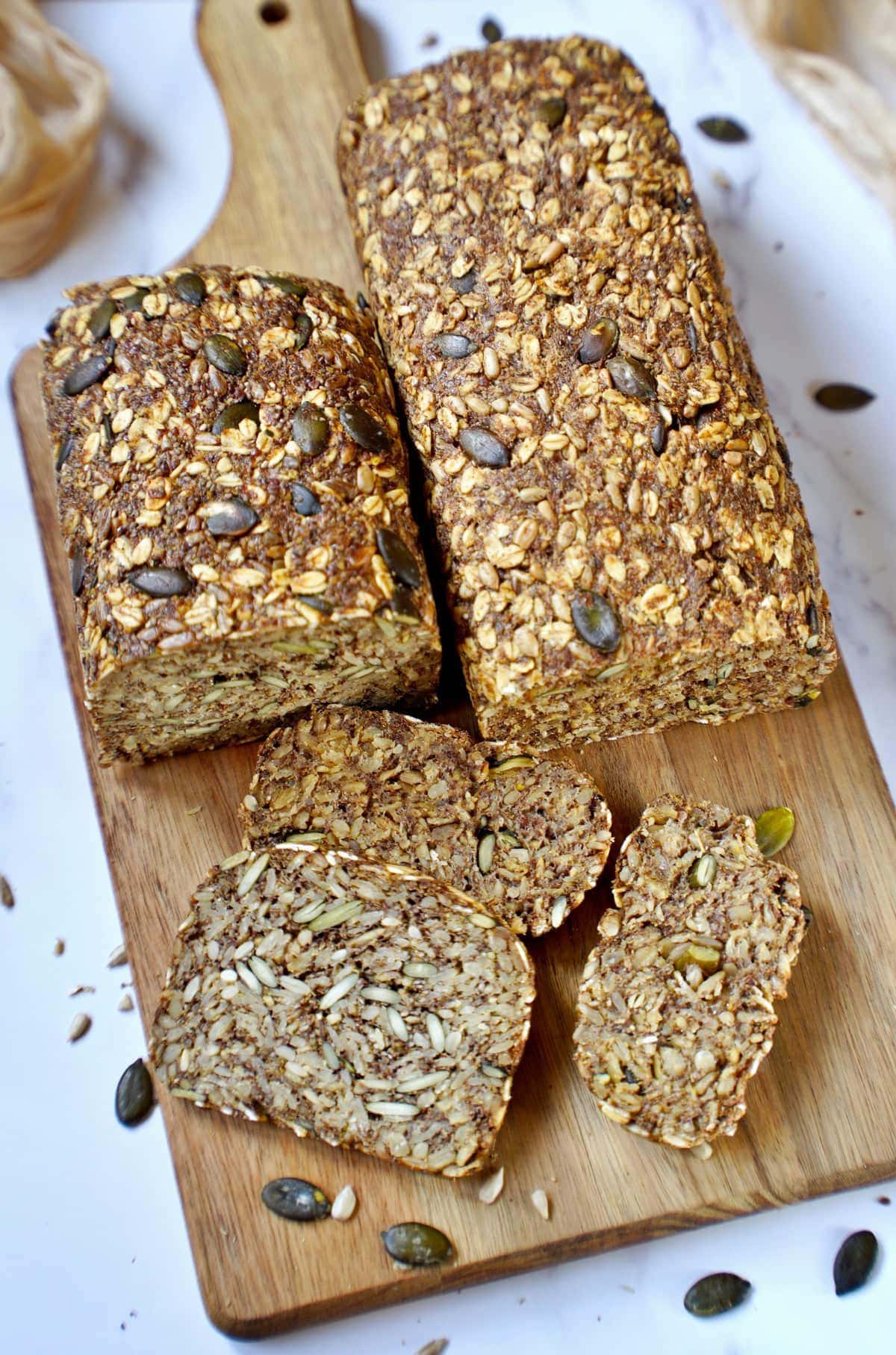
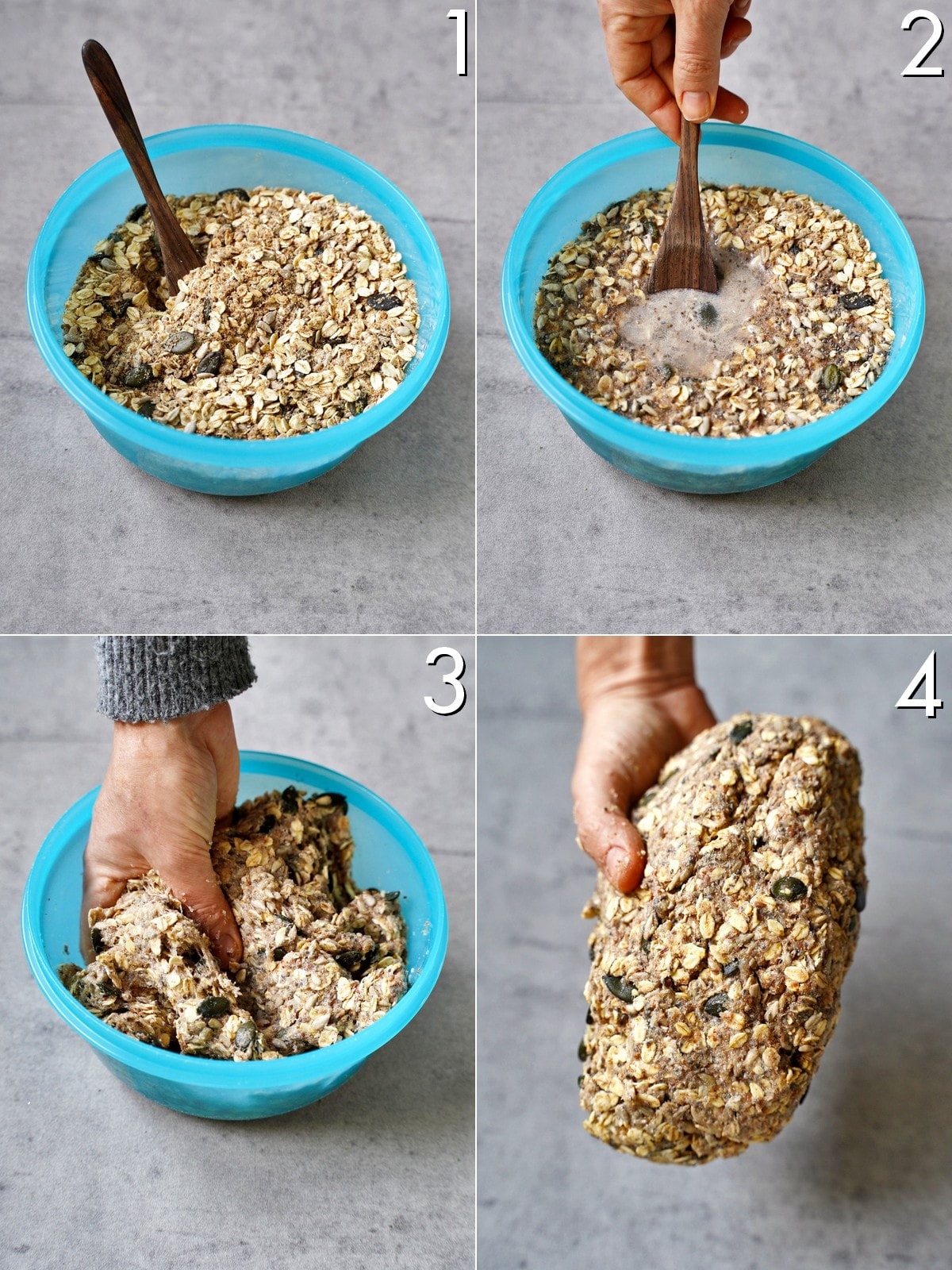
- First, stir all the dry ingredients in a large bowl.
- Then, add the wet ingredients (water and apple cider vinegar) and mix again – first with a wooden spoon, then with your hands.
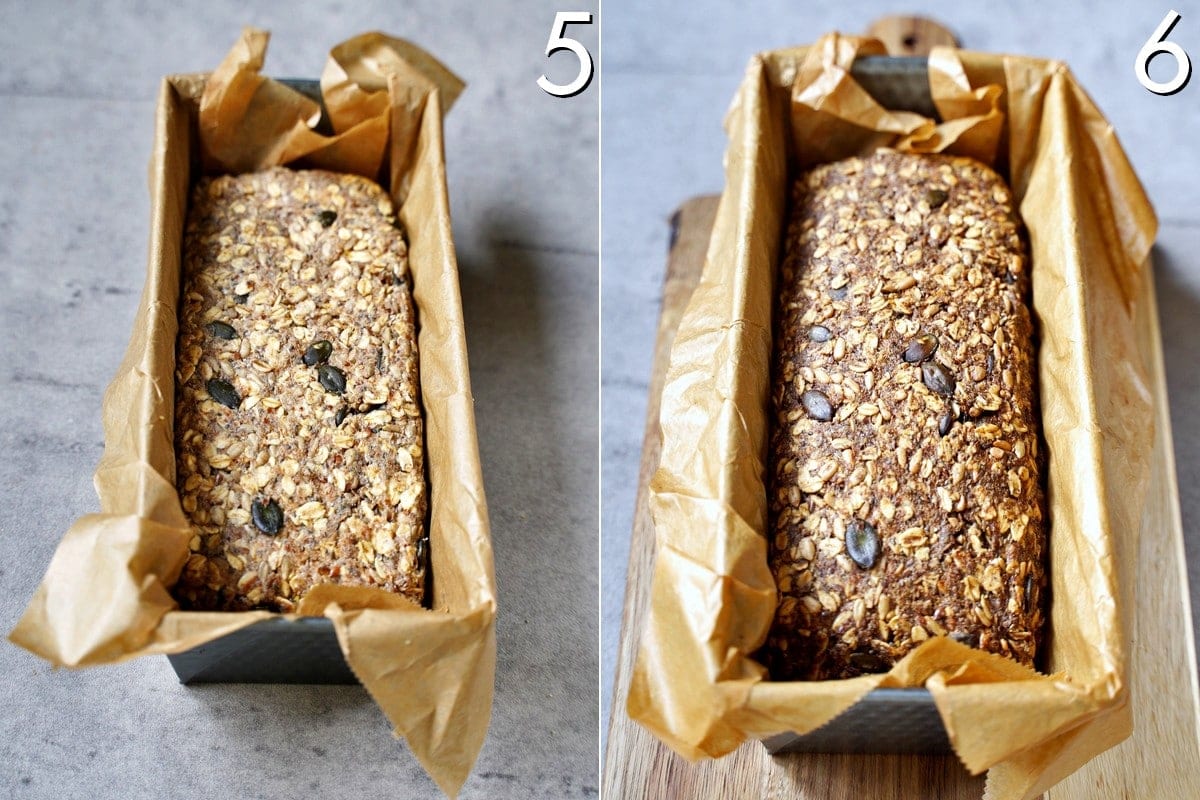
- Transfer the oat seed dough to a parchment paper-lined loaf tin (leave overhang for easy removal), cover with a damp kitchen towel (or plastic wrap), and set aside for 30 minutes, preheating the oven to 360F/180C (top and bottom heat) in the last 15 minutes.
During this time, the ingredients will swell and bind to create a cohesive flourless loaf. The water should have entirely soaked up during this time. If not, leave it for longer.
- Transfer the loaf to the oven and bake for around 50-60 minutes until the top is golden brown.
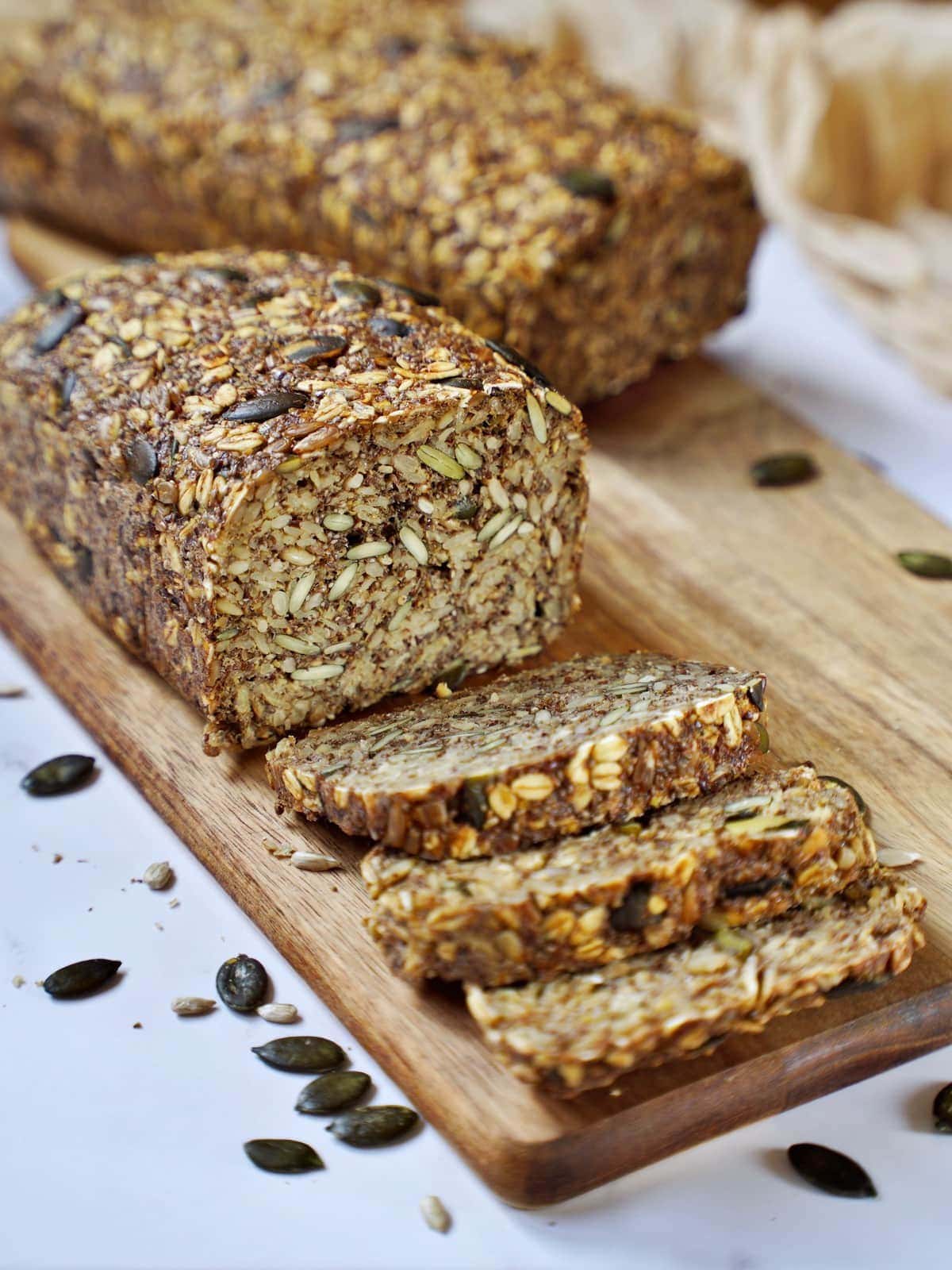
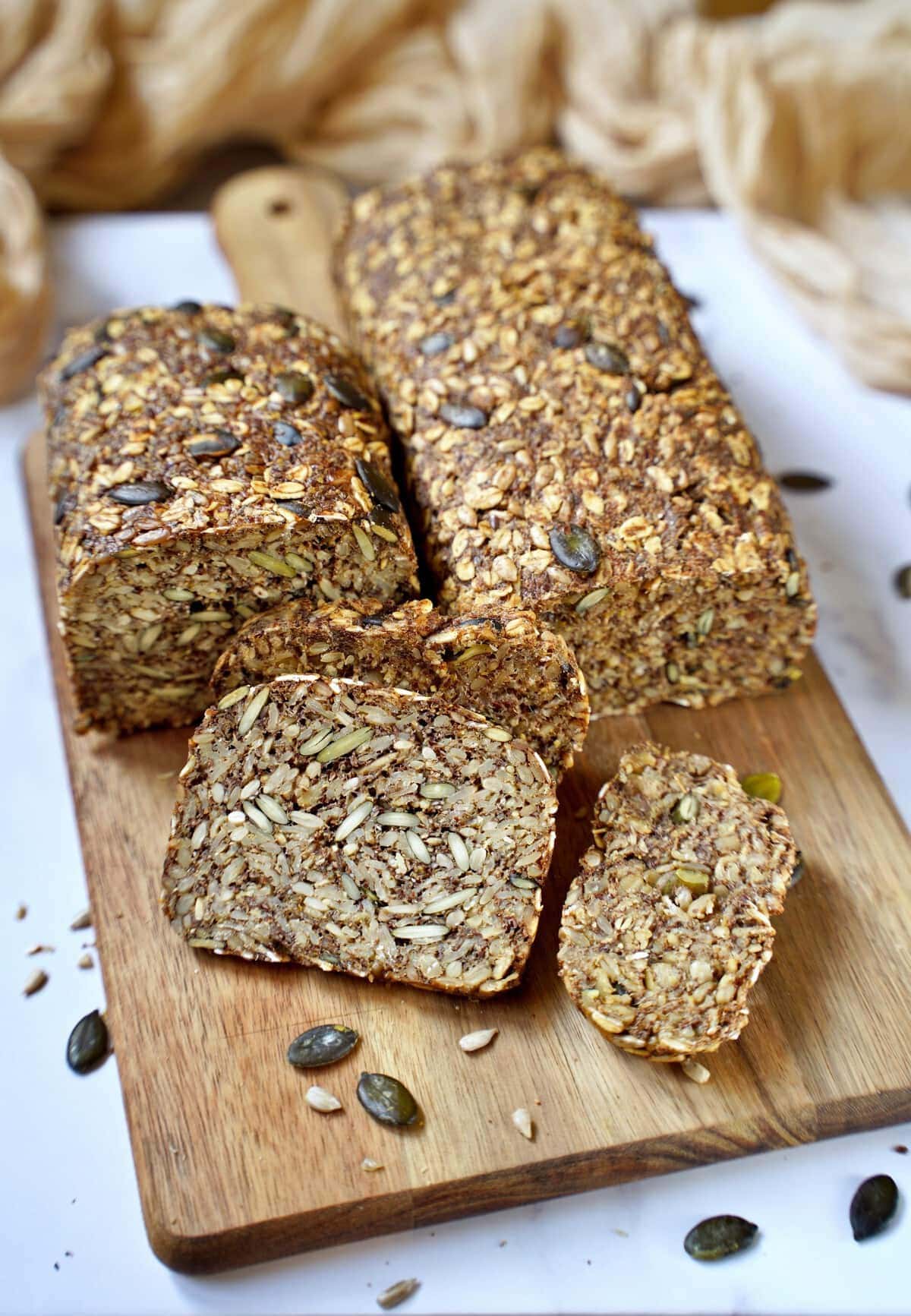
- Finally, remove the seed load from the oven and leave it to cool before slicing. Enjoy!
Serving Suggestions
This flourless oatmeal and seed bread works particularly well when toasted and/or served as an open sandwich, topped with:
- Hummus and vegetables (cucumber, radish, tomato, etc.)
- Other dips, pates, and spreads – like garlic white bean dip and lentil hummus
- Sliced or smashed avocado
- Chickpea ‘tuna’ salad with garnishes
- Nut or seed butter (optionally topped with banana slices or berries)
- Jellies and jams – like this raspberry chia jam
- Vegan cream cheese with veggies (tomato, cucumber, gherkins, etc.)
- Vegan ricotta cheese with maple syrup and fruit (apple, pear, berries)
- Pesto and tomato slices
You can also enjoy this healthy bread alongside soups, stews, and salads.
Storage Instructions
Store: Make sure the seedy oat bread has cooled completely, then store leftovers tightly wrapped/in an airtight container at room temperature or in the refrigerator for 6-8 days.
Freeze: Store the seed loaf, either whole or sliced (with parchment paper between the slices) in a Ziplock bag or plastic wrap in the freezer for up to 3 months.
Thaw in the fridge overnight, at room temperature for 2-3 hours, or a toaster oven/microwave.
FAQs
Can I toast the oat seed bread?
Yes, and it will make the outside crunchier, like regular bread.
Can I make mini loaves?
Yes, that should be fine – you’ll just need to reduce the baking time. You could also bake the dough in a muffin tin for 20-25 minutes, remove them from the tin, and bake for a further 15-20 minutes (for crispier, browner edges).
Can I make the dough in advance?
I think you’d be able to leave the dough to soak overnight (up to 12 hours) before baking. It may take slightly longer to bake and have a softer, moister consistency.
Recipe Notes
- Don’t omit the psyllium: There is no similar replacement, and it’s necessary for binding and texture.
- Use a metal loaf pan: Silicone pans don’t conduct heat in the same way and won’t achieve the best toasty, crisp outer texture. Also, note this bread doesn’t rise much, so the smaller the pan, the taller the loaf.
- Allow to cool completely: The oats and seeds mixture will fully set while cooling but are still sticky directly from the oven- so it’s important to leave it until fully cooled before slicing the loaf.
Other Gluten-free ‘Bread’ Recipes
- The Best Gluten-free Bread
- Gluten-free French Bread
- Easy Gluten-free Pita Bread
- Gluten-free Naan Bread
- Protein Bread with Lentils
- Gluten-Free Bread Rolls (German Brötchen)
If you try this healthy oatmeal seed bread recipe, I’d love a comment and ★★★★★ recipe rating below. Also, please don’t forget to tag me in re-creations on Instagram or Facebook with @elavegan #elavegan—I love seeing them.

Oatmeal Seed Bread
Video
Ingredients
- 180 g (2 cups) rolled oats
- 100 g (¾ cup) sunflower seeds
- 80 g (¾ cup) ground flaxseed
- 50 g (⅜ cups) pumpkin seeds
- 30 g (3 ½ Tbsp) chia seeds
- 30 g (⅓ cup) psyllium husk
- 1 tsp salt
- 400 ml (1 ⅔ cup) hot water
- 1 Tbsp apple cider vinegar
Instructions
- You can watch the video for visual instructions.First, stir all the dry ingredients in a large bowl.
- Then, add the wet ingredients (water and apple cider vinegar) and mix again – first with a wooden spoon, then with your hands.
- Transfer the dough to a parchment paper-lined loaf tin (leave overhang for easy removal), cover with a damp kitchen towel (or plastic wrap), and set aside for 30 minutes, preheating the oven to 360F/180C (top and bottom heat) in the last 15 minutes.During this time, the ingredients will swell and bind to create a cohesive flourless loaf. The water should have entirely soaked up during this time. If not, leave it for longer.
- Transfer the loaf to the oven and bake for around 50-60 minutes until the top is golden brown.
- Finally, remove the seed load from the oven and leave it to cool before slicing. Enjoy!
Notes
- Don’t omit the psyllium: There is no similar replacement, and it’s necessary for binding and texture.
- Use a metal loaf pan: Silicone pans don’t conduct heat in the same way and won’t achieve the best toasty, crisp outer texture. Also, note this bread doesn’t rise much, so the smaller the pan, the taller the loaf.
- Allow to cool completely: The oats and seeds mixture will fully set while cooling but are still sticky directly from the oven- so it’s important to leave it until fully cooled before slicing the loaf.
Nutrition information is an estimate and has been calculated automatically
 „Simple and Delicious Vegan“ Cookbook by ElaVeganCLICK HERE to order!
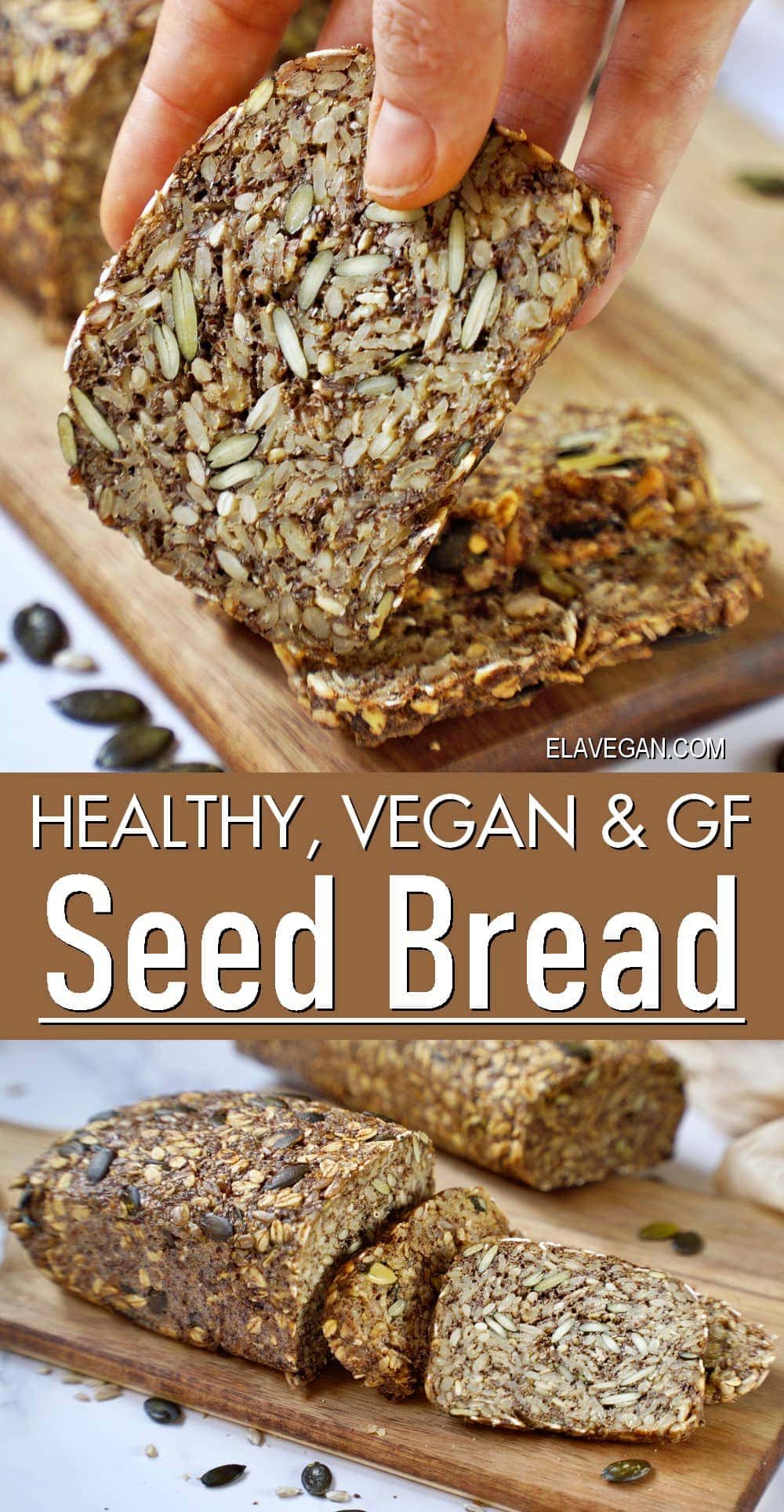
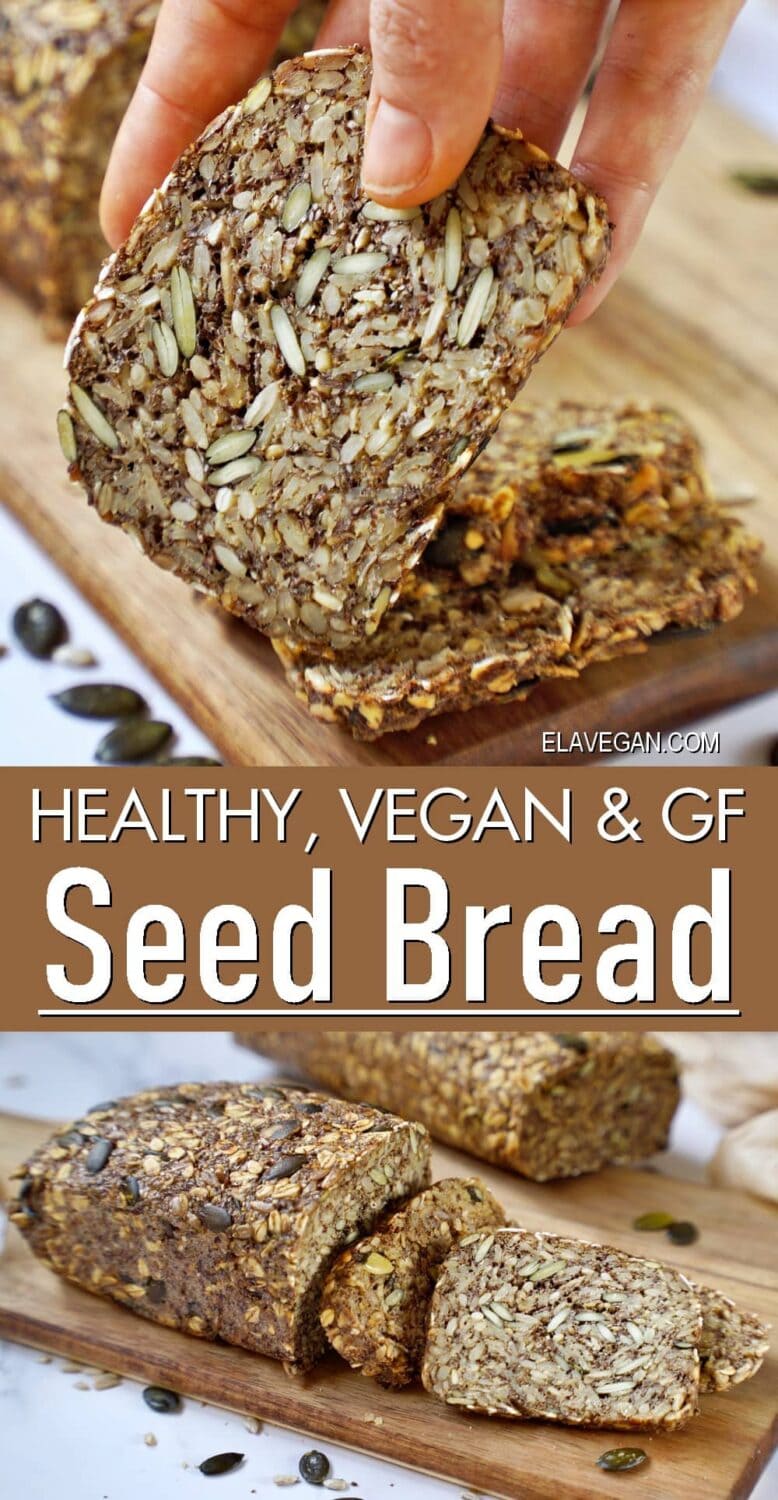
IF YOU ARE USING PINTEREST, FEEL FREE TO PIN THE FOLLOWING PHOTO:
Hi, sometimes when I make this loaf it comes out tall and fluffy. Other times it comes out flat and more of a brick shape. I can’t figure out what is causing each outcome. Any suggestions?
Hi Daniel, did you bake it in different sized pans maybe?
Дякую за рецепт
Будь ласка! 😊💛 Дуже рада, що вам сподобався рецепт. Дякую, що знайшли час залишити коментар!
Lovely recipe! Chopped onions and poppyseeds are great add/ins too. Thanks
So glad you like it, Maryam 😊 That sounds like a delicious combo, thanks for sharing 💛
I like your recepies
Thank you so much 😊 That really means a lot! So happy you’re enjoying the recipes 💛
Ela, did you use whole psyllium husk or powder? Thx
Hi Mindy, I used whole psyllium husk.
very healthy and delicious
I love this recipe, I add olives and thyme and olive oil for a crunchier top and it’s delicious. Thank you ☺️
So happy you love the recipe, Caroline 😊💛
Olives and thyme sound like such a delicious addition, and the olive oil for a crunchier top is a fantastic idea 👌
Thank you so much for sharing ☺️
Is it necessary to use a pan for this, or would it be possible to just shape it into a loaf or a ball and put it either on a baking sheet or in a pyrex bowl (like peasant bread), and bake it that way?
That is absolutely possible and I bake it very often without a pan. 🙂
Hey Ela. Just made this and it was sensational! 🙏. Love your nutritious recipes
Thank you so much, Sally! 😊 I’m really happy you enjoyed it. So glad you like my nutritious recipes. 💛
this turned out amazing! I thought I’d done it wrong when the mixture went sticky after mixing together and starting to mould with my hands but it turned out beautifully and I just love the toasted seed flavor it gets! My only fault was my tin being too big and it being a thin loaf, maybe I’ll double the mix next time so it fills the whole tin.
So happy to hear that it turned out amazing 🥰
If your tin was too big, doubling the recipe next time sounds like a great idea. You could also try using a slightly smaller loaf pan for a taller loaf. Either way, I’m so glad you loved it!
Can I use Oat flour instead of rolled oats? Recipe looks yummy. Cant wait to try!
Yes, you can use oat flour, but with a small adjustment 😊
Rolled oats give the bread more texture and structure. If you replace them with oat flour, the loaf will turn out a bit denser and more compact.
If you want to try it anyway, I recommend:
* Using about 150 g oat flour instead of 180 g rolled oats
* Keeping an eye on the dough. It should be thick and fully hydrated after resting, not wet or mushy
* Letting it rest a little longer if needed so everything can bind properly
If you’re able to, rolled oats really work best here. But oat flour will still give you a tasty, sliceable loaf 👍
This is the recipe that I’ve been looking for.
Today, I’m gonna bake this heathy bread. Thank you Ella for sharing this recipe. I would definitely love this
That makes me so happy to read, Elizabeth. 🥰
I hope you love the bread just as much once it’s out of the oven. Enjoy the baking and thanks so much for the sweet message! 💛
Ela
I’m in love with this recipe! Thank you so much for sharing. In my next batch I think I’m going to add some caraway seeds to make it taste like rye bread. I can’t stop eating it.
That sounds delicious, Wendy. Caraway seeds are a perfect idea and will totally give it that rye bread vibe. I’m so happy you’re enjoying it so much, thanks for the lovely feedback. 😊
I love this bread! Thanks!!
Yay, so glad you love it, Cheryl! 🙂
Thanks for this recipe! I love this kind of bread and can’t wait to try the recipe. Just checking, if I don’t have maple syrup, can I use a bit of manuka honey instead?
So glad you’re excited to try the bread! Maple syrup is actually optional (not even mentioned in the ingredients), so you can totally leave it out. But if you want to add some sweetness and aren’t vegan, you can of course add a bit of manuka honey.
Great recipe! I eat it with everything. Also works with gluten-free oats 🙂
So happy you love it! And yes, gluten-free oats work perfectly. Thanks for the sweet feedback! 😊💛
This loaf worked perfectly – I’m so pleased I now have a go to recipe ! And so easy! Only addition I made was slightly more salt but that’s just personal ! Thank you!
So happy to hear that it worked so well for you, Agnes! And yes, adjusting the salt to taste is always the way to go.
I’m thrilled this has become your new go-to loaf — enjoy every slice! 💛
Amazing.! I’ve just recently started making my own bread. I love bread and ate too much, so It’s great to be aware of what goes into my bread.
So happy to hear that, Maggie! 😊 Homemade bread is such a game changer, right? It feels great knowing exactly what’s in it. Enjoy your baking journey! 💛
can I add olive oil to the recipe
Yes, you can add a little olive oil if you’d like. It will make the loaf slightly richer and give the crust a softer texture. I’d recommend 1–2 tablespoons – just mix it in with the wet ingredients.
what’s the size of the loaf pan ?
An 8-inch (20 cm) loaf pan. 🙂
Glad to see this worked for most here:-)
I baked a brick today 🙁 The dough absorbed all the water, and looked like it should have as per your pictures.
But it didn’t swell. Or rise. Or do anything … 30 minutes. Then another 10.
I kept checking your ingredients and instructions and to see if I’d missed anything.
Eventually put it into the hot oven to bake… hoping it would rise.
Nope. It didn’t budge.
Appx 60 minutes later I knew it was a complete fail.
I just feel so bad for wasting all those ingredients.
Hi Lisha! This bread is not supposed to rise like a traditional yeast loaf, as mentioned in the recipe notes.
It’s a dense, flourless seed-and-oats loaf that gets its structure from psyllium husk binding the ingredients together and swelling with water, but it won’t puff up or get airy.
The “swelling” happens as the seeds and psyllium absorb the water and create a sticky dough, which then sets firmly while baking and cooling. So if it looks dense and doesn’t rise, that’s actually totally normal for this recipe.
Just let it cool completely before slicing, and you’ll get a nice, firm loaf perfect for toasting or spreading!