

This irresistible sticky, tangy, sweet, slightly spicy Korean BBQ sauce comes together in 10 minutes—perfect for marinating, glazing, dipping, and drizzling to elevate any dish!

What is Korean BBQ Sauce?
Unlike sweet and smoky American tomato-based BBQ sauces (like my Keto BBQ sauce), Korean BBQ sauce is soy-sauce-based and combines popular Asian ingredients like garlic, ginger, rice vinegar, and Korean chili paste (gochujang) to create an umami powerhouse with a more complex flavor profile—tangy, sweet, savory, garlicky, umami, and a little (or a lot) spicy.
Why You’ll Love This Recipe
Once you try this bold, umami-rich homemade Korean BBQ sauce recipe, there’s no going back. This recipe has been tried and tested with friends and family over several years, is so easy to make, and comes together in 10 minutes in one pan. It’s also meal-prep friendly and super versatile.
Best of all, this gochujang BBQ sauce is quick, easy, naturally vegan (and easily gluten-free/ refined sugar-free), addictively delicious, and made of wholesome pantry staples—without any of the artificial junk in store-bought versions. Warning, though… you might find yourself using this sauce on everything—and I fully support that!
You might also like my Chinese garlic sauce, hoisin sauce, or Hibachi-style Yum Yum sauce.
The Ingredients and Substitutes
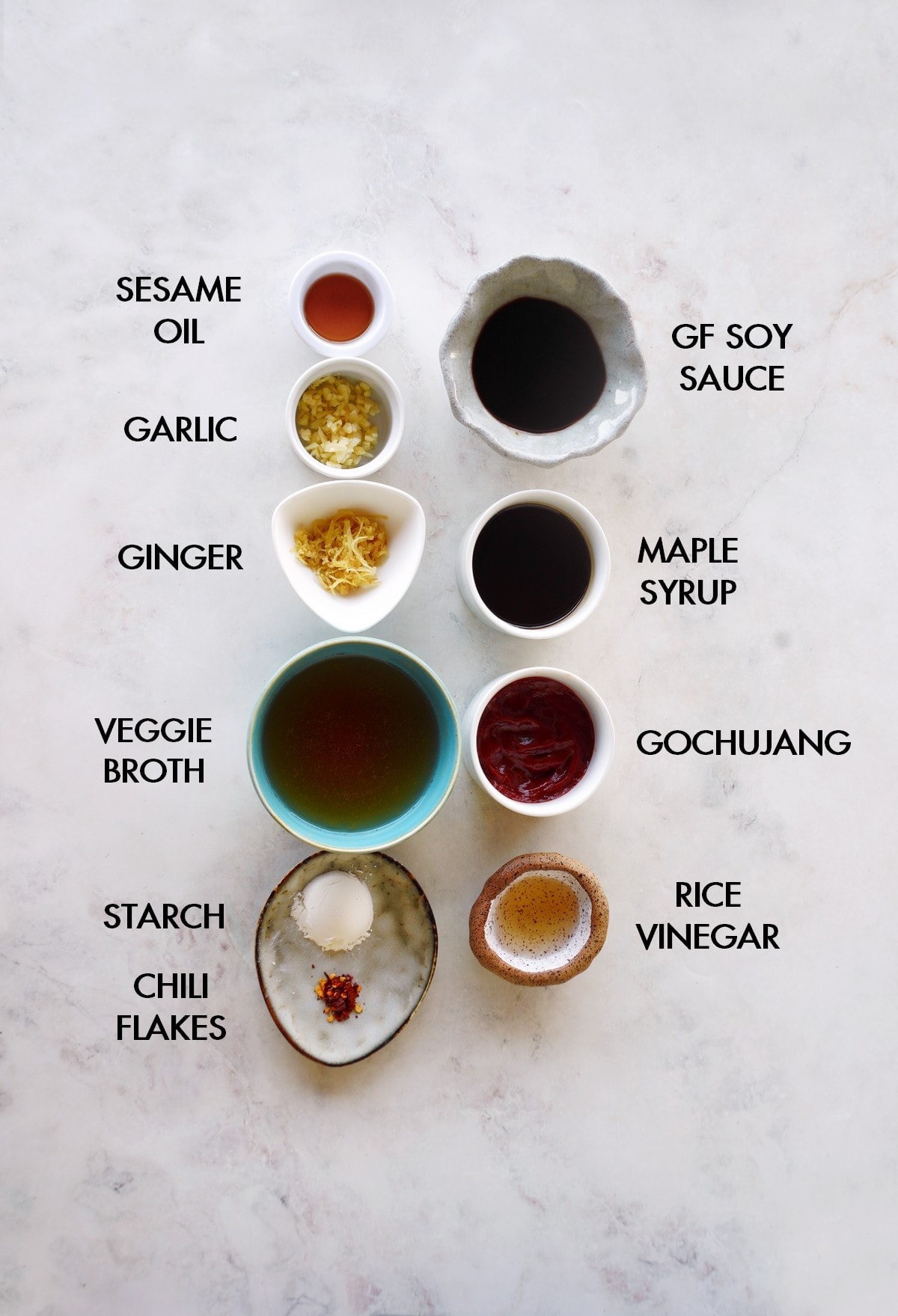
- Gochujang: A tangy, slightly sweet, spicy fermented Korean red chili paste available in different heat levels. Alternatively, sriracha works though the flavor/heat differ.
- Maple syrup: To balance heat/tanginess. Brown sugar, unrefined coconut sugar, or a sugar-free alternative will work.
- Rice vinegar: Or red/white rice wine vinegar. Mirin (rice wine) also works.
- Soy sauce: I prefer low-sodium soy sauce. Use coconut aminos/tamari if gluten-free.
- Chili flakes: Use Korean red pepper flakes (gochugaru- milder) or regular red pepper flakes (spicier).
- Aromatics: Fresh garlic and ginger make a flavorful, aromatic Korean barbecue sauce. Powdered versions work in a pinch.
- Sesame oil: Use toasted sesame oil to add rich, toasty, nutty depth.
- Vegetable broth: Regular or reduced sodium. Vegan chicken broth also works.
- Cornstarch: (Or arrowroot starch) To thicken the sauce.
Recipe Variations
- Black pepper: To add heat complexity to the spicy Korean BBQ sauce.
- Onion: Finely minced and sauteed with the garlic.
- Pureed Asian pear: Adds natural sweetness and thickness, like bulgogi sauce.
- Green onion: Finely minced for color and freshness in the Asian BBQ sauce.
- Liquid smoke: A few drops add subtle smokiness similar to regular BBQ sauce.
For the full ingredients list, measurements, complete recipe method, and nutritional information, read the recipe card below.
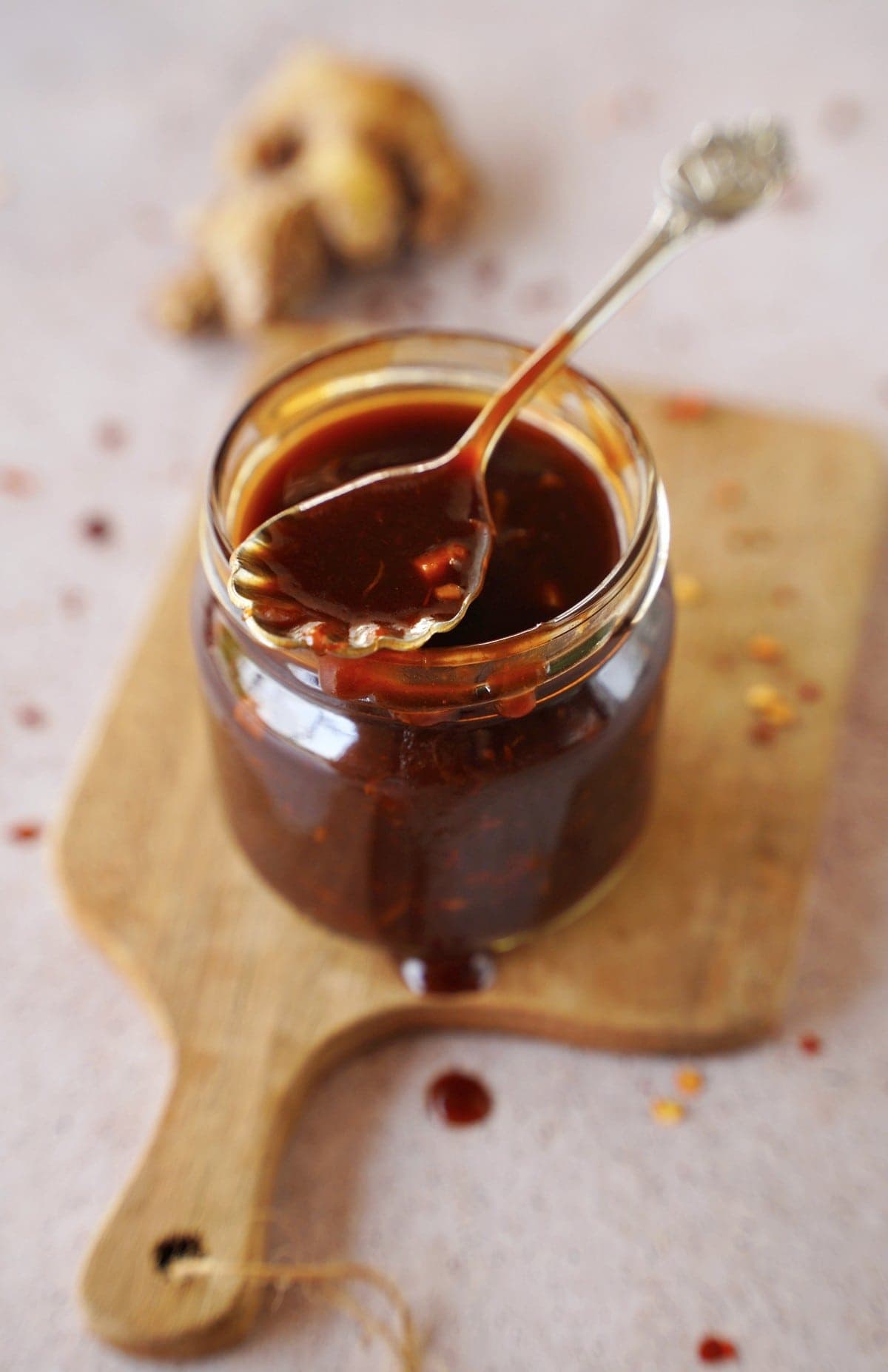
How to Make Korean BBQ Sauce
- First, peel and mince the garlic and ginger.
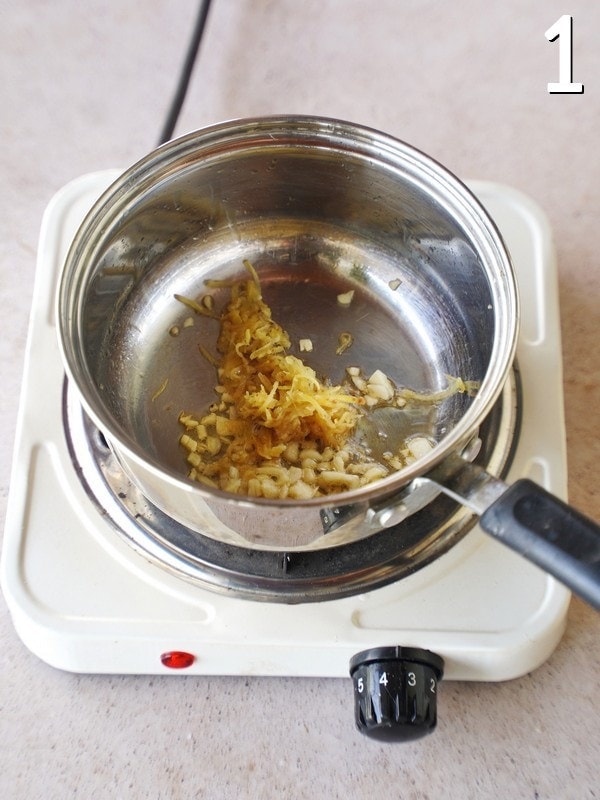
- Heat the sesame oil in a small saucepan. Then sauté the garlic and ginger for a minute.
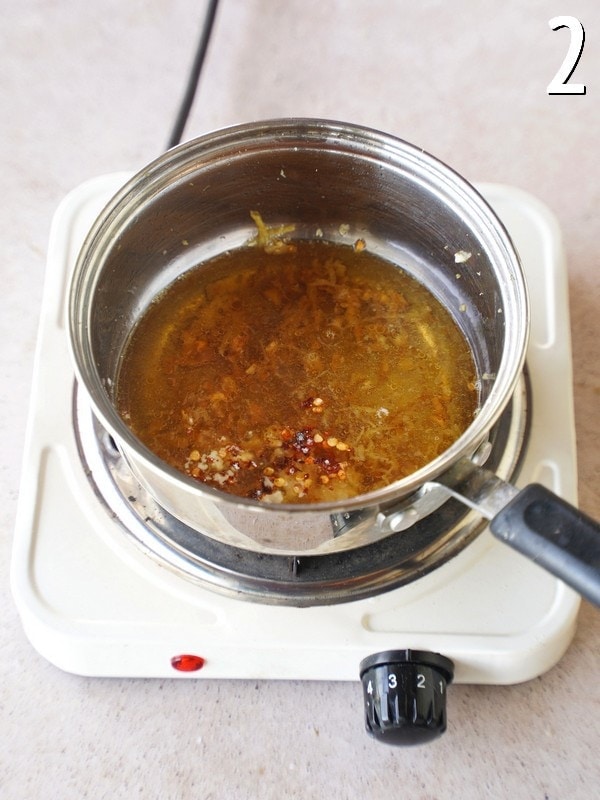
- Stir in the broth, cornstarch, and chili flakes, whisking until the starch dissolves.
- Add the soy sauce, maple syrup, gochujang paste, and rice vinegar. Stir well.
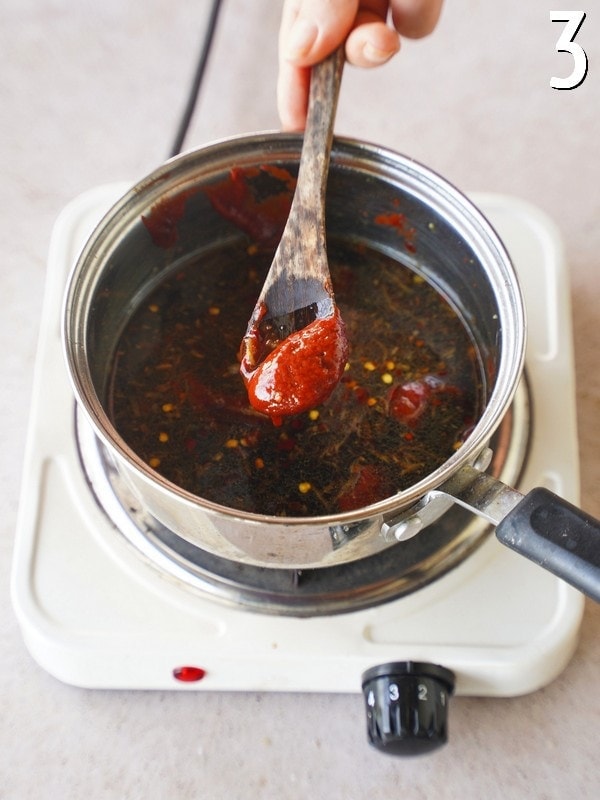
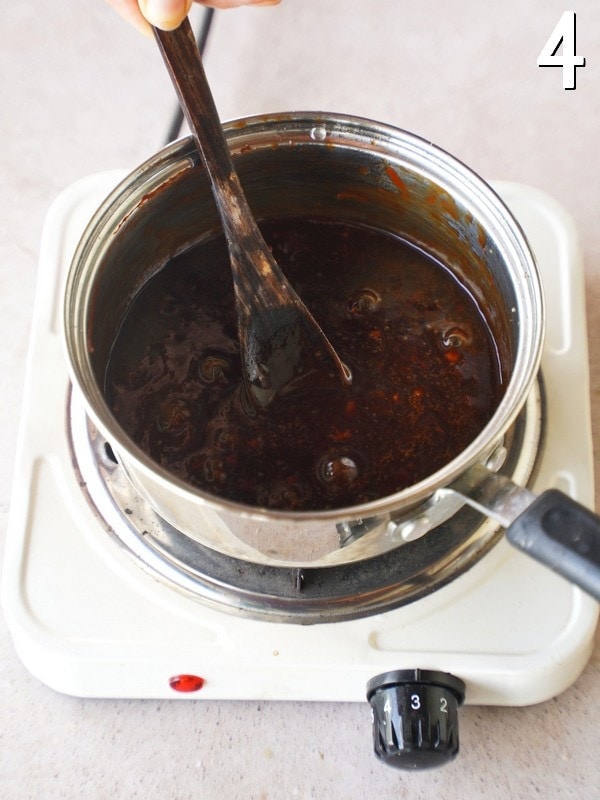
- Bring to a boil, reduce to medium-low heat, and simmer for 1-3 minutes until thickened.
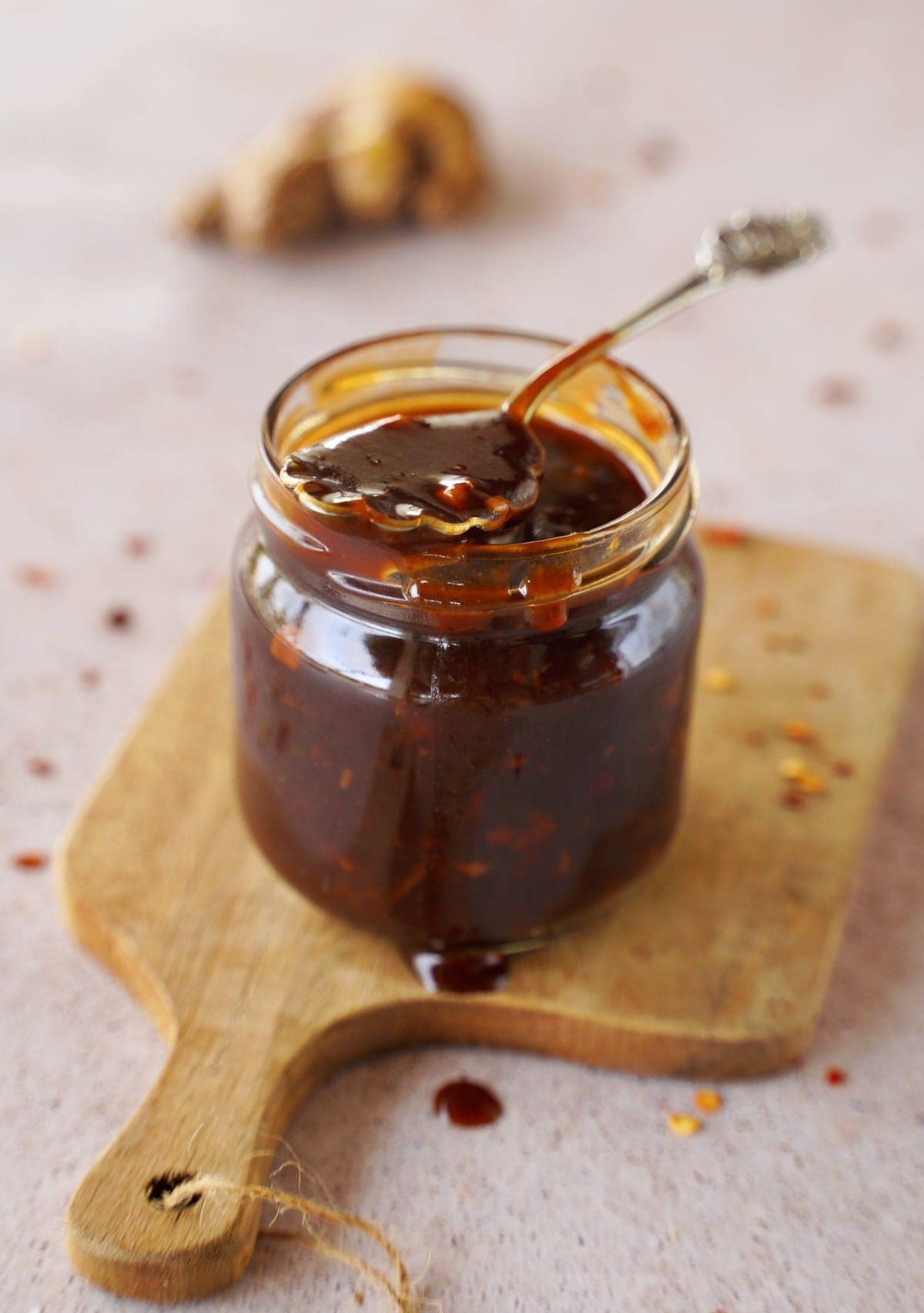
Enjoy the gochujang BBQ sauce immediately, or transfer it to a jar, cool, and enjoy later.
Serving Suggestions
Unsurprisingly, Korean gochujang BBQ sauce is popular with Korean BBQ dishes. However, you can also use is as a marinade, glaze, dressing, or dipping sauce with:
- Vegan Korean fried chicken/ chicken wings/ Cauliflower wings
- Seitan steak, tofu (including tofu kabobs), tempeh, etc.
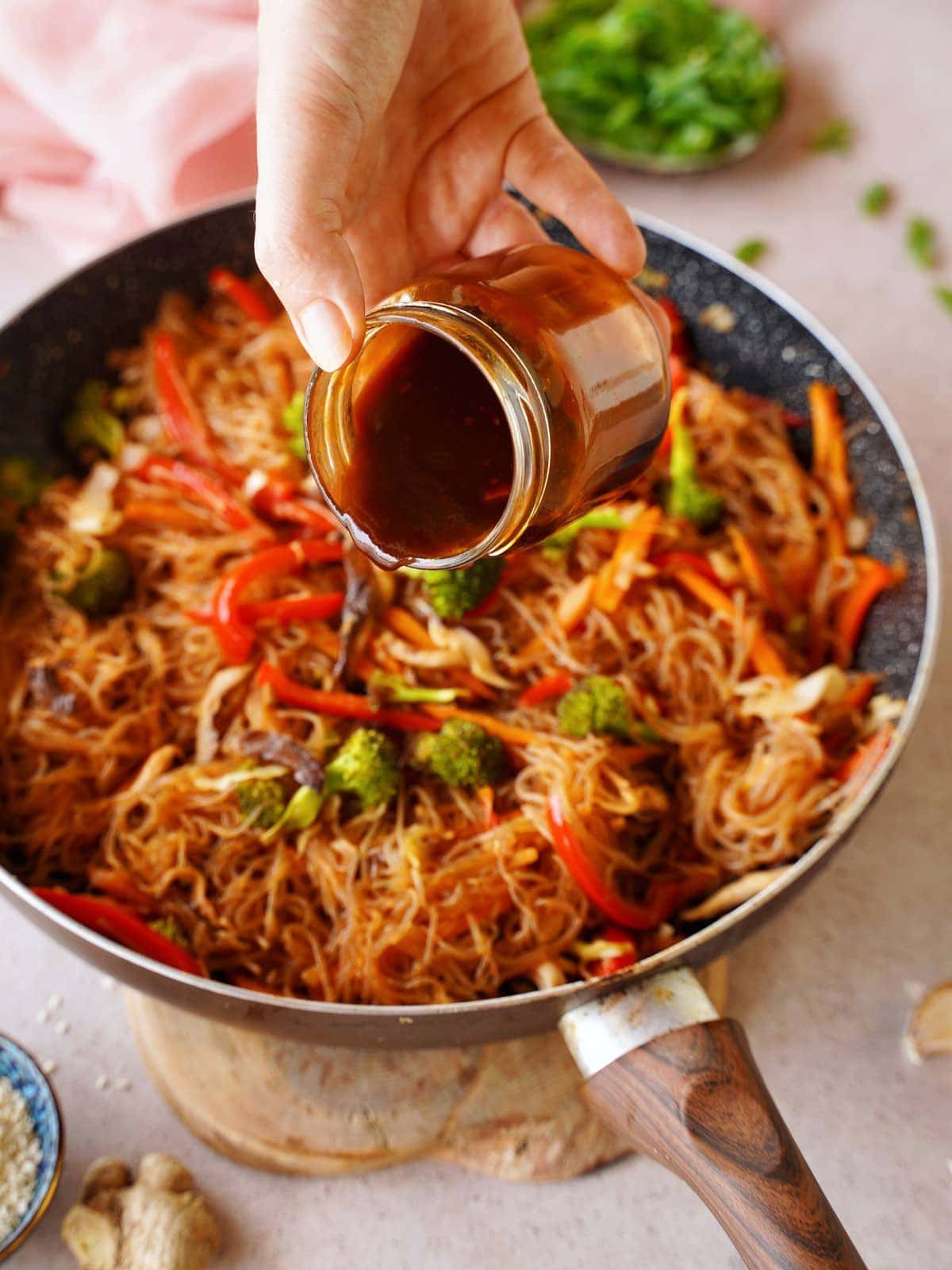
- As a Korean stir-fry sauce – i.e., for vermicelli stir-fry noodles
- Roasted/grilled veggies or fruit (like mango)
- Sandwiches, burgers, lettuce wraps
- Rice/noodle bowls (like bibimbap)
- A dipping sauce for spring rolls, dumplings, Pajeon, fries, etc.
Storage Instructions
Fridge: In a clean, airtight jar for up to 1 week.
Freezer: In a freezer-safe container/Ziplock for up to 2 months. Thaw in refrigerator overnight.
FAQs
Is Korean BBQ sauce gluten-free?
For gluten-free BBQ gochujang, use tamari/coconut aminos and check gochujang labels (some brands contain wheat).
What is Gochujang?
Gochujang is a thick, bold Korean fermented chili pepper paste made with gochugaru (Korean red chili peppers), glutinous rice flour, salt, barley malt powder and fermented soybean paste/powder. It’s spicy (different levels available), tangy, and slightly sweet.
Recipe Notes and Tips
- To adjust the heat: Add more or less Gochujang paste and red pepper flakes.
- For a smoother sauce: Blend it until smooth.
- Tweak the taste: Taste and adjust any ingredient to your liking (at the end).
- To reduce saltiness: Soy sauce, vegetable stock, and gochujang paste all add salt, so use reduced-sodium versions where possible.
- Let it rest: Korean barbecue sauce tastes even better on day two after the flavors meld.
More Easy Vegan Sauce Recipes
If you try this easy Korean BBQ sauce recipe, I’d love a comment and ★★★★★ recipe rating below. Also, please don’t forget to tag me in re-creations on Instagram or Facebook with @elavegan and #elavegan—I love seeing them.


Korean BBQ Sauce
Video
Ingredients
- 2 tsp sesame oil
- 3 cloves of garlic minced
- 2 tsp fresh ginger grated
- ½ cup (120 ml) low sodium vegetable broth or water
- 1 Tbsp cornstarch (or any other starch like potato)
- ¼ tsp red pepper flakes or more to taste
- ¼ cup (60 ml) low sodium soy sauce or tamari (see notes)
- 3 Tbsp (60 g) maple syrup (or liquid sweetener of choice)
- 2 Tbsp gochujang paste or Sriracha
- 1 Tbsp rice vinegar
Instructions
- You can watch the video for visual instructions.First, peel and mince the garlic and ginger.
- Then, heat the sesame oil in a small-medium saucepan until it shimmers. Add the garlic and ginger, and sauté for about a minute.
- Next, stir in the vegetable broth, cornstarch, and red pepper flakes, and whisk until the starch dissolves.
- Add the remaining ingredients (soy sauce, maple syrup, gochujang paste, and rice vinegar) and stir well.
- Bring the sauce to a boil, then reduce the heat to medium-low and allow it to simmer and thicken for 1-3 minutes.
- Finally, remove the saucepan from the stove and use this delicious Asian BBQ sauce immediately (e.g. for this Vermicelli Stir-Fry) or transfer it to a clean jar for later. Enjoy!
Notes
- To adjust the heat: Add more or less Gochujang paste and red pepper flakes.
- To avoid it being overly salty: The soy sauce, vegetable stock, and gochujang paste will all add salty elements to the Korean BBQ sauce recipe, so it’s best to use reduced-sodium versions of the soy sauce and/or broth (or just water).
Nutrition information is an estimate and has been calculated automatically
 „Simple and Delicious Vegan“ Cookbook by ElaVeganCLICK HERE to order!
IF YOU ARE USING PINTEREST, FEEL FREE TO PIN THE FOLLOWING PHOTO:


Just made this sauce. I’m making the vermicelli noodle stir fry tonight. This sauce is perfect. A keeper for sure.
Great recipe. It’s a keeper.! Perfect with bao buns.
Hi Greg, I am glad you like the sauce. Thanks for your feedback. 🙂
Made today 😊
I saw the recipe in the newsletter and I had everything at home and it was perfect for my bowl style recipe of today.
Thus I made it directly and it was delicious.
Thanks a lot !!
I will make it again for sure !
That’s awesome, dear! I am so glad you liked it. 🙂